
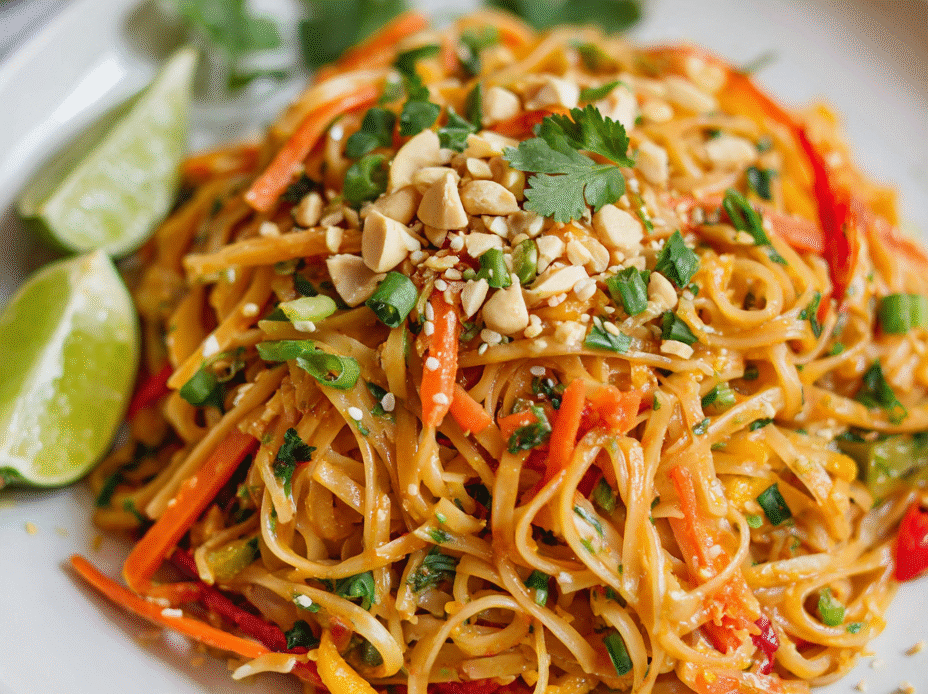
Vegetable Pad Thai is my go-to for when I want something comforting but lively, especially when I’ve got a fridge full of seasonal produce. It’s like taking a familiar childhood flavor and giving it a fresh, crunchy upgrade with whatever vegetables I have on hand. The trick is balancing that sweet-sour-tangy sauce with the earthiness of the veggies, making every bite feel both nostalgic and new.
I love how this dish can be adjusted based on what’s in the market or what’s left in my crisper. Sometimes it’s a handful of snap peas and carrots; other times, I toss in thinly sliced zucchini or roasted sweet potatoes. It’s a flexible, forgiving recipe that rewards good ingredients and a little bit of patience. Plus, I swear the smell of garlic and lime filling the kitchen makes any day feel a little brighter.
Focusing on how to make vegetable Pad Thai that balances nostalgic flavors with a creative twist using seasonal vegetables, turning a takeout favorite into a vibrant, veggie-packed meal that feels both familiar and fresh.
Balancing nostalgia with seasonal freshness
- Making this dish always reminds me of summer nights at my friend’s place, where we’d toss together whatever veggies we had and laugh about how perfectly imperfect the final dish looked.
- There’s a strange sense of pride I feel when I master that perfect balance of sweet, sour, and umami in the sauce—it’s like catching lightning in a bottle every time.
- Honestly, I’ve never met a vegetable I didn’t want to toss in this pad thai—carrots, zucchini, bell peppers—you name it, it all works and keeps things exciting.
- Cooking this dish is my small rebellion against takeout—more vibrant, more personal, and I get to control every flavor and texture.
- Sometimes, I get a little nostalgic for my first Thai cooking class, where I learned how important it is to taste and adjust as you go—this dish is a nod to that lesson.
The inspiration behind this dish
- This recipe came from a moment of trying to make my favorite takeout at home, but with a twist—more vegetables, less oil, and a fresher flavor. I wanted something that felt both satisfying and vibrant, not weighed down by too much sweetness or salt. It’s become my go-to when I want quick comfort but with a bit more intention, especially when I have seasonal produce that’s begging to be used.
- Cooking this dish reminds me of lazy weekend afternoons spent experimenting in the kitchen, trying to balance flavors without overthinking. Sometimes I toss in whatever crispy veggies I have leftover, and it feels like a little victory each time I nail that perfect sauce, bright and tangy but not overpowering. It’s humble, adaptable, and honest—kind of like a good story told over a bowl of noodles.
- heading
- story_type
Vegetable Pad Thai Trivia
- Vegetable Pad Thai is a modern twist on the classic street food that originated in Thailand, where it was originally a humble, quick meal for vendors and workers.
- The dish as we know it gained international popularity in the late 20th century, especially as a vegetarian-friendly option that highlights fresh, seasonal produce.
- Traditionally, Pad Thai uses shrimp or chicken, but the vegetable version emphasizes adaptability and sustainability, making it a favorite among plant-based eaters.
- The balance of sweet, sour, salty, and spicy flavors in Pad Thai reflects a harmony that’s central to Thai cuisine and culture.
- In recent years, chefs have experimented with vibrant vegetables like rainbow chard or charred eggplant, turning this dish into a canvas for seasonal bounty.
Ingredient breakdown: key components
- Rice noodles: I prefer the chewy, slightly sticky texture that soaks up the sauce beautifully—so don’t overcook. If they’re too soft, they turn mushy fast, so cook until just al dente.
- Carrots: I like to julienne them thin for crunch and sweetness, but shredded works too. They add a fresh, crisp bite that contrasts the softer noodles.
- Bell peppers: Bright and juicy, they lend a pop of color and sweetness. Use any color—red, yellow, or orange—for more vibrancy.
- Tofu: Crispy on the outside, soft inside. Press out excess water, then fry until golden and crackling, which adds a satisfying bite. Skip if you prefer a lighter vibe.
- Pad Thai sauce: A mix of tamarind, fish sauce (or soy for vegan), sugar, and lime—this combo is essential. It’s tangy, savory, with a hint of sweetness that’s oozing with flavor. Adjust the lime for brightness or the sugar for balance.
- Garlic & shallots: They form the aromatic backbone. Sauté until fragrant, golden, and slightly caramelized—this is where the magic begins.
- Peanuts: Chopped and sprinkled on top, they give a nutty, salty crunch. Toast them lightly beforehand for extra flavor. Feel free to swap for cashews or omit if nut allergies are a concern.
Spotlight on key ingredients
Rice noodles:
- I prefer the chewy, slightly sticky texture that soaks up the sauce beautifully—so don’t overcook. If they’re too soft, they turn mushy fast, so cook until just al dente.
- Carrots: I like to julienne them thin for crunch and sweetness, but shredded works too. They add a fresh, crisp bite that contrasts the softer noodles.
- Bell peppers: Bright and juicy, they lend a pop of color and sweetness. Use any color—red, yellow, or orange—for more vibrancy.
Tofu and Sauce:
- Tofu: Crispy on the outside, soft inside. Press out excess water, then fry until golden and crackling, which adds a satisfying bite. Skip if you prefer a lighter vibe.
- Pad Thai sauce: A mix of tamarind, fish sauce (or soy for vegan), sugar, and lime—this combo is essential. It’s tangy, savory, with a hint of sweetness that’s oozing with flavor. Adjust the lime for brightness or the sugar for balance.
Notes for ingredient swaps
- Rice Noodles: Use kelp noodles for a low-carb, slightly chewy alternative with a subtle sea flavor.
- Vegetables: Swap carrots for shredded kohlrabi or jicama for a crisp, milder crunch.
- Tofu: Firm tempeh, sliced thin and fried, gives a nutty flavor and firm bite.
- Sauce: Coconut aminos can replace soy or fish sauce, adding sweetness and umami without fishy notes.
- Peanuts: Pumpkin seeds or chopped roasted sunflower seeds for a nutty crunch without nuts.
- Lime: Lemon juice as a brighter, slightly less tart substitute.
- Oil: Sesame oil adds a toasted aroma; for a milder taste, go with vegetable oil.
Equipment & Tools
- Wok or large skillet: For high-heat stir-frying all ingredients quickly.
- Tongs or spatula: To toss and combine ingredients evenly without breaking noodles.
- Small bowl: Mixing and whisking the sauce ingredients.
- Colander or strainer: Draining the noodles efficiently.
- Grater: Julienning carrots or grating peanuts if needed.
Step-by-step guide to Vegetable Pad Thai
- Gather all equipment: a wok or large skillet, tongs or a spatula, a small bowl for sauce, and a grater for vegetables. Keep everything within reach to keep the process smooth.
- Cook the rice noodles: Bring a large pot of water to a boil (about 100°C/212°F). Add noodles and cook until just al dente, about 4 minutes. Drain and rinse with cold water to stop the cooking. Set aside.
- Prep the vegetables: Julienne carrots, thinly slice bell peppers, and chop scallions. Keep them handy; they’ll add crunch and color.
- Make the sauce: In your small bowl, whisk together tamarind paste, soy sauce or fish sauce, sugar, and lime juice. Adjust to taste—bright and tangy but balanced.
- Cook the tofu (if using): Press out excess water, then cut into small cubes. Heat a tablespoon oil in the wok over medium-high heat (around 180°C/356°F). Fry tofu until golden and crispy, about 4-5 minutes, turning occasionally. Remove and set aside.
- Stir-fry the aromatics: Add a bit more oil if needed, then toss in minced garlic and shallots. Sauté until fragrant and golden, about 30 seconds to 1 minute. The aroma should fill the kitchen with a garlic-lime scent.
- Cook the vegetables: Add carrots and peppers to the wok. Stir-fry for about 2-3 minutes until just tender but still crisp, with some charred edges for flavor.
- Combine noodles and sauce: Add the drained noodles to the wok. Pour over the sauce and toss everything together quickly over high heat (about 200°C/392°F). Cook until evenly coated and heated through, about 2 minutes. The noodles should be glossy and slightly sticky.
- Add the tofu: Return the crispy tofu to the wok and toss gently to combine, warming through, about 1 minute.
- Finish with peanuts and scallions: Sprinkle chopped peanuts and sliced scallions over the top. Give one last toss to distribute evenly.
- Plate immediately: Serve hot, garnished with extra lime wedges and fresh herbs if desired. The noodles should be chewy, saucy, and vibrant with a balance of sweet, sour, and savory flavors.
Serve immediately on warm plates. Garnish with extra lime, herbs, and peanuts for added texture and brightness. Enjoy the contrasting textures—chewy noodles, crisp vegetables, and crunchy peanuts.
How to Know It’s Done
- Noodles are al dente, not mushy, with a slight chew.
- Vegetables are tender but still crisp, with some char for flavor.
- Sauce is vibrant, balanced, and coats all ingredients evenly.
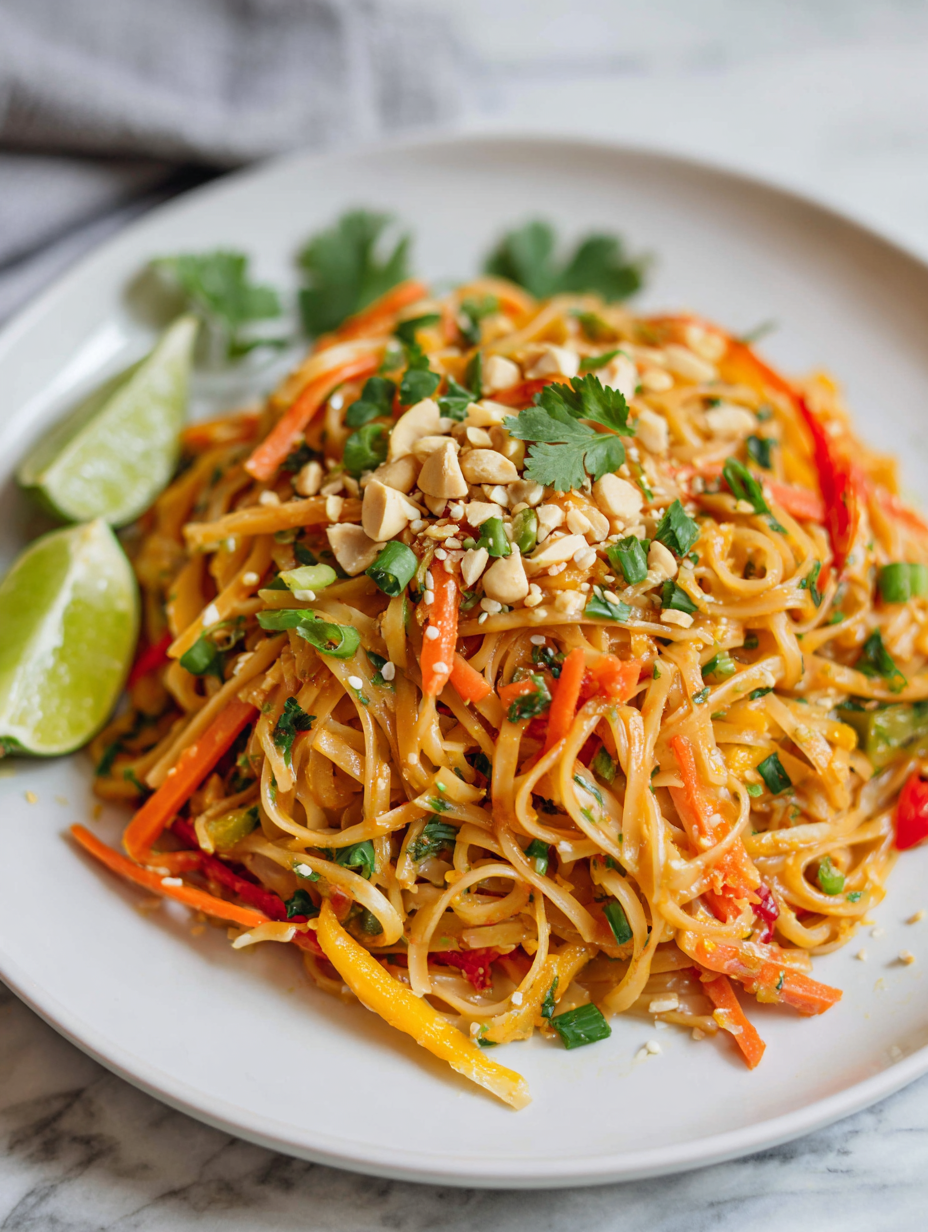
Vegetable Pad Thai
Ingredients
Equipment
Method
- Bring a large pot of water to a boil. Add the rice noodles and cook until just al dente, about 4 minutes. Drain and rinse with cold water to stop the cooking process, then set aside.
- While the noodles cook, julienne the carrots and thinly slice the bell pepper. Keep them ready for stir-frying. Also, press and cube the tofu.
- In a small bowl, whisk together the tamarind paste, soy sauce, sugar, and lime juice until the sugar dissolves. Set this flavorful sauce aside.
- Heat a tablespoon of oil in your wok or large skillet over medium-high heat. Add the tofu cubes and cook, turning occasionally, until golden and crispy, about 4-5 minutes. Remove and set aside.
- Add another splash of oil if needed, then toss in the minced garlic and sliced shallots. Sauté for about 30 seconds until fragrant and slightly golden, filling your kitchen with that warm garlic aroma.
- Stir-fry the sliced bell peppers and carrots in the wok for 2-3 minutes, until they are just tender but still crisp, with some slight charring for extra flavor.
- Add the drained noodles to the wok. Pour the sauce over them and toss vigorously with tongs or a spatula for about 2 minutes, until the noodles are glossy, evenly coated, and heated through.
- Return the crispy tofu to the wok and gently toss to combine everything. Cook for an additional minute, allowing flavors to meld.
- Sprinkle the chopped toasted peanuts and sliced scallions over the top. Give everything one last toss, then remove from heat.
- Serve your vibrant Vegetable Pad Thai immediately while hot, garnished with extra lime wedges if desired. The noodles should be chewy and saucy, with crisp vegetables and a nutty crunch from the peanuts.
Tips & Tricks for Perfect Pad Thai
- Bolded mini-head: Use high heat → Sear aromatics quickly to develop flavor without burning.
- Bolded mini-head: Keep noodles slightly undercooked → They’ll finish cooking in the stir-fry and avoid mushiness.
- Bolded mini-head: Toss ingredients rapidly → Prevent sticking and ensure even coating with sauce.
- Bolded mini-head: Toast peanuts lightly → Enhances their nutty aroma and adds depth to the topping.
- Bolded mini-head: Adjust lime last → Brighten or mellow the dish by adding lime juice at the end, not during cooking.
- Bolded mini-head: Use tongs for tossing → Helps evenly coat noodles and veggies without breaking them apart.
- Bolded mini-head: Rest briefly before serving → Let flavors meld for a minute, making each bite more cohesive.
Common mistakes and how to fix them
- FORGOT to drain noodles thoroughly → Rinse well to prevent sticking and clumping.
- DUMPED in all sauce at once → Add gradually, tasting for balance and avoiding oversaturation.
- OVER-TORCHED the vegetables → Stir constantly, and remove from heat when veggies are crisp-tender.
- MISSED the high-heat stir-fry step → Use medium-high heat to sear flavors and prevent sogginess.
Fast fixes for common issues
- If noodles stick, splash with hot water and toss gently to loosen.
- When sauce is too sour, add a pinch of sugar to balance flavors.
- DUMPED in too much oil → Patch with paper towels to soak excess and crisp again.
- Overcooked vegetables → Shield with a quick stir-fry over high heat to revive crunch.
- heading
Prep, store, and reheat tips
- Prepare the sauce and chop vegetables a day ahead. Keep in separate airtight containers in the fridge for up to 24 hours. The flavors deepen overnight, and the prep saves time during cooking.
- Cook and drain the rice noodles ahead of time. Store them in a sealed container in the fridge for up to 2 days. To prevent sticking, toss lightly with oil before refrigerating and reheat quickly to maintain chewiness.
- Assemble the dish components but don’t combine everything until just before serving. Reheat the noodles with a splash of hot water or broth—watch for that glossy, slightly sticky texture restoring easily.
- Refrigerated leftovers keep well for 2–3 days. The sauce may thicken slightly; loosen with a squeeze of lime or a splash of water when reheating to bring back the vibrancy and moisture.
- For best sensory results, reheat in a hot wok or skillet over medium-high heat, stirring constantly. The dish should shimmer with sauce and smell bright, with vegetables crisp again and noodles chewy.
Top questions about Vegetable Pad Thai
1. How do I get crispy tofu in Pad Thai?
Use firm tofu, pressed to remove excess water, then fry until golden and crispy for the best texture.
2. How do I avoid mushy noodles?
Cook noodles until just al dente, about 4 minutes. Rinse with cold water to stop cooking and prevent sticking.
3. When should I add lime juice?
Adjust lime juice to taste at the end, adding a splash for brightness and a bit more if needed.
4. What oil is best for stir-frying Pad Thai?
Use a high-smoke-point oil like vegetable or peanut oil to stir-fry, and heat your pan thoroughly before adding ingredients.
5. Can I use different vegetables?
Julienne carrots and thinly slice bell peppers for a crisp, colorful contrast. Feel free to swap in zucchini or snap peas.
6. How do I make the Pad Thai sauce?
Whisk together tamarind paste, soy or fish sauce, sugar, and lime juice for the authentic sauce base.
7. How do I get that aromatic flavor base?
Cook aromatics like garlic and shallots until fragrant and golden—this is the flavor foundation of your dish.
8. When is the best time to serve Pad Thai?
Serve immediately while hot for the best chewy noodles and crisp vegetables. Garnish with peanuts and scallions.
9. How do I store and reheat leftovers?
Store leftovers in an airtight container for up to 2 days. Reheat in a hot pan, adding a splash of water if needed.
10. What if my Pad Thai turns out too salty or sticky?
If the noodles stick together, splash with hot water and toss gently. To fix over-salted sauce, add a squeeze of lime or a pinch of sugar.
Making this vegetable Pad Thai is like capturing a moment of simple joy—crunchy, tangy, and just a little messy in the best way. It’s a dish that reminds me how flexible and forgiving home cooking can be, especially when you’re using what’s fresh and in season.
Every time I make it, I feel a little more connected to the vibrant, chaotic energy of street food stalls and the comforting familiarity of a well-loved recipe. It’s not just about the flavors, but about creating something honest and satisfying, no matter how imperfect it looks or how quickly it comes together.
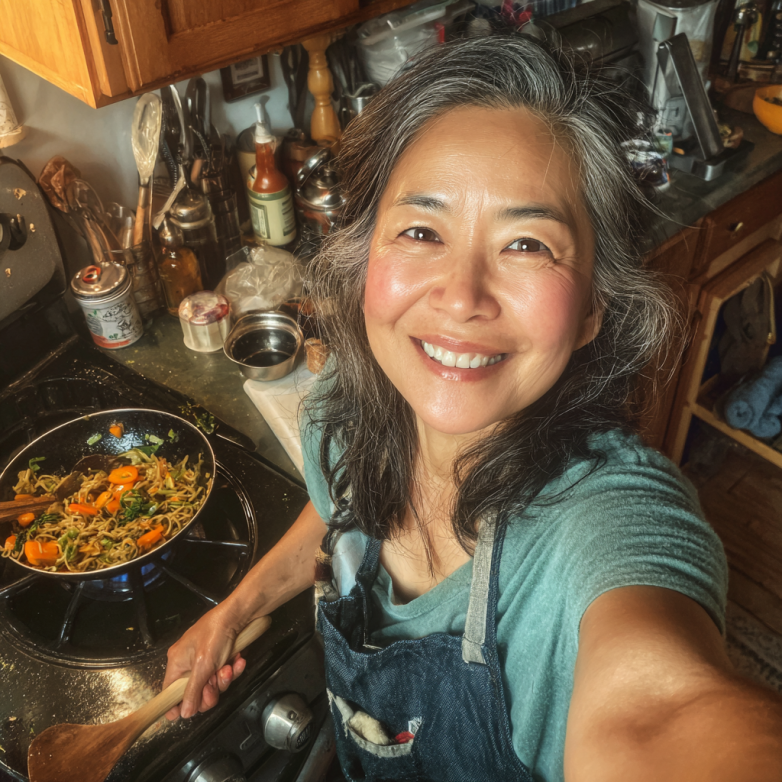
Hi, I’m Olivia Chen-Williams, a professional chef, cooking instructor, and the founder of Turn Around At 50. For nearly three decades, my life has revolved around kitchens. Not the quiet, romantic kind, but the real ones. Hot, loud, demanding, and deeply alive.