
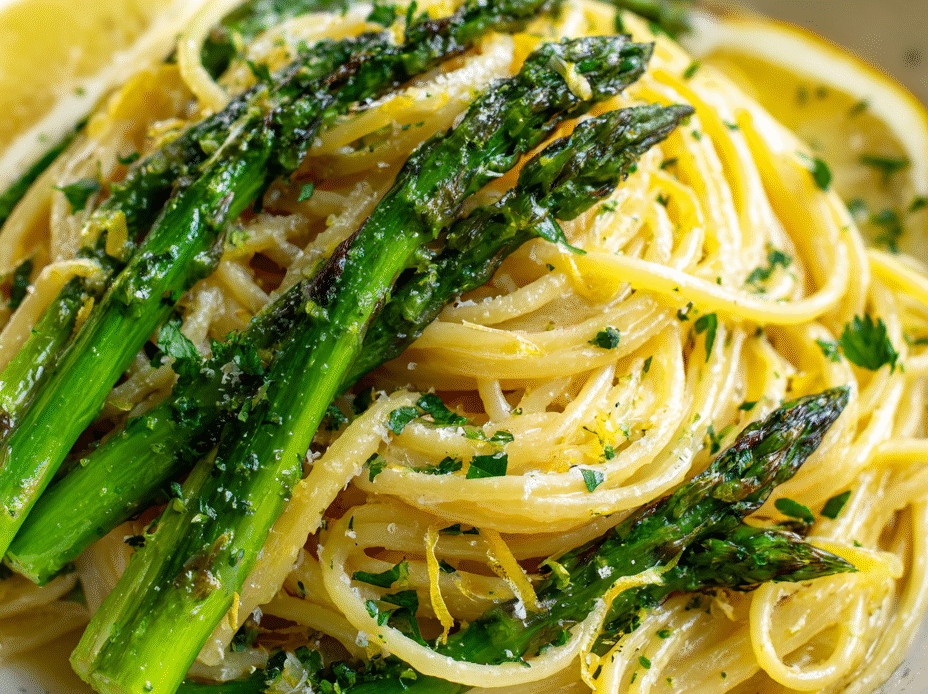
This lemon butter asparagus pasta is my go-to when I want something fresh, bright, and satisfying without a lot of fuss. The secret is in how the lemon zest and juice cut through the buttery richness, making each bite feel like a burst of spring. It’s a dish that feels both simple and special—perfect for a quick weeknight dinner or a lazy weekend lunch.
What I love most is how the flavors come together effortlessly. The earthiness of the asparagus gets lifted by the citrus, and the creamy butter adds a mellow richness that ties everything up. It’s honest home cooking, nothing fancy, but the kind that makes you pause and really enjoy each forkful.
This recipe is a reminder that sometimes, the best meals are the simplest. Fresh ingredients, a quick toss, and you’re eating something that feels like a celebration of seasonality. Plus, it’s forgiving—no overthinking, just good, honest flavors that brighten up any day.
Focusing on how the bright, zesty lemon butter elevates the earthy sweetness of asparagus, turning simple pasta into a springtime celebration with minimal fuss.
The inspiration behind this dish
- This dish came together one busy spring evening when I had a handful of fresh asparagus and a lemon that needed using. I wanted something quick but vibrant—something that would make me smile with its simplicity and brightness. The idea of butter, lemon, and crisp asparagus just clicked, and I kept tweaking until it felt just right.
- Cooking it felt like a small act of celebration—bright lemon zest, the sizzle of asparagus hitting hot butter, the smell of citrus and greens mingling in the pan. It’s a reminder that some of the best meals come from improvising with what’s at hand, trusting that simple flavors can really shine.
- heading
- story_type
Ingredient breakdown: key components
- Lemon: I use bright, fresh lemon zest and juice to really wake up the dish—don’t skip the zest, it’s the zing that makes it sing. You can swap in lime for a slightly different citrus punch.
- Asparagus: I prefer thin spears—they cook faster and stay tender-crisp. Roast or blanch them first if you want a deeper flavor or more texture—either way, that snap is essential.
- Butter: I go for unsalted, good-quality butter to keep the flavor clean and rich. If you’re dairy-free, try a neutral oil with a splash of lemon—less luscious but still bright.
- Pasta: I lean toward a starchy variety like spaghetti or linguine. Save some pasta water—it’s magic for adjusting consistency and making the sauce cling better.
- Garlic: I love a good minced garlic—don’t burn it, though. Add it once the butter melts, just enough to release a fragrant aroma without bitterness.
- Olive Oil: I use a drizzle of good extra virgin olive oil for extra flavor, especially if I want a touch more richness or to finish the dish. Skip if the butter feels heavy enough.
- Seasonings: Salt and black pepper are obvious, but I sometimes toss in a pinch of red pepper flakes for heat or fresh herbs like parsley for brightness—simple tweaks that make all the difference.
Spotlight on key ingredients
Lemon:
- I use bright, fresh lemon zest and juice to really wake up the dish—don’t skip the zest, it’s the zing that makes it sing. You can swap in lime for a slightly different citrus punch.
- Asparagus: I prefer thin spears—they cook faster and stay tender-crisp. Roast or blanch them first if you want a deeper flavor or more texture—either way, that snap is essential.
Asparagus:
- Butter: I go for unsalted, good-quality butter to keep the flavor clean and rich. If you’re dairy-free, try a neutral oil with a splash of lemon—less luscious but still bright.
- Pasta: I lean toward a starchy variety like spaghetti or linguine. Save some pasta water—it’s magic for adjusting consistency and making the sauce cling better.
Notes for ingredient swaps
- Lemon: I use bright, fresh lemon zest and juice to really wake up the dish—don’t skip the zest, it’s the zing that makes it sing. You can swap in lime for a slightly different citrus punch.
- Asparagus: I prefer thin spears—they cook faster and stay tender-crisp. Roast or blanch them first if you want a deeper flavor or more texture—either way, that snap is essential.
- Butter: I go for unsalted, good-quality butter to keep the flavor clean and rich. If you’re dairy-free, try a neutral oil with a splash of lemon—less luscious but still bright.
- Pasta: I lean toward a starchy variety like spaghetti or linguine. Save some pasta water—it’s magic for adjusting consistency and making the sauce cling better.
- Garlic: I love a good minced garlic—don’t burn it, though. Add it once the butter melts, just enough to release a fragrant aroma without bitterness.
- Olive Oil: I use a drizzle of good extra virgin olive oil for extra flavor, especially if I want a touch more richness or to finish the dish. Skip if the butter feels heavy enough.
- Seasonings: Salt and black pepper are obvious, but I sometimes toss in a pinch of red pepper flakes for heat or fresh herbs like parsley for brightness—simple tweaks that make all the difference.
Equipment & Tools
- Large pot: Boil pasta efficiently.
- Sauté pan: Cook asparagus and sauce.
- Tongs: Toss and combine pasta and sauce.
- Sharp knife: Prep asparagus and garlic quickly.
Step-by-step guide to lemon butter asparagus pasta
- Equipment ready: large pot for pasta, sauté pan (preferably non-stick), tongs, and a sharp knife. Fill the pot with water, add salt generously, and bring to a rolling boil at 100°C (212°F).
- Trim the asparagus: snap off the woody ends with your hands—they naturally break where tough. Cut the spears into 2-inch pieces. Set aside.
- Cook the pasta: add to boiling water, cook for 8-10 minutes until al dente. Stir occasionally to prevent sticking. Drain, reserving ½ cup pasta water, and set aside.
- Heat the sauté pan over medium heat (~160°C/320°F). Add 2 tbsp butter. Once melted and bubbling, toss in the asparagus pieces. Cook for 3-4 minutes, shaking the pan, until bright green and tender with slight caramelization.
- Add garlic: mince 2 cloves and stir into the asparagus. Cook for 30 seconds until fragrant, but don’t let it burn—if garlic starts to brown too quickly, reduce heat.
- Deglaze with lemon: squeeze in juice of half a lemon and add the zest. Stir quickly, letting the acid brighten the butter and coating the asparagus with zesty aroma.
- Combine pasta and sauce: add cooked pasta to the pan. Toss to coat, adding reserved pasta water a splash at a time to loosen the sauce and make it silky. Cook for 1-2 minutes until everything is hot and well mixed.
- Finish with butter: stir in the remaining 1 tbsp butter for extra richness. Adjust seasoning with salt and pepper. If you like heat, sprinkle red pepper flakes now.
- Plate immediately: transfer to warm bowls or plates. Garnish with a small squeeze of lemon or fresh herbs if desired. Serve with a light drizzle of olive oil for shine.
Serve immediately while hot, with optional lemon wedges or fresh herbs for brightness.
How to Know It’s Done
- Asparagus: tender yet crisp, with a vibrant green color and slight caramelization.
- Pasta: al dente, with a slight bite, coated in a glossy sauce.
- Sauce: silky and well-integrated, with bright lemon aroma and butter sheen.
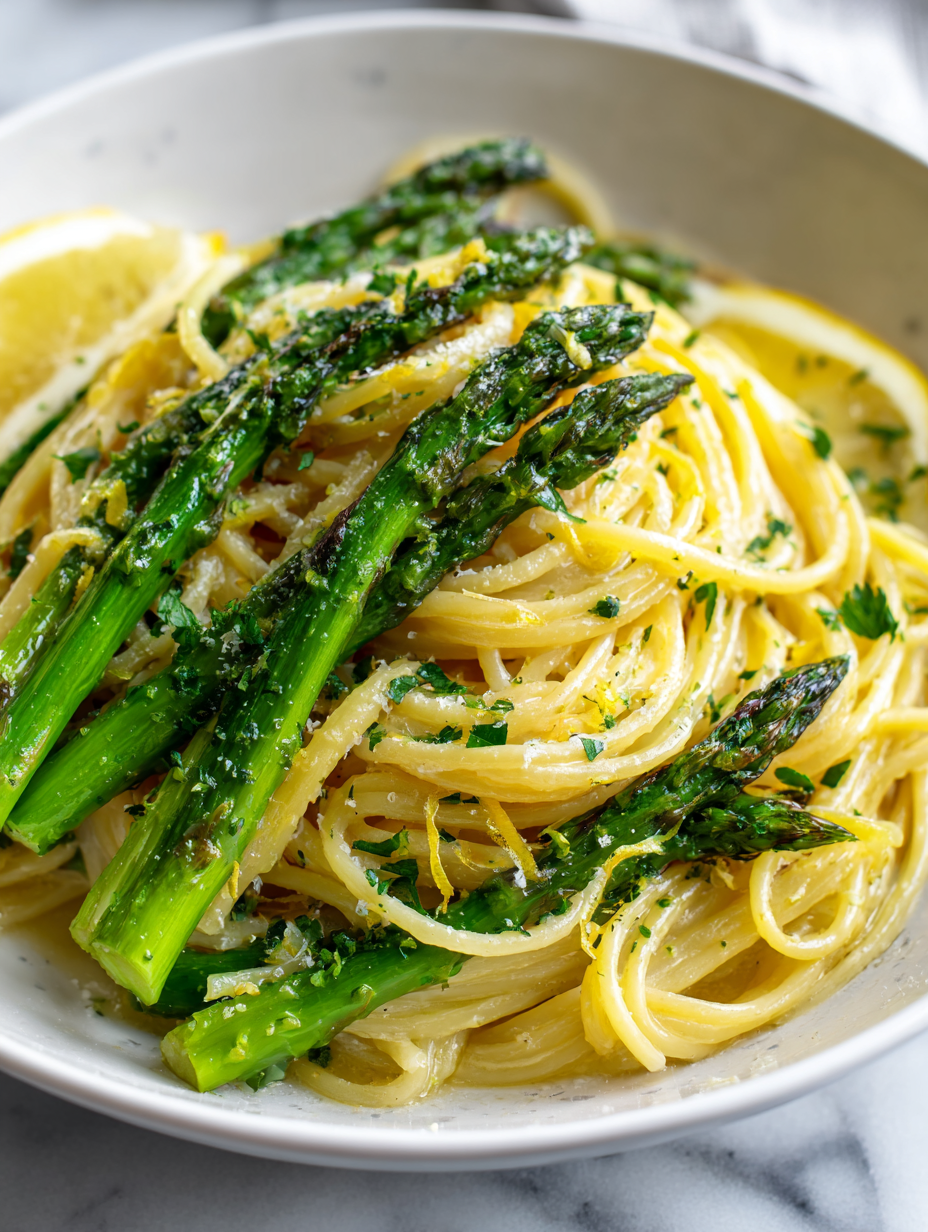
Lemon Butter Asparagus Pasta
Ingredients
Equipment
Method
- Fill a large pot with water, add a generous amount of salt, and bring to a rolling boil. While waiting, trim the woody ends from the asparagus by snapping off the tough part with your hands, then cut the spears into 2-inch pieces.
- Add the pasta to the boiling water and cook according to package instructions until al dente, about 8-10 minutes. Stir occasionally to prevent sticking. Once done, reserve about ½ cup of pasta water, then drain and set aside.
- While the pasta cooks, heat a sauté pan over medium heat. Add 2 tablespoons of butter and let it melt with a gentle sizzle. Toss in the asparagus pieces and cook for about 3-4 minutes, shaking the pan occasionally, until they turn bright green and develop slight caramelization.12 ounces spaghetti or linguine
- Add the minced garlic to the pan and cook for about 30 seconds, stirring constantly, until fragrant but not browned. The garlic should release a fragrant aroma, filling the pan with a savory scent.12 ounces spaghetti or linguine
- Squeeze the juice of half a lemon into the pan, then add the lemon zest. Stir quickly to coat the asparagus with the citrusy brightness, which will cut through the richness of the butter.12 ounces spaghetti or linguine
- Add the cooked pasta to the pan. Toss everything together using tongs, adding reserved pasta water a splash at a time to loosen the sauce and help it cling to the noodles. Cook for about 1-2 minutes until everything is hot and well-coated.
- Stir in the remaining tablespoon of butter for extra richness. Season with salt, black pepper, and red pepper flakes if using. Adjust seasoning to taste.12 ounces spaghetti or linguine
- Transfer the pasta to serving bowls, garnishing with chopped fresh parsley and an additional squeeze of lemon if desired. Drizzle lightly with olive oil for shine, and serve immediately while hot.12 ounces spaghetti or linguine
Notes
Pro tips for perfect lemon butter asparagus pasta
- Use fresh lemon zest—it’s the zing that brightens everything, add it early to release full flavor.
- Keep asparagus tender-crisp—cook just until vibrant green and slightly caramelized, for the best snap.
- Toss pasta into the sauce off heat—this helps the sauce cling and prevents it from breaking.
- Reserve pasta water—starchy and perfect for loosening the sauce and adding silkiness.
- Don’t burn garlic—add it after butter melts, cook until fragrant, but keep the heat moderate.
- Finish with butter off heat—this melts smoothly into the sauce, adding richness without splitting.
- Serve immediately—this dish tastes best hot, with bright lemon aroma and a silky texture.
Common mistakes and how to fix them
- FORGOT to taste and adjust seasoning before serving — always taste and tweak salt and acidity.
- DUMPED the pasta water without reserving some — save it for the sauce’s consistency.
- OVER-TORCHED the garlic — add it later or lower heat to prevent bitterness.
- MISSED the lemon zest — zest first to get the most flavor and avoid burning it.
Quick fixes and pantry swaps
- When sauce shimmers and smells lemon-bright, it’s ready—don’t overcook it.
- Splash a bit of pasta water if the sauce feels thick or sticky—silky texture restored.
- Patch overcooked asparagus by tossing in fresh lemon juice and a tiny knob of butter.
- Shield burnt garlic by removing pan from heat immediately and adding fresh garlic at the end.
- Rescue dull flavor with a quick squeeze of lemon—brightens everything and lifts the dish.
Prep, store, and reheat tips
- Prep the asparagus by trimming and cutting into 2-inch pieces a day ahead; keep refrigerated to maintain freshness and snap.
- Cook the pasta until just al dente, then rinse with cold water, toss with a little oil, and store in an airtight container for up to 24 hours.
- Zest and juice the lemon in advance; store separately in airtight containers to preserve brightness and prevent muddiness.
- Refrigerate the cooked asparagus and pasta separately; reheat gently in a pan or microwave, adding a splash of water or lemon juice to revive the flavors.
- The flavors will mellow slightly overnight, but the lemon’s brightness and the asparagus’s snap can be reawakened with a quick reheat and fresh lemon squeeze.
Top questions about lemon butter asparagus pasta
1. Why is lemon zest important in this recipe?
Use fresh lemon zest and juice for the brightest flavor, adding zest early to release aroma. Swap lime if you prefer a different citrus punch.
2. Can I prepare asparagus in advance?
Blanch or roast asparagus beforehand for deeper flavor or crunch, but fresh, tender spears are best for quick cooking.
3. What’s a good butter substitute?
Use good-quality unsalted butter for a clean, rich taste. Dairy-free? Try a neutral oil with lemon for brightness.
4. Why save pasta water?
Save a cup of pasta water before draining; it’s starchy and helps loosen the sauce for a silky coating.
5. When should I add garlic?
Add garlic after the butter melts, cooking just until fragrant—avoid burning to prevent bitterness.
6. How do I know when pasta is done?
Cook pasta until al dente, about 8-10 minutes. Toss directly into the sauce off heat for the best coating.
7. How do I finish the dish properly?
Finish the dish with a splash of lemon juice and a pat of butter off heat for maximum brightness and richness.
8. What if the sauce gets too thick?
If sauce becomes too thick, loosen it with reserved pasta water or a little lemon juice for brightness.
9. How do I reheat this dish?
Reheat leftovers gently in a pan with a splash of water or lemon to revive flavors and texture.
10. Why is this recipe good for spring?
This dish is perfect for spring when asparagus and lemons are in season, making fresh flavors shine.
This lemon butter asparagus pasta is a reminder that simple ingredients can create something memorable. The bright lemon lifts the earthy asparagus, and the buttery richness makes every bite feel indulgent. It’s a dish I come back to when I need a quick, honest meal that feels like a small celebration.
In these busy days, it’s nice to have a recipe that’s straightforward but full of flavor. No fuss, just good ingredients and a bit of attention—perfect for making any day feel a little brighter, even when time is tight.

Hi, I’m Olivia Chen-Williams, a professional chef, cooking instructor, and the founder of Turn Around At 50. For nearly three decades, my life has revolved around kitchens. Not the quiet, romantic kind, but the real ones. Hot, loud, demanding, and deeply alive.