
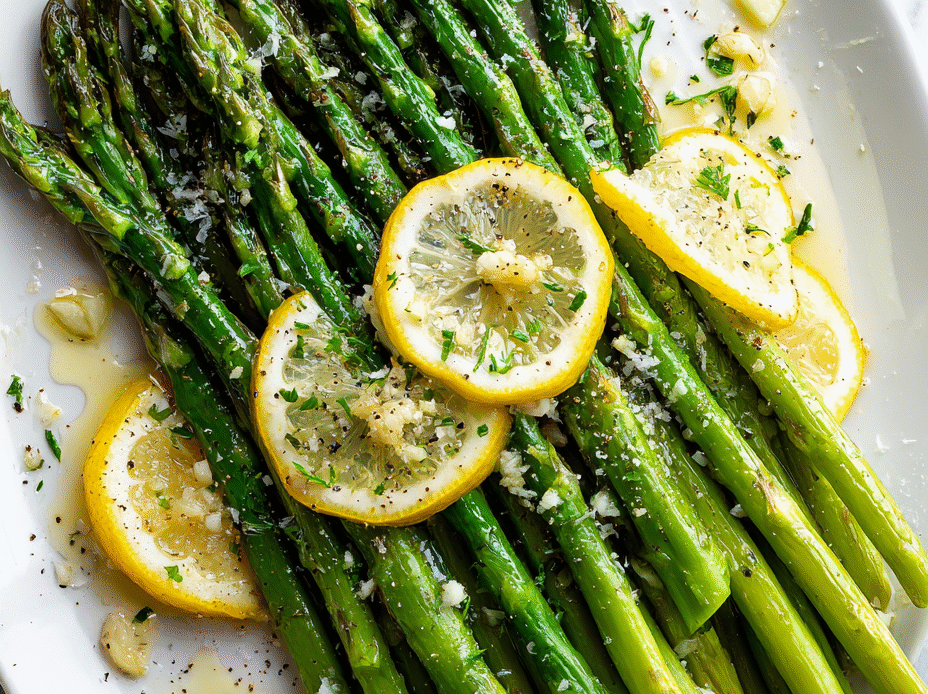
There’s something magical about watching asparagus transform under the oven’s heat. Raw, it’s bright green and slightly firm, but after roasting, it becomes tender, smoky, with a natural sweetness that’s almost caramelized. It’s a simple change, but it flips the vegetable on its head, making even the most skeptical veggie eater ask for more.
I love how this method pulls out the best in asparagus—no fuss, just olive oil, garlic, and a hot oven. The process is forgiving, almost meditative, and the aroma that drifts through the kitchen as it roasts is a quiet promise of flavor. It’s a humble dish that somehow feels elevating, perfect for a quick side or a snack that’s more than just a veggie.
Focusing on the sensory transformation of asparagus from raw to roasted, highlighting how roasting intensifies its natural sweetness and smoky aroma, making it a more appealing vegetable even for skeptics.
The story behind this recipe
This dish came about during a hectic week when I needed something quick but flavorful. I remembered how my grandmother used to roast vegetables with simple ingredients, letting their natural flavors shine. One evening, I threw together some asparagus with garlic and olive oil, and the aroma alone made me pause. That moment, with the oven crackling and the garlic sizzling, reminded me how straightforward ingredients can become something special with just heat and patience.
Key ingredients breakdown
- Fresh asparagus: I love the snap and vibrant green color when they’re fresh. If yours are a bit limp, try trimming the woody ends and selecting the brighter stalks—they’ll roast more tender and sweet.
- Olive oil: I use a good extra-virgin for that fruity, peppery note. You can swap in avocado oil if you want a milder flavor, but don’t skimp on the quality—it makes all the difference.
- Garlic: I crush mine to release the aroma—smoky, pungent, almost sweet when roasted. If raw garlic is too harsh for you, toss it in whole or sliced thin to mellow out the bite.
- Salt: I prefer flaky sea salt for that subtle crunch and burst of mineral flavor. If you want to cut some sodium, a light sprinkle of smoked salt adds a smoky depth that pairs beautifully with the asparagus.
- Pepper: Freshly cracked black pepper gives a subtle heat and complexity. Skip it if you prefer a milder, more delicate flavor or substitute with red pepper flakes for a bit of kick.
- Lemon zest or juice: A splash brightens everything up. Sometimes I add it after roasting, just enough to shimmer on the surface—like a little citrus whisper that cuts through the richness.
- Optional herbs or toppings: A sprinkle of parmesan or a scatter of chopped herbs can elevate the dish. I sometimes toss in a few toasted pine nuts for a crunchy contrast, especially if I want a more substantial snack.
Spotlight on key ingredients
Asparagus:
- Fresh asparagus: I love the snap and vibrant green color when they’re fresh. If yours are a bit limp, try trimming the woody ends and selecting the brighter stalks—they’ll roast more tender and sweet.
- Olive oil: I use a good extra-virgin for that fruity, peppery note. You can swap in avocado oil if you want a milder flavor, but don’t skimp on the quality—it makes all the difference.
Garlic:
- I crush mine to release the aroma—smoky, pungent, almost sweet when roasted. If raw garlic is too harsh for you, toss it in whole or sliced thin to mellow out the bite.
- Salt: I prefer flaky sea salt for that subtle crunch and burst of mineral flavor. If you want to cut some sodium, a light sprinkle of smoked salt adds a smoky depth that pairs beautifully with the asparagus.
Notes for ingredient swaps
- Dairy-Free: Skip butter or cheese; the roasted asparagus will still shine with its smoky, sweet flavor.
- Oil Choices: Swap olive oil for avocado or sunflower oil for a milder, less fruity taste.
- Garlic Alternatives: Use garlic powder or roasted garlic for a subtler, more mellow garlic note.
- Salt Variations: Use Himalayan pink salt or smoked sea salt for added mineral or smoky flavor.
- Herb Additions: Toss in fresh thyme or rosemary instead of herbs for a more aromatic punch.
- Citrus Options: Lemon zest can be replaced with lime or orange zest for different brightness levels.
- Spice Kick: Add a dash of red pepper flakes or smoked paprika for extra heat or smoky depth.
Equipment & Tools
- Rimmed baking sheet: Provides even roasting surface for the asparagus.
- Parchment paper or silicone mat: Prevents sticking and makes cleanup easier.
- Small bowl: Mixes the garlic and oil together.
- Tongs or spatula: Turns or tosses the asparagus for even cooking.
- Lemon squeezer or zester: Adds fresh brightness at the end.
Step-by-step roasting guide
- Preheat your oven to 220°C (430°F). Use a rimmed baking sheet, and line it with parchment paper or a silicone mat for easy cleanup.
- Trim the woody ends off the asparagus, about 1-2 inches from the bottom. Aim for an even length for uniform roasting.
- In a small bowl, mix 2-3 tablespoons of good quality olive oil with 3-4 minced garlic cloves. Whisk until combined. Set aside.
- Arrange the asparagus in a single layer on the prepared baking sheet. Drizzle the garlic oil evenly over, then toss gently with your hands to coat everything well.
- Sprinkle generously with flaky sea salt and freshly cracked black pepper. For a smoky touch, add a pinch of smoked paprika if desired.
- Place the baking sheet in the oven. Roast for 12-15 minutes, depending on thickness. The spears should turn a vibrant green, with some tips slightly charred.
- Halfway through, shake the pan or flip the spears gently to ensure even roasting. The garlic should smell fragrant and slightly caramelized.
- Once done, remove from the oven. The asparagus should be tender, with a slight crisp at the tips, and the garlic mellowed and fragrant.
- Let rest for 1-2 minutes. Finish with a squeeze of fresh lemon juice or a sprinkle of lemon zest for brightness. Serve immediately.
Let the asparagus rest for 1-2 minutes to allow flavors to settle. Finish with a squeeze of lemon or a sprinkle of herbs if desired. Plate directly from the sheet for a rustic look or transfer to a platter. Serve hot, with extra lemon on the side.
How to Know It’s Done
- Color: vibrant green with some charred tips.
- Smell: fragrant garlic and roasted aroma.
- Texture: tender but with a slight crisp at the tips.
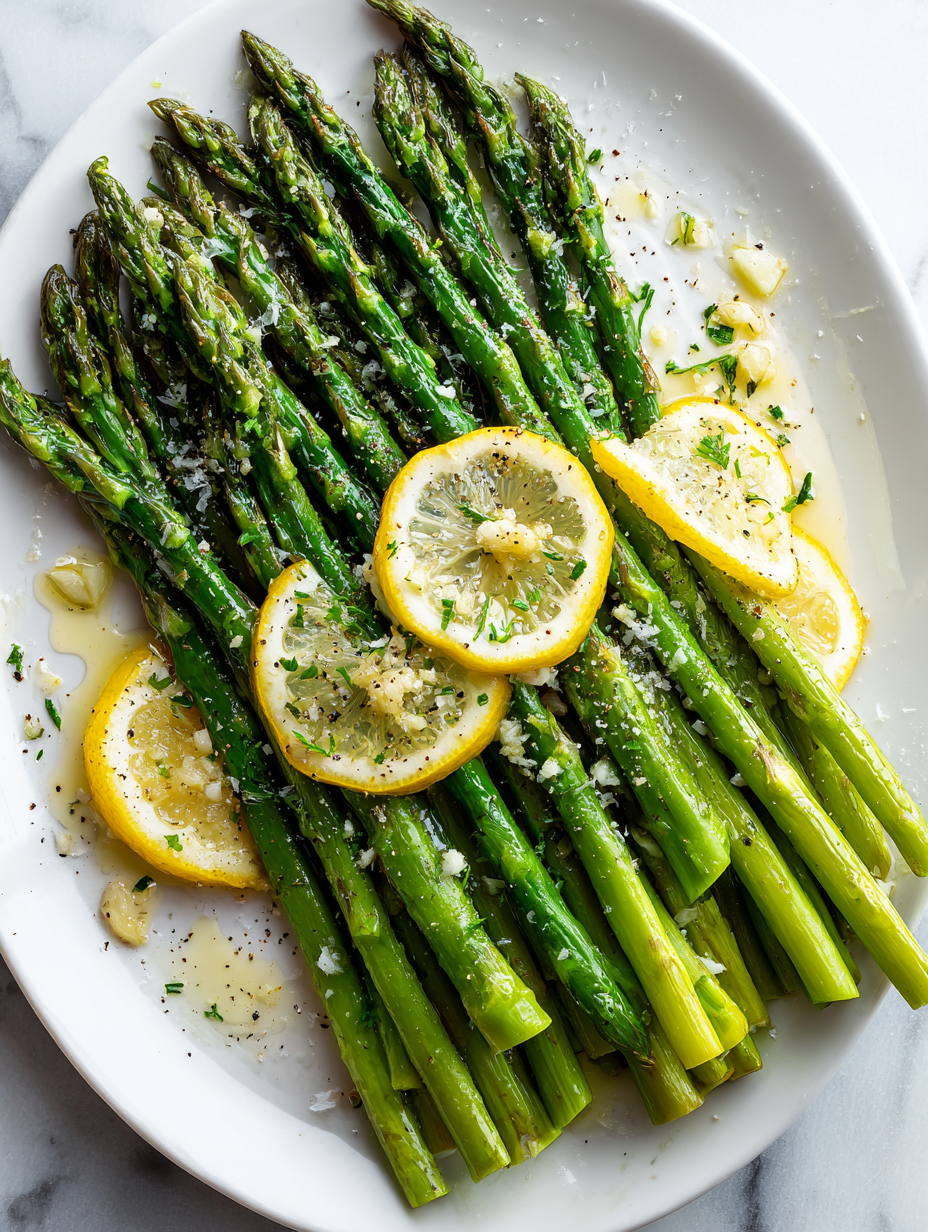
Oven-Roasted Asparagus with Garlic and Lemon
Ingredients
Equipment
Method
- Preheat your oven to 220°C (430°F). Line a rimmed baking sheet with parchment paper or a silicone mat for easy cleanup.
- Trim the woody ends off the asparagus, about 1-2 inches from the bottom, aiming for uniform lengths for even roasting.
- In a small bowl, whisk together the olive oil and minced garlic until fragrant and well combined.
- Arrange the asparagus in a single layer on the prepared baking sheet. Drizzle the garlic oil mixture evenly over the spears, then toss gently with tongs or your hands to coat thoroughly.
- Sprinkle generously with flaky sea salt and freshly cracked black pepper for flavor and texture.
- Place the baking sheet in the oven and roast for 12-15 minutes. The asparagus will turn vibrant green, with some tips slightly charred and caramelized.
- Halfway through, shake the pan or flip the spears gently to ensure even browning and cooking.
- Once roasted, remove from the oven and transfer to a serving platter. Squeeze fresh lemon juice over the hot asparagus, and sprinkle lemon zest for brightness.
- Serve immediately, garnished with additional lemon wedges if desired, enjoying the tender, smoky, and fragrant asparagus with a crisp finish.
Essential roasting tips
- Bolded Mini-Head: Use high-quality olive oil. It shimmers and coats the asparagus with a fruity, peppery aroma, making every bite richer.
- Bolded Mini-Head: Toss asparagus well. Ensures even coating and caramelization, so no spear is left bland or soggy.
- Bolded Mini-Head: Watch for color change. The asparagus should turn a vibrant green with slightly charred tips—perfect visual cue.
- Bolded Mini-Head: Roast in a hot oven. 220°C (430°F) is ideal; lower temps won’t caramelize, higher risks over-browning.
- Bolded Mini-Head: Add garlic in the last 5 minutes. Prevents burning, keeps that sweet, pungent aroma intact.
- Bolded Mini-Head: Rest briefly after roasting. Resting for 1-2 minutes lets flavors settle and prevents burning your palate.
- Bolded Mini-Head: Finish with lemon. A splash brightens the natural sweetness and adds a fresh, zesty contrast.
Common mistakes and how to fix them
- FORGOT to preheat the oven → Ensure oven is fully heated before roasting.
- DUMPED too much oil → Use just enough to lightly coat; excess causes sogginess.
- OVER-TORCHED the asparagus → Remove when tips are slightly charred, not burnt.
- MISSED flipping halfway → Shake or turn spears to prevent uneven browning.
Quick fixes and pantry swaps
- When asparagus is limp, splash with lemon juice to revive brightness.
- If garlic burns, patch with a squeeze of lemon to mask bitterness.
- Dumped too much oil? Shield with a paper towel, then start again with less.
- Over-torched tips? Rescue by scraping off char and adding a fresh squeeze of lemon.
- When spears stick to the pan, swap parchment paper for easy release and even roasting.
Prep, store, and reheat tips
- Trim and prepare the asparagus ahead. Keep in an airtight container in the fridge for up to 24 hours. The stalks stay vibrant and firm, ready to roast.
- Make the garlic oil mixture in advance. Store in a small jar in the fridge for up to 3 days. The aroma will deepen and become more pungent over time.
- Roasted asparagus is best enjoyed fresh, but leftovers can last 1-2 days in the fridge. Reheat in a 180°C (350°F) oven for 5-7 minutes until warmed and slightly crispy at the tips.
- For reheating, watch for the garlic to turn slightly golden and fragrant again. The asparagus should remain tender with a hint of caramelization, not soggy.
Top questions about oven roasted asparagus
1. How do I choose good asparagus?
Look for bright green spears with firm, snap-worthy tips. Avoid dull, limp stalks for the best texture and flavor.
2. How do I prep the asparagus?
Trim the woody ends, about 1-2 inches from the bottom. This ensures tender, evenly cooked spears that aren’t tough at the base.
3. What temperature and time are ideal?
Roast at 220°C (430°F) for 12-15 minutes. Check for vibrant color and slightly charred tips—those are signs it’s ready.
4. What equipment do I need?
Use a rimmed baking sheet lined with parchment or silicone. It prevents sticking and makes cleanup quick, no fuss.
5. How should I select garlic?
Look for fresh garlic bulbs with plump, firm cloves. They roast sweet and fragrant, almost nutty, when cooked properly.
6. How do I know when it’s done?
Roast until the asparagus is tender with crisp tips and garlic is fragrant. Slight charring is okay, but avoid burnt tips.
7. Can I substitute ingredients?
Skip the oil or use a milder oil like avocado if you prefer less fruity flavor. Flaky sea salt adds a nice crunch.
8. How should I finish the dish?
Add lemon zest or juice after roasting to brighten the flavors. It gives a fresh, zesty contrast to the smoky sweetness.
9. Can I make this ahead?
Roasted asparagus tastes great hot, but leftovers can be refrigerated for up to 2 days. Reheat at 180°C (350°F) for 5-7 minutes.
10. What if I encounter common issues?
If tips burn, quickly squeeze lemon over to mask bitterness. Use parchment paper to prevent sticking and uneven charring.
This simple roasted asparagus dish captures the essence of how a few good ingredients and a hot oven can transform vegetables. The smoky aroma and tender-crisp texture make it a go-to side that never fails to impress. It’s one of those recipes I keep coming back to, especially when I need something quick, honest, and full of flavor.
In the end, it’s about those tiny moments—the aroma wafting through the kitchen, the first bite that balances earthiness and brightness. It’s a reminder that good food doesn’t have to be complicated; sometimes, it’s just about respecting the ingredients and letting them shine. That’s what makes this dish worth making again and again.
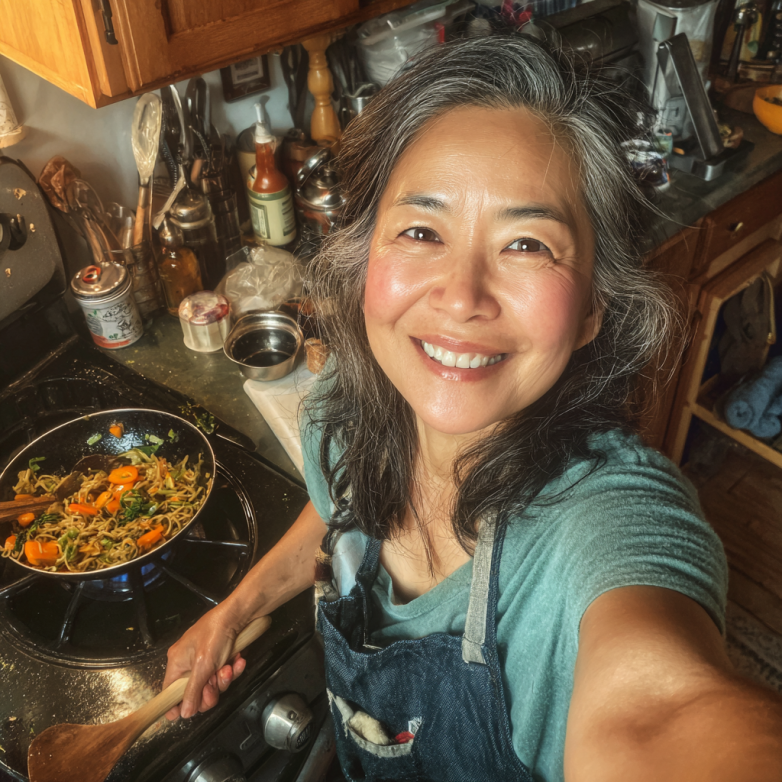
Hi, I’m Olivia Chen-Williams, a professional chef, cooking instructor, and the founder of Turn Around At 50. For nearly three decades, my life has revolved around kitchens. Not the quiet, romantic kind, but the real ones. Hot, loud, demanding, and deeply alive.