
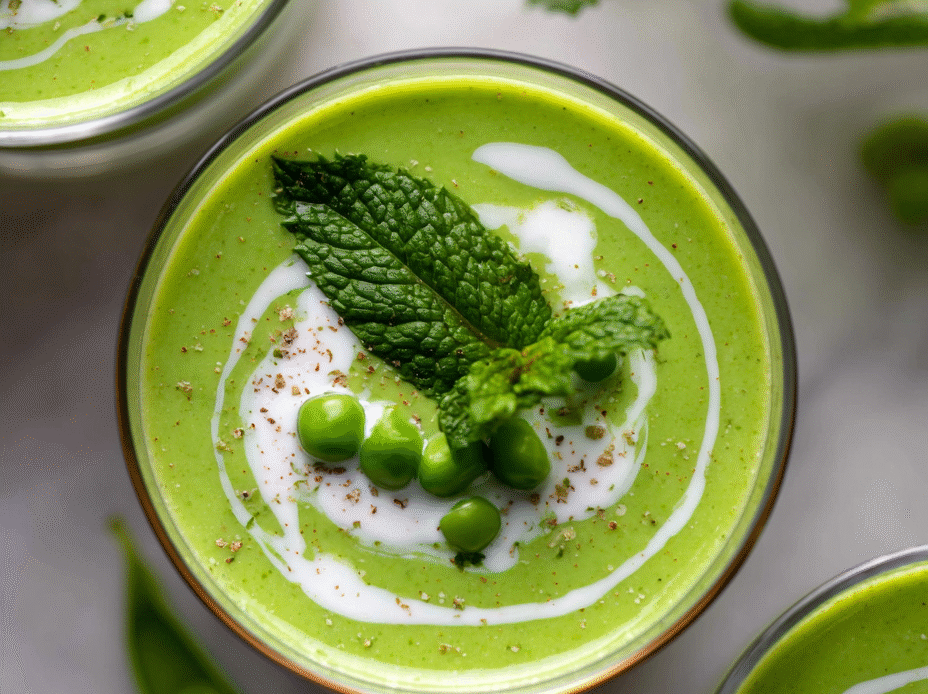
This creamy pea and mint soup is a recipe born from the chaos of my garden in early spring. I remember those mornings when I’d stumble outside, breath still foggy, to find the first burst of sweet peas and fresh mint ready to be picked. It’s a simple dish, but it captures that fleeting moment when everything feels alive and full of promise.
What I love about this soup is how it transforms humble ingredients into something unexpectedly lush and vibrant. The icy burst of mint cuts through the sweetness of the peas, creating a flavor combo that feels both nostalgic and refreshing. It’s the kind of meal that feels like a quiet toast to the season, perfect for those days when you want something honest, quick, and deeply satisfying.
This recipe is inspired by my grandmother’s garden, where mint grew wild and peas were gathered straight from the pod, reminding me how simple ingredients can become a comforting, lush soup. I love how the fresh mint adds a burst of brightness that cuts through the sweetness of the peas, making every spoonful feel like a breath of fresh air on a spring day. It’s a dish that feels like a quiet celebration of seasonality and homegrown flavors, perfect for when you want something honest and revitalizing.
The story behind this recipe
This soup came about during a rare moment of quiet in my kitchen, when I realized how often I overlook the simplest things—like fresh peas and mint—that can turn into something surprisingly special. I was craving a dish that felt both light and nourishing, something that could remind me of spring’s fleeting freshness without fuss. It’s a reminder that sometimes, just a few good ingredients and a gentle hand can create something truly memorable.
Ingredient breakdown: key components
- Fresh peas: I love how sweet and juicy they are, almost oozing with flavor when cooked just right. Skip the frozen ones if you can, for that garden-fresh burst.
- Mint: Bright, aromatic, almost like a splash of cool water. A little goes a long way—start small and add more to suit your taste.
- Vegetable broth: I prefer homemade or low-sodium store-bought. It’s the cozy base that carries all the bright flavors without overwhelming the peas.
- Cream: I use heavy cream here for richness, but full-fat coconut milk can be a dairy-free swap that adds a slightly sweeter, coconut-y note.
- Onion & garlic: Their aroma when sautéing is unbeatable—make sure they’re soft and fragrant before adding the peas.
- Olive oil: Use good-quality extra virgin; it gives a subtle fruitiness that balances the sweetness of the peas and freshness of the mint.
- Lemon juice: A squeeze right at the end lifts the whole bowl with a citrusy zing—don’t skip it, even a small splash makes a difference.
Spotlight on key ingredients
Fresh peas:
- I love how sweet and juicy they are, almost oozing with flavor when cooked just right. Skip the frozen ones if you can, for that garden-fresh burst.
- Mint: Bright, aromatic, almost like a splash of cool water. A little goes a long way—start small and add more to suit your taste.
Mint:
- Bright, aromatic, almost like a splash of cool water. A little goes a long way—start small and add more to suit your taste.
- Lemon juice: A squeeze right at the end lifts the whole bowl with a citrusy zing—don’t skip it, even a small splash makes a difference.
Notes for ingredient swaps
- Fresh peas: I love the juicy burst of garden-fresh peas, but frozen peas work in a pinch—just don’t expect quite the same sweetness.
- Mint: Bright and aromatic, but basil can add a different, sweet herbaceous note if mint isn’t available.
- Vegetable broth: Homemade broth adds depth, but low-sodium store-bought is fine—just watch the salt. Water can work if you’re in a pinch.
- Cream: Heavy cream makes it rich, but coconut milk offers a dairy-free alternative with a subtly sweet, coconut-bright flavor.
- Onion & garlic: Essential for depth—skip or reduce if sensitive to onion, but they really boost the flavor and aroma.
- Olive oil: Use good-quality extra virgin for richness; a neutral oil like canola can sub in if needed, but it won’t add the same fruity undertone.
- Lemon juice: Brightens everything—if you don’t have lemon, a splash of vinegar (apple cider or white wine) can lift the flavors similarly.
Equipment & Tools
- Large saucepan: Cook the vegetables and broth together.
- Immersion blender or regular blender: Puree the soup until smooth.
- Ladle: Serve the soup easily into bowls.
Step-by-step guide to creamy pea and mint soup
- Gather your equipment: a large saucepan, an immersion blender or regular blender, and a ladle. The saucepan will cook everything, the blender purees, and the ladle serves.
- Prepare the ingredients: peel and shell fresh peas, chop an onion, and mince garlic. Measure out fresh mint, broth, cream, and lemon juice. Have everything ready so you don’t rush.
- Heat 2 tbsp olive oil in the saucepan over medium heat. When it shimmers and you smell a faint fruitiness, add the chopped onion.
- Sauté the onion for about 5 minutes, stirring occasionally, until translucent and soft. It should smell sweet and slightly caramelized around the edges.
- Add the garlic and cook for another 30 seconds until fragrant. Be careful not to burn it—just a gentle sizzle.
- Stir in the peas, pour in 4 cups vegetable broth. Bring to a gentle simmer, about 10 minutes. The peas should turn bright green and be tender when pierced with a fork.
- Taste and season with salt and pepper. If the peas aren’t soft enough, simmer a little longer, up to 5 more minutes.
- Remove from heat. For a smoother texture, blend the soup directly in the pot with an immersion blender until silky. If using a regular blender, do this in batches — be cautious of hot splashes.
- Once pureed, stir in ½ cup heavy cream or coconut milk. Adjust seasoning if needed. Add a squeeze of lemon juice for brightness, about 1 tsp.
- Taste again; the soup should be vibrant, slightly sweet, and fresh with a hint of mint. If it’s too thick, thin with a splash of broth or water. Reheat gently if needed.
- Serve hot, garnished with a few mint leaves or a drizzle of cream. Rest for 5 minutes before serving to meld flavors.
Let the soup rest for 5 minutes after blending. Finish with a squeeze of lemon and a drizzle of cream or olive oil. Garnish with fresh mint leaves before serving.
How to Know It’s Done
- Soup is bright green and peas are tender after simmering.
- Pureed texture is smooth and silky, with no lumps or graininess.
- Flavor is balanced—bright, sweet peas with fresh mint and a hint of lemon.
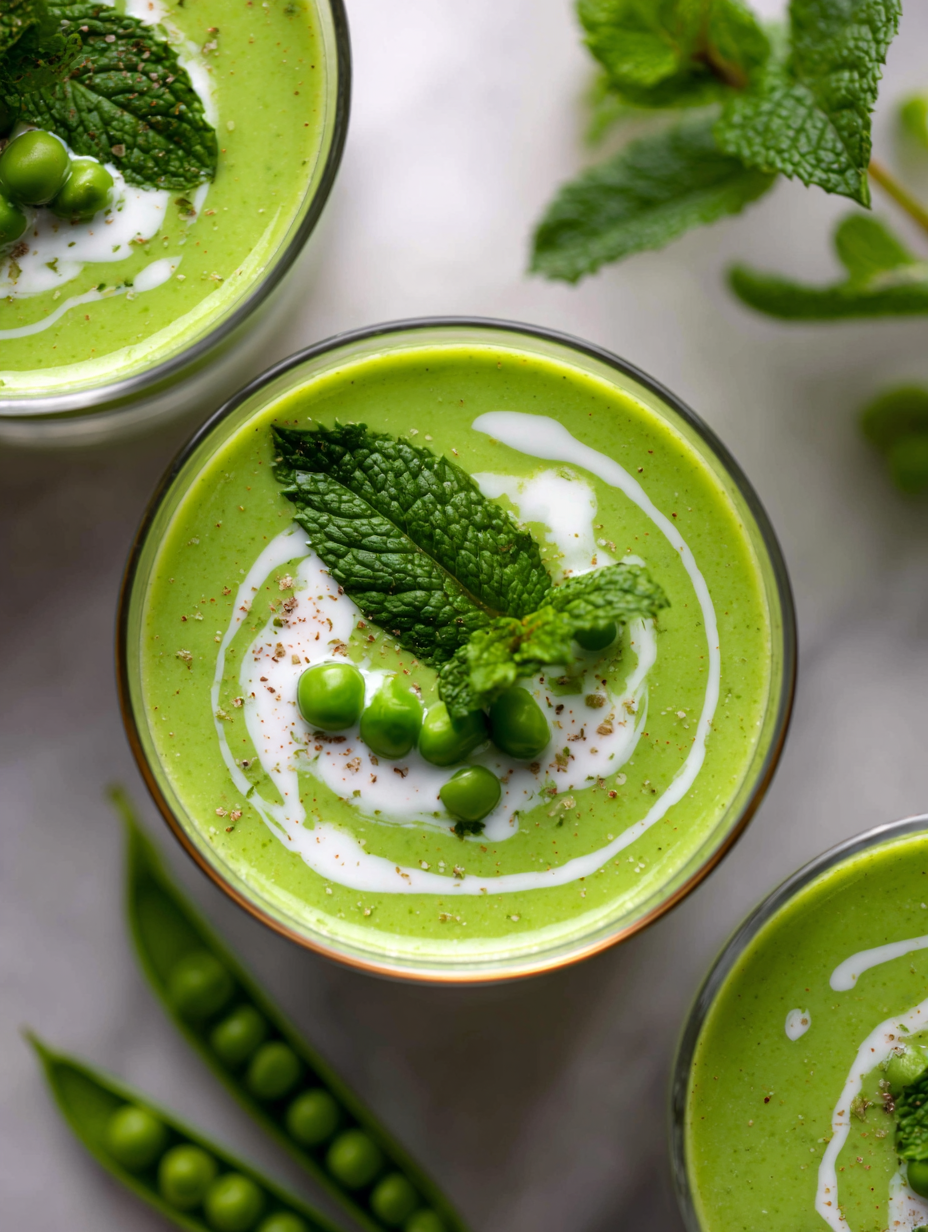
Creamy Pea and Mint Soup
Ingredients
Equipment
Method
- Heat the olive oil in a large saucepan over medium heat until it shimmers and you notice a faint fruity aroma.
- Add the chopped onion and sauté for about 5 minutes until it becomes translucent and soft, with a gentle sizzle and a sweet smell filling the air.
- Stir in the minced garlic and cook for about 30 seconds until fragrant, making the kitchen smell even more inviting.
- Add the fresh peas to the pan, stirring to coat them with the fragrant oil and softened onion mixture.
- Pour in the vegetable broth, then bring the mixture to a gentle simmer. Cook for about 10 minutes until the peas are tender and bright green.
- Remove the saucepan from heat and use an immersion blender or carefully transfer the soup in batches to a blender, blending until silky smooth and velvety.
- Stir in the heavy cream or coconut milk, then add a teaspoon of lemon juice and season with salt and pepper to taste. Blend briefly to combine.
- Add the chopped mint leaves into the hot soup, stirring gently so the fresh aroma infuses into the mixture.
- Taste the soup and adjust the seasoning with more salt, pepper, or lemon juice if needed, to brighten the flavors.
- Serve the soup hot, garnished with extra mint leaves or a swirl of cream for an inviting presentation.
Tips and tricks for perfect soup
- Use fresh mint for a bright, aromatic flavor that really pops when added at the end.
- Keep an eye on the peas—overcooking turns them dull; they should be tender but still vibrant green.
- When blending, start on low speed to avoid splattering, then increase to get a silky smooth texture.
- For a richer flavor, sauté the onion until caramelized lightly—this adds depth without sweetness overpowering.
- Taste and adjust seasoning after blending; a pinch of salt or a squeeze of lemon can elevate the entire bowl.
- If the soup feels too thick, thin with a splash of cold broth or water, then reheat gently to preserve texture.
- Chill the soup briefly before serving if you prefer it cold—mint’s flavor sharpens as it rests.
Common mistakes and how to fix them
- FORGOT to add salt early? Salt during cooking enhances flavor, not just at the end.
- DUMPED the peas in boiling water? Blanch peas quickly for vibrant color and sweetness.
- OVER-TORCHED the mint? Add mint at the end to preserve its bright aroma.
- SKIPPED blending thoroughly? Puree until silky, or texture gets grainy and dull.
Quick fixes and pantry swaps
- When soup is too thick, splash in hot broth and stir gently to loosen texture.
- If mint turns dull, splash lemon juice to revive its brightness.
- Splash cold water on overcooked peas to stop cooking and preserve color.
- Patch dull flavor by adding a pinch of salt and a squeeze of lemon at the end.
- Shield the soup from burning by reducing heat when simmering for extended times.
Prep, store, and reheat tips
- Prep the peas and mint: shell fresh peas and chop mint leaves a day ahead to save time and keep flavors fresh. Store separately in airtight containers in the fridge for up to 24 hours.
- Cook the soup ahead: once pureed and seasoned, it keeps well in the fridge for up to 2 days. Reheat gently, stirring often, until steaming hot and aromatic.
- Storage notes: the soup may thicken overnight; add a splash of broth or water during reheating to restore its silky texture. The mint aroma will intensify slightly, so taste and adjust seasoning.
- Reheating tips: warm slowly over low heat, tasting for brightness and seasoning. The flavors become more integrated, with a slightly mellowed, more rounded mint note. Serve immediately once hot.
Top questions about creamy pea and mint soup
1. Can I use frozen peas instead of fresh?
Fresh peas give the soup a sweeter, more vibrant flavor, especially if cooked just until tender. Frozen peas are fine, but they lack that garden-fresh punch.
2. When should I add mint for the best flavor?
Adding mint at the end preserves its bright aroma and flavor. If added too early, it can turn dull and lose its punch.
3. How do I make the soup more vibrant?
A splash of lemon juice brightens the entire dish, balancing the sweetness of the peas with a citrusy zing. Add it right before serving.
4. What’s the best way to puree this soup?
Pureeing the soup until silky is key. Use an immersion blender or carefully blend in batches to avoid splashes and ensure smoothness.
5. How do I prevent overcooking the peas?
Overcooking peas can turn them dull and mushy. Cook just until tender—bright green and slightly firm to the bite—about 10 minutes.
6. What if my soup is too thick?
If the soup is too thick after blending, thin it with a bit of warm broth or water. Reheat gently, stirring often to keep it smooth.
7. Can I substitute olive oil?
Use good-quality extra virgin olive oil for a subtle fruity note. It enhances the overall flavor without overpowering the freshness of the peas and mint.
8. Can I make the soup dairy-free?
Heavy cream adds richness, but coconut milk makes it dairy-free with a slightly sweet, coconut-y flavor that pairs well with mint.
9. How do I keep the herbs fresh in the soup?
Fresh herbs like mint are best added at the end for maximum aroma. If cooked too long, they lose their fresh, vibrant scent.
10. How do I store and reheat leftovers?
The soup can be made ahead, stored in the fridge for up to 2 days, and reheated slowly. Add a splash of water or broth to loosen it up.
This soup isn’t just a springtime fling; it’s a reminder of how fresh ingredients can brighten even the dullest days. I keep coming back to it when I want something honest, a little lush, and packed with that sweet, minty punch.
Sharing it with friends or just pouring a bowl for myself feels like catching a breath of fresh air — simple, bright, and satisfying, no fuss needed. It’s a dish that makes me slow down and appreciate the small, fleeting moments of freshness in the season.

Hi, I’m Olivia Chen-Williams, a professional chef, cooking instructor, and the founder of Turn Around At 50. For nearly three decades, my life has revolved around kitchens. Not the quiet, romantic kind, but the real ones. Hot, loud, demanding, and deeply alive.