
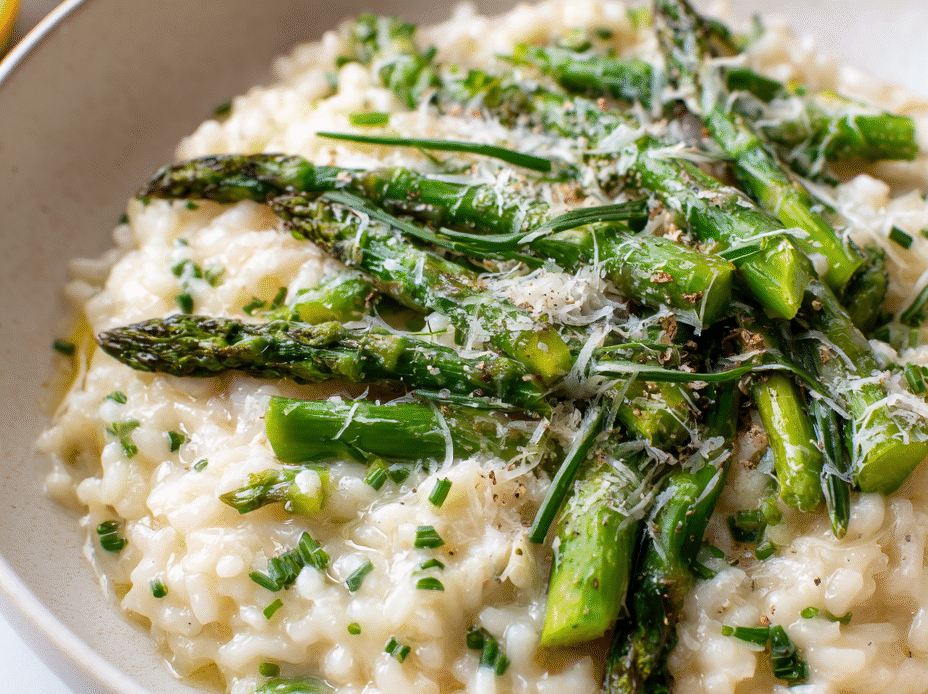
Focusing on how the subtle sweetness of fresh asparagus can be enhanced through a slow, gentle simmer, transforming it into a silky, fragrant risotto that captures the essence of spring in every bite.
This dish is a quiet celebration of the season’s greens, where each spoonful whispers stories of early mornings in the garden and the simple joy of coaxing flavor from humble ingredients.
I love how the process of making this risotto feels like a small, meditative act—waiting patiently for the rice to absorb every bit of broth, turning into something creamy and bright, yet comforting.
Focusing on how the subtle sweetness of fresh asparagus can be enhanced through a slow, gentle simmer, transforming it into a silky, fragrant risotto that captures the essence of spring in every bite.
The story behind this recipe
- This dish came about one spring when I had a basket of fresh asparagus that seemed too perfect to just boil and forget. I wanted to capture that tender, grassy aroma in something richer, more layered, and comforting.
- I remember a quiet afternoon in my kitchen, just me, a pot of rice, and the smell of sizzling garlic and melting Parmesan mingling with the sweet, green scent of asparagus. It felt like a small, honest celebration of seasonal ingredients.
- Over the years, I kept coming back to this recipe—not just for its flavor, but for how it makes me slow down and really appreciate simple, fresh things in the middle of chaos.
Ingredient breakdown: key components
- Asparagus: I love how the fresh, grassy aroma of asparagus blooms as it cooks, turning tender and slightly caramelized. If it’s not quite fresh, it can taste a bit dull—try adding a squeeze of lemon to brighten it up.
- Arborio rice: This rice’s creamy texture when cooked is what makes risotto special. If you can’t find Arborio, Carnaroli is a good substitute, but avoid long-grain varieties—they won’t absorb the flavors as well.
- Parmesan: I rely on freshly grated Parmesan for that sharp, nutty punch that ties everything together. Skip pre-grated cheese—it’s often drier and less flavorful, and you’ll miss that oozy melt.
- Vegetable broth: I prefer homemade or low-sodium for its pure, savory depth. If you only have store-bought, consider simmering some veggie scraps first to boost flavor—your risotto will thank you.
- Butter & olive oil: The combo adds richness and a subtle fruity note. Use good-quality butter, and don’t skimp—this is what gives the risotto its silky finish and depth of flavor.
- Lemon zest (optional): A tiny bit of lemon zest brightens the whole dish with that fresh, zingy scent. If you prefer a milder profile, skip it, but don’t forget to taste before serving.
- Salt & pepper: I season gradually, tasting as I go. The right pinch of salt really lets the asparagus’s sweetness shine through, so don’t shy away from adjusting at the end.
Spotlight on key ingredients
Asparagus:
- I love how the fresh, grassy aroma of asparagus blooms as it cooks, turning tender and slightly caramelized. If it’s not quite fresh, it can taste a bit dull—try adding a squeeze of lemon to brighten it up.
- Arborio rice: This rice’s creamy texture when cooked is what makes risotto special. If you can’t find Arborio, Carnaroli is a good substitute, but avoid long-grain varieties—they won’t absorb the flavors as well.
- Parmesan: I rely on freshly grated Parmesan for that sharp, nutty punch that ties everything together. Skip pre-grated cheese—it’s often drier and less flavorful, and you’ll miss that oozy melt.
Parmesan:
- It melts beautifully, creating that luscious, cheesy coating. If it’s not fresh, it can feel dry and bland—grate it right before adding it to maximize flavor and meltiness.
- The nutty aroma intensifies as it heats, adding depth. Be careful not to add too early or it might seize up; stir it in off the heat for best smoothness.
Notes for ingredient swaps
- Dairy-Free: Swap Parmesan for a nutty, aged vegan cheese—less sharp, but still adds umami richness.
- Vegan: Use nutritional yeast instead of Parmesan for cheesy flavor; it’ll be slightly earthier and less creamy.
- Gluten-Free: Arborio rice is naturally gluten-free, but ensure broth is also gluten-free—check labels or make your own.
- Vegetable Broth: Substitute with mushroom or tomato broth for a deeper, umami boost or a slightly different flavor note.
- Butter & Oil: Replace butter with a splash of good-quality olive oil or vegan butter—still adds richness, different mouthfeel.
- Lemon Zest: Omit or replace with a splash of white wine for a subtle acidity and brightness to balance the richness.
- Salt & Pepper: Use sea salt and freshly cracked pepper for the best flavor; consider a pinch of smoked salt for depth.
Equipment & Tools
- Large shallow pan: For even heat and easy stirring
- Ladle: To add warm broth in portions
- Wooden spoon: Gentle stirring without damaging rice
- Small pot: To keep broth warm
- Ice water bowl: To shock and refresh blanched asparagus
Step-by-step guide to creamy asparagus risotto
- Gather all equipment and ingredients. Use a large, shallow pan for even heat distribution; a ladle for broth addition; and a wooden spoon for stirring.
- Bring vegetable broth to a gentle simmer in a separate pot, keep warm over low heat.
- Trim asparagus: snap off woody ends, then cut into 1-inch pieces. Blanch in boiling water for 2 minutes, then shock in ice water to retain bright color and crunch.
- In your risotto pan, heat 1 tbsp olive oil and 1 tbsp butter over medium heat (about 160°C/320°F). Add finely chopped onion or shallot, cook until translucent, about 3-4 minutes, until it smells sweet and slightly caramelized.
- Add the arborio rice, stirring constantly until edges turn translucent and it crackles softly, about 2 minutes. This toasts the rice slightly for better flavor.
- Pour in a ladle of warm broth, enough to just cover the rice. Stir gently, allowing rice to absorb the liquid. Continue to add broth, one ladle at a time, stirring gently and frequently, letting each addition absorb before adding the next.
- When rice is halfway cooked (after about 10 minutes), stir in the blanched asparagus pieces. Keep stirring and adding broth, maintaining a gentle simmer.
- Check the rice: it should be tender yet firm to the bite, and the mixture creamy but not soupy. This will take about 18-20 minutes total. If it becomes too thick before rice is cooked, add a splash more broth.
- Finish with grated Parmesan (about 1/2 cup), a squeeze of lemon (if using), salt, and freshly ground pepper. Stir until cheese melts and the risotto is silky.
- Taste and adjust seasoning. The risotto should be bright, creamy, and slightly al dente with a fragrant aroma of Parmesan and asparagus.
- Remove from heat. Let sit for 1-2 minutes to settle. Serve immediately, garnished with extra Parmesan or a drizzle of olive oil.
Once off heat, let the risotto sit for 1-2 minutes. Serve immediately in warm bowls, garnished with extra Parmesan or a drizzle of olive oil for richness.
How to Know It’s Done
- Rice is tender yet firm, with a slight bite.
- Risotto is creamy and coats the back of a spoon.
- Asparagus is bright green, tender but not mushy.
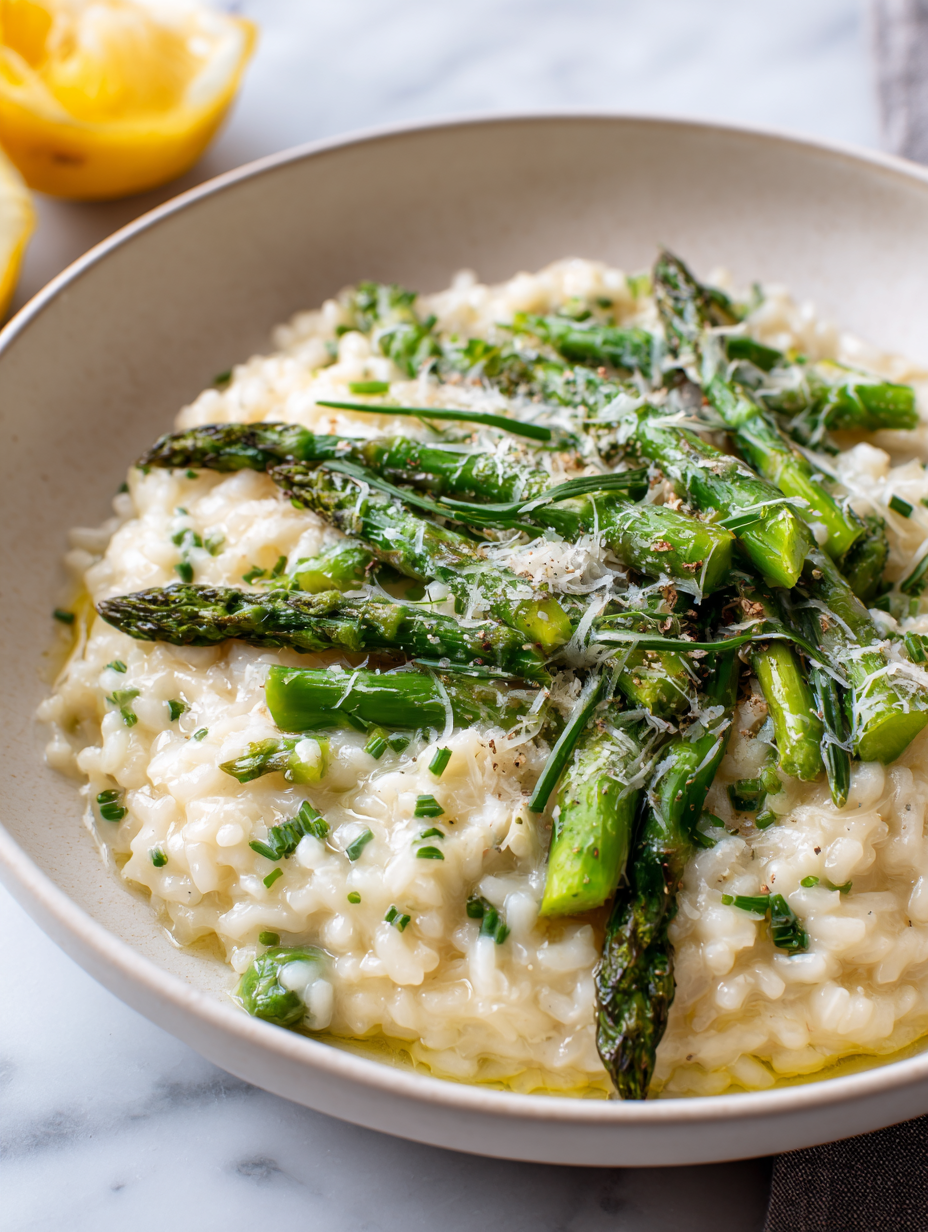
Creamy Asparagus Risotto
Ingredients
Equipment
Method
- Bring the vegetable broth to a gentle simmer in a small pot, then reduce to low to keep warm throughout cooking.
- Trim the woody ends from the asparagus, then cut into 1-inch pieces. Blanch in boiling water for about 2 minutes until vibrant green and tender-crisp, then quickly transfer to a bowl of ice water to stop cooking and preserve color.
- In your large pan, heat the olive oil and butter over medium heat until they shimmer and smell fragrant, about 2 minutes.
- Add the finely chopped onion or shallot to the pan and cook, stirring often, until translucent and fragrant, about 3-4 minutes.
- Stir in the Arborio rice, cooking for about 2 minutes until the edges turn slightly translucent and it begins to crackle softly, giving a toasted aroma.
- Start adding the warm broth one ladleful at a time, stirring gently and constantly, allowing each addition to be absorbed before adding the next. Continue this process, maintaining a gentle simmer, for about 10 minutes.
- When the rice is halfway cooked, gently fold in the blanched asparagus pieces, stirring to combine and continue adding broth as needed.
- Cook until the rice is tender but still has a slight bite, and the mixture is creamy, about 8-10 more minutes. If it thickens too much, add a splash more warm broth.
- Remove the pan from heat and stir in the grated Parmesan, lemon zest (if using), and season with salt and pepper to taste. The risotto should be silky and fragrant.
- Let the risotto rest for a minute or two, then give it a gentle stir. Serve immediately in warm bowls, garnished with extra Parmesan if desired.
Tips and Tricks for Perfect Risotto
- Bolded mini-head: Use a gentle simmer → Keeps the broth flavorful and prevents rice from overcooking.
- Bolded mini-head: Stir often but gently → Releases starches, creating that creamy texture without breaking the rice.
- Bolded mini-head: Add broth gradually → Ensures rice can absorb flavors slowly, resulting in a silkier risotto.
- Bolded mini-head: Cook asparagus separately → Keeps it vibrant and tender, not mushy, and preserves its grassy aroma.
- Bolded mini-head: Finish with cheese off heat → Melts better and avoids grainy texture, enriching the dish’s creaminess.
- Bolded mini-head: Taste as you go → Adjust salt and acidity to balance the natural sweetness of asparagus and the richness of cheese.
Common mistakes and how to fix them
- FORGOT to stir continuously → Stir gently and often to prevent sticking.
- DUMPED all broth at once → Add broth gradually, allowing absorption for creamy texture.
- OVER-TORCHED the rice → Cook over medium heat; adjust if it browns too quickly.
- MISSED the salt step → Season gradually; taste to balance sweetness and acidity.
Quick fixes and pantry swaps
- When risotto looks too thick → Splash in a little warm broth and stir gently until creamy.
- If asparagus is dull → Patch with a squeeze of lemon zest for bright flavor and aroma.
- Splash in a touch of olive oil when it’s cracking in the pan → Adds richness and prevents sticking.
- When rice is undercooked → Cover and simmer on low, then stir in more broth for a gentle finish.
- If Parmesan clumps → Shred finely and add off the heat, stirring until smooth and oozy.
Prep, store, and reheat tips
- Prep the asparagus: trim, blanch, and shock in ice water; keeps bright and crisp for up to 2 days in the fridge.
- Cook the rice and assemble ingredients ahead; store separately in airtight containers for up to 24 hours, then reheat gently.
- Store leftover risotto in an airtight container in the fridge for up to 1 day; reheating may cause loss of creaminess but can be revitalized with a splash of broth.
- Reheat slowly over low heat, stirring constantly; add a bit more broth or water until it regains its creamy texture and aroma. Expect a slightly thicker consistency.
- For best sensory experience, serve freshly reheated risotto soon after warming, when the flavors are most vibrant and the texture still silky.
Common Questions about Asparagus Risotto
1. How do I pick the best asparagus for this dish?
Use fresh, firm asparagus with bright green tips. Overripe or limp asparagus won’t give that tender, grassy aroma.
2. Why is my risotto too runny or too thick?
Stir the risotto gently and continuously during cooking to release enough starch for creaminess without breaking the rice.
3. How do I get that perfect creamy consistency?
Add broth gradually, about one ladle at a time, and wait for it to absorb before adding more. This ensures a silky texture.
4. Should I cook the asparagus with the rice?
Cook the asparagus separately in boiling water for 2 minutes, then shock in ice water to keep it vibrant and crisp.
5. Can I use pre-grated cheese?
Use freshly grated Parmesan cheese for that sharp, nutty flavor and good meltability. Pre-grated cheese often feels dry and dull.
6. When should I add the Parmesan and lemon?
Finish the risotto off the heat with cheese and lemon zest to preserve the silky texture and bright aroma.
7. Can I make this risotto ahead of time?
Store leftovers in an airtight container in the fridge for up to 24 hours. Reheat slowly with a splash of broth to restore creaminess.
8. How do I reheat risotto without losing texture?
Reheat gently over low heat, stirring constantly. If it thickens, add a little warm broth until it reaches the desired consistency.
9. What tools are best for making risotto?
Use a wide, shallow pan for even heat distribution and easier stirring. A wooden spoon helps release starch without damage.
10. What if my risotto gets too thick or clumpy?
If the risotto becomes too thick, splash in warm broth and stir until it loosens up to that silky, luscious texture.
This risotto isn’t just about comfort; it’s about capturing a fleeting green moment of spring, creamy and fragrant. It’s a dish that asks for patience and a little attention, but rewards with every bite that melts and sings with freshness.
In a world that often rushes, taking the time to make something this simple and satisfying feels like a small act of rebellion. It’s a reminder to slow down, really taste, and appreciate the humble beauty of good ingredients, cooked with care.

Hi, I’m Olivia Chen-Williams, a professional chef, cooking instructor, and the founder of Turn Around At 50. For nearly three decades, my life has revolved around kitchens. Not the quiet, romantic kind, but the real ones. Hot, loud, demanding, and deeply alive.