
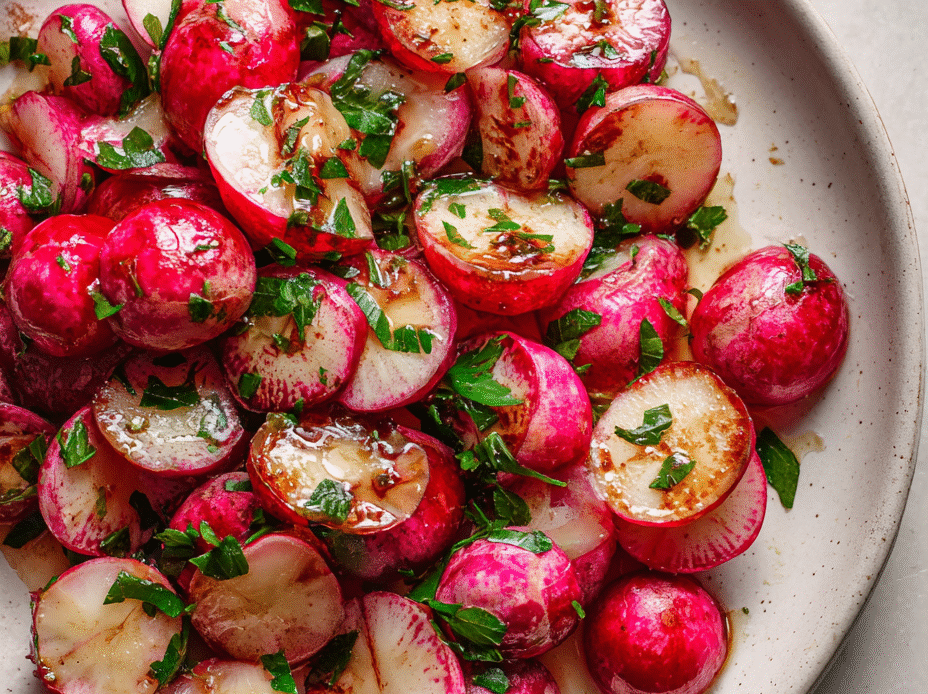
Radishes often get a bad rap as just crunchy, peppery snacks or salad add-ons. But when you sauté them in butter, they turn into something entirely different—tender, slightly sweet, and with a nutty undertone that surprises you. It’s a simple trick to elevate a humble root into a side that feels both comforting and a little unexpected.
I started playing with radishes this way after a summer garden harvest, when I was overwhelmed with more than I knew what to do with. Sautéing them was a game changer—no more raw bite, just a mellow, buttery glow that makes even skeptics ask for seconds. It’s honestly one of those little kitchen miracles that makes you rethink what radishes can do.
Using sautéed radishes with butter as a way to rediscover their underrated sweetness and texture, turning what’s usually a crunchy, peppery root into a tender, buttery side that surprises and delights.
The story behind this recipe
- One summer, I was overwhelmed by a garden full of radishes—tiny, bright, and stubbornly peppery. I didn’t want to toss them into salads or let them go to waste, so I started experimenting with different ways to tame their bite. Sautéing in butter was a revelation, turning that raw punch into a mellow, sweet glow that suddenly made radishes feel indulgent, almost like a root vegetable you’d cook all winter. Since then, it’s been my go-to for transforming these humble roots into a side that feels both simple and a little special.
- The best part? It’s an honest, quick fix. No fancy ingredients, just butter, radishes, and a little patience. It’s a reminder that sometimes, the simplest ingredients cooked with care can surprise you with their quiet, understated magic.
- heading: The story behind this recipe
Ingredient breakdown
- Radishes: I love their crisp bite and peppery punch, but when sautéed, they soften and sweeten. Use fresh, firm radishes for the best texture, and don’t skimp on cooking long enough to unlock their tender side.
- Butter: It’s the backbone of this dish—rich, nutty, and glossy. I prefer unsalted butter to control salt, but a splash of cream can add a luxurious depth if you’re feeling indulgent.
- Salt: A pinch balances the natural sweetness of the radishes. I add it toward the end so I can taste and adjust, ensuring the flavor isn’t lost in the butter’s richness.
- Pepper: Freshly cracked black pepper adds a subtle heat and aroma. I like to sprinkle it just before serving for a lively contrast, but white pepper works if you prefer a milder look and flavor.
- Lemon juice: A squeeze brightens everything up, cutting through the richness and highlighting the radish’s natural glow. Use fresh lemon for that zing that makes the dish pop visually and flavor-wise.
- Optional herbs: Chopped parsley or dill can add a fresh, herbal note. I sprinkle just before serving—too early and they lose their vibrancy—and it’s a quick way to lift the dish.
- Oil (if needed): Sometimes I add a tiny drizzle of neutral oil if the butter isn’t enough to coat the radishes evenly. It helps prevent sticking and adds a subtle sheen, making the dish look as good as it tastes.
Spotlight on Key Ingredients
Radishes:
- I love their crisp bite and peppery punch, but when sautéed, they soften and sweeten. Use fresh, firm radishes for the best texture, and don’t skimp on cooking long enough to unlock their tender side.
- Butter: It’s the backbone of this dish—rich, nutty, and glossy. I prefer unsalted butter to control salt, but a splash of cream can add a luxurious depth if you’re feeling indulgent.
- Salt: A pinch balances the natural sweetness of the radishes. I add it toward the end so I can taste and adjust, ensuring the flavor isn’t lost in the butter’s richness.
Butter:
- It’s the backbone of this dish—rich, nutty, and glossy. I prefer unsalted butter to control salt, but a splash of cream can add a luxurious depth if you’re feeling indulgent.
- Salt: A pinch balances the natural sweetness of the radishes. I add it toward the end so I can taste and adjust, ensuring the flavor isn’t lost in the butter’s richness.
Notes for ingredient swaps
- Dairy-Free: Swap butter for olive oil or coconut oil. Expect a slightly different flavor profile—less nutty, more grassy or tropical. Keep the heat moderate to prevent burning.
- Vegan: Use vegan butter or a splash of olive oil instead of butter. The taste will be a bit lighter, but still rich enough to complement the radishes beautifully.
- Salt Alternatives: Try sea salt flakes or Himalayan pink salt. They add subtle mineral notes and a pleasing crunch, enhancing the natural sweetness.
- Acid Boost: Lemon juice can be replaced with a splash of apple cider vinegar or a little lime juice. Both add brightness, but lemon offers a cleaner, sharper zing.
- Herbs: Fresh dill or parsley are classic, but chives or tarragon work well too. Use fresh herbs for a vibrant, aromatic finish—dried won’t give the same punch.
- Sweetener: A tiny drizzle of honey or maple syrup can add an extra layer of caramelization and sweetness, especially if your radishes are a bit spicy or bitter.
- Pepper: White pepper keeps a mild heat and less visual impact, but black pepper provides a more pungent, rustic bite. Adjust based on your heat preference.
Equipment & Tools
- medium skillet: For sautéing the radishes evenly
- spatula: To turn and stir the radishes
- sharp knife: For slicing radishes uniformly
- cutting board: To prep the radishes safely
Step-by-step guide to sautéed radishes
- Gather your tools: a medium skillet, a spatula, and a sharp knife for slicing. Heat the skillet over medium heat until hot, about 2 minutes at 180°C (350°F).
- Wash and trim the radishes: remove the greens if attached, leaving about 1/4 inch of stems for stability. Slice radishes into thin, even rounds, about 3mm thick, for quick, uniform cooking.
- Add butter: toss in about 2 tablespoons of unsalted butter. Let it melt and foam, swirling the pan to coat evenly. Watch for a nutty aroma, about 1–2 minutes.
- Cook the radishes: add the sliced radishes to the skillet. Spread them out so they sit in a single layer. Cook undisturbed for 2–3 minutes until edges start to turn translucent and golden.
- Flip and sauté: turn the radishes with a spatula. Continue cooking for another 3–4 minutes, stirring occasionally, until tender and slightly caramelized. The edges should shimmer with butter and turn a light golden hue.
- Season and finish: sprinkle with a pinch of salt and freshly cracked black pepper. Squeeze a small wedge of lemon over the radishes, then stir gently to coat. Cook for 30 seconds more to meld flavors.
- Rest and plate: transfer radishes to a warm plate. Let them rest for 1 minute to absorb residual butter. Garnish with a sprinkle of chopped herbs if desired. Serve warm, spooning any buttery juices over the top.
Let the radishes rest for a minute off heat to absorb flavors. Serve warm, drizzled with any remaining buttery juices, and garnish with herbs if you like.
How to Know It’s Done
- Edges turn a light golden and become slightly translucent.
- Radishes feel tender but still hold their shape when pierced with a fork.
- Butter smells nutty and coats the radishes evenly without burning.
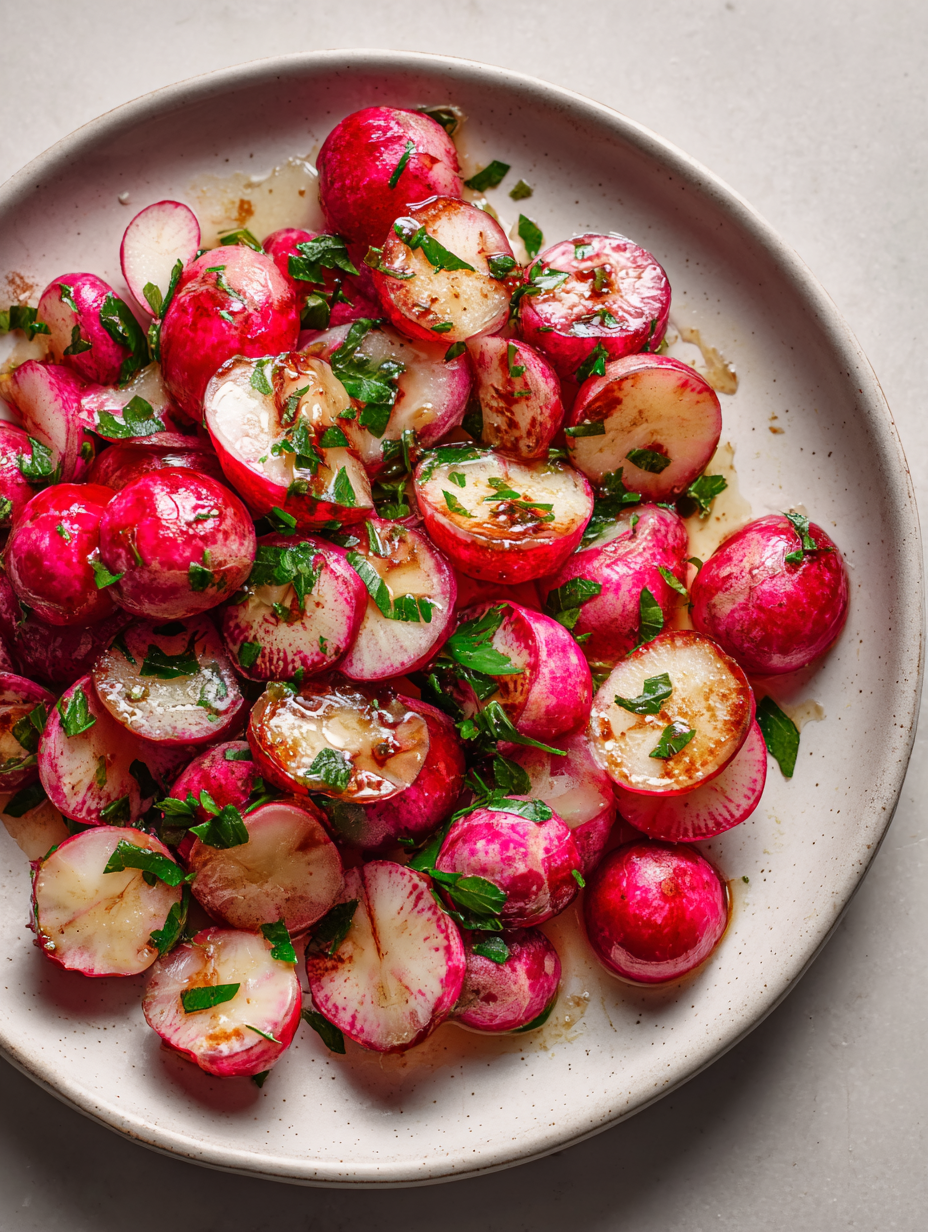
Sautéed Radishes in Butter
Ingredients
Equipment
Method
- Wash and trim the radishes, removing the greens and slicing into thin, even rounds about 3mm thick.
- Heat a medium skillet over medium heat until hot, then add the butter, letting it melt and foam gently, releasing a nutty aroma.
- Add the sliced radishes to the skillet, spreading them out in a single layer. Let cook undisturbed for 2–3 minutes until the edges start to turn translucent and golden.
- Flip the radishes with a spatula, then sauté for another 3–4 minutes, stirring occasionally, until they are tender, slightly caramelized, and glossy with butter.
- Sprinkle with a pinch of salt and freshly cracked black pepper, then squeeze fresh lemon juice over the radishes. Stir gently to combine and cook for 30 seconds more to meld the flavors.
- Transfer the radishes to a serving dish, spooning any remaining buttery juices over the top. Garnish with chopped herbs if desired, and serve warm.
Notes
Tips for perfect sautéed radishes
- Bold the butter: Let it foam and turn lightly nutty before adding radishes for a richer flavor.
- Thin slices: Keep radish slices uniform—about 3mm—to ensure even cooking and tender bites.
- Don’t rush: Sauté over medium heat; rushing can burn butter or leave radishes raw inside.
- Add salt at the end: Season late to enhance sweetness without drawing out moisture prematurely.
- Finish with lemon: A squeeze brightens the dish, balancing the butter’s richness and radish’s earthiness.
- Use fresh radishes: Firm, vibrant radishes yield the best texture and natural sweetness after sautéing.
- Don’t overcrowd: Cook in a single layer—overcrowding lowers heat, causing uneven caramelization and soggy radishes.
Common mistakes and how to fix them
- FORGOT to preheat the pan thoroughly → Heat the pan for even cooking and better caramelization.
- DUMPED in radishes without enough butter → Use enough butter to coat evenly and prevent sticking.
- OVER-TORCHED the butter or radishes → Keep heat moderate; butter should foam gently, not burn.
- MISSED the salt at the right time → Season towards the end for balanced flavor and better tenderness.
Quick fixes and pantry swaps
- When radishes release a strong, earthy smell, splash a little lemon juice to brighten.
- If radishes turn soggy, quickly drain excess butter and toss with fresh herbs to revive texture.
- DUMPED in too many radishes at once? Patch with a little oil and cook in batches for even caramelization.
- When butter begins to brown too much, lower heat immediately to prevent a bitter, burnt flavor.
- Splash a teaspoon of water if radishes stick and burn, then cover briefly to loosen and steam.
Prep, store, and reheat tips
- Prep the radishes: Wash, trim, and slice the radishes beforehand. Keep them in an airtight container in the fridge for up to 24 hours. They stay crisp and fresh, ready to sauté.
- Store cooked radishes: You can sauté and cool the radishes up to a day ahead. Keep in an airtight container in the fridge. Reheat gently in a skillet with a touch of butter or oil until warmed through, noticing the flavors deepen slightly.
- Shelf life: Raw prep lasts about 24 hours; cooked radishes are best within 1-2 days. After that, texture and flavor may diminish, and they could become mushy or dull.
- Reheating tips: When reheating, do so over low to medium heat. Expect a slight loss of crunch, but the buttery, tender texture should remain. Smell the reheated radishes—if they emit a nutty, buttery aroma, they’re good to serve.
- Flavor note: Radishes may mellow and develop a richer sweetness after sitting for a while. Reheated, they’ll be softer and more mellow, with a slightly caramelized note from the butter.
Top questions about sautéed radishes
1. How do I pick good radishes?
Look for radishes that are firm, bright, and free of blemishes. Avoid limp or shriveled ones for the best texture.
2. How thick should I slice radishes?
Slice radishes evenly, about 3mm thick, to ensure uniform cooking and tender bites.
3. How much butter do I need?
Use enough butter—about 2 tablespoons per bunch—to coat the radishes thoroughly without burning it.
4. What temperature should I sauté radishes at?
Cook over medium heat, around 160–180°C (320–350°F). Adjust heat if butter starts to brown too quickly.
5. How do I know when radishes are done?
Sauté until edges are lightly golden and translucent, about 5–7 minutes total, stirring occasionally.
6. When should I add salt and lemon?
Add a pinch of salt and a squeeze of lemon after cooking. Taste and adjust seasoning as needed.
7. Can I prepare this ahead of time?
Store cooked radishes in an airtight container in the fridge for up to 2 days. Reheat gently in a skillet.
8. What if my radishes turn soggy?
If radishes become too soggy, drain excess butter and toss with fresh herbs to refresh the texture.
9. How do I prevent butter from burning?
When butter starts to burn, lower the heat immediately or add a splash of water to cool the pan.
10. What if my radishes are not fresh?
Use fresh, firm radishes for the best flavor and texture. Avoid those that are limp or discolored.
Sautéed radishes with butter might seem like a simple side, but the way their natural sweetness intensifies under gentle heat is something special. It’s a reminder that humble ingredients can surprise you when treated with a little patience and care. Plus, it’s a quick, honest way to add flavor and texture to any meal.
In times when I want a side that feels both familiar and a little unexpected, this dish always comes through. It’s those small moments—watching radishes soften and turn golden—that make cooking feel genuine and satisfying, even on the busiest nights.

Hi, I’m Olivia Chen-Williams, a professional chef, cooking instructor, and the founder of Turn Around At 50. For nearly three decades, my life has revolved around kitchens. Not the quiet, romantic kind, but the real ones. Hot, loud, demanding, and deeply alive.