
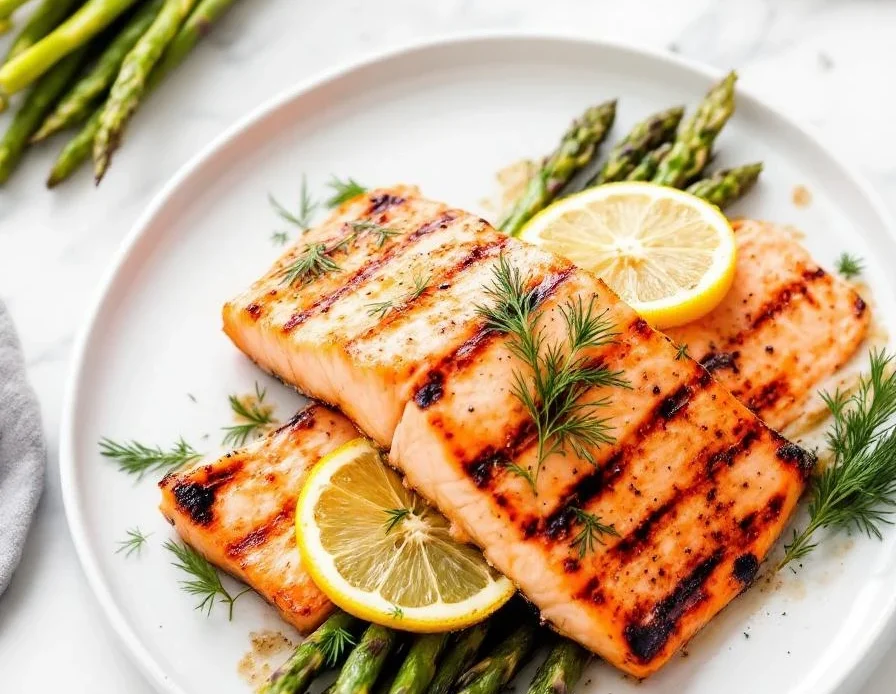
Firing up the grill means dealing with the mess—oil spatters, charred bits, and that lingering smoky smell that clings to everything. I keep a spray bottle nearby to tame the splatters and a rag for quick cleanups, ’cause this gets messy fast.
Prepping the salmon and asparagus is simple but requires focus—patting the fish dry, trimming the spears, and brushing everything with oil. The key is to work quickly once the grill heats up; otherwise, the salmon sticks and the asparagus wilts before it chars.
The crack of the salmon skin as it hits the hot grill, followed by the sizzle and the aroma of smoky fat.
Essential ingredients and swaps
- Salmon fillets: I go for skin-on, thick-cut pieces—sear that skin until it’s crispy and crackly; if you skip this, the fish loses its texture and crunch. Swap for trout or cod if you want a milder, flaky alternative.
- Asparagus: Fresh, bright green spears—trim the woody ends and toss with oil to prevent sticking on the grill; smoky char and tender bites are what we aim for. You could substitute with green beans or zucchini, but they won’t get that smoky edge.
- Olive oil: I use a good splash for brushing—helps with browning and flavor. Skip if you want to keep it light, but don’t omit it or the fish might stick. Avocado oil works well too, especially at high heat.
- Lemon: Squeeze fresh lemon juice over the fish after grilling—brightens everything up with a zing. If lemons are out, lime or a splash of vinegar can bring some acidity, but it won’t have that sunny aroma.
- Garlic: Minced garlic brushed onto the fish before grilling adds a fragrant punch; if you’re sensitive, reduce the amount. You can swap in shallots or skip altogether for a milder, less pungent flavor.
- Salt and pepper: I season generously—salty and peppery help build flavor directly on the flesh and vegetables. Use smoked paprika or chili flakes if you want a smoky or spicy kick, but keep it simple if not.
- Optional herbs: Fresh dill or parsley—sprinkle after grilling for freshness and color. Dried herbs work too, but they won’t provide the same vibrant aroma or bright contrast.
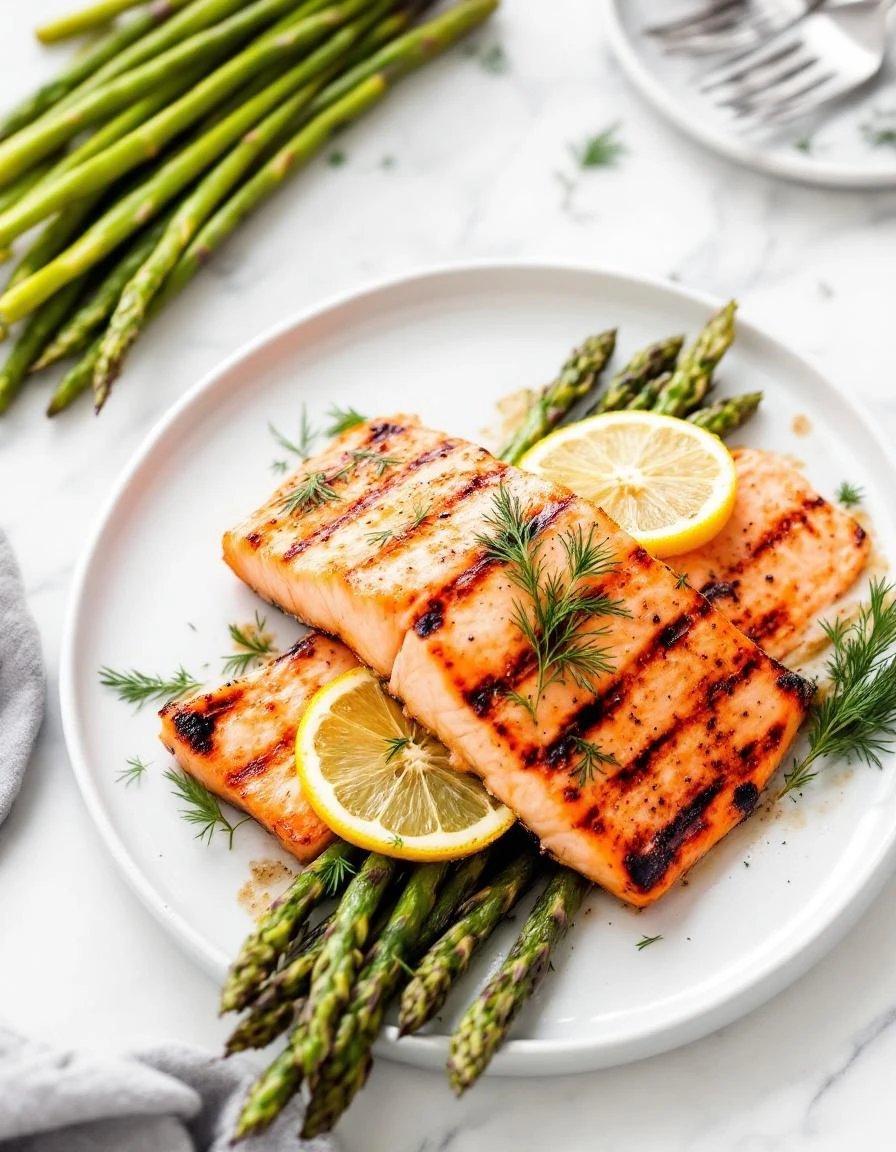
Grilled Salmon with Asparagus
Ingredients
Equipment
Method
- Preheat your grill to medium-high heat and give the grates a quick spray with a spray bottle or brush with oil to prevent sticking.
- Pat the salmon fillets dry with a paper towel, then brush the flesh and skin with a thin layer of olive oil, seasoning generously with salt, pepper, and minced garlic.
- Arrange the asparagus spears on a tray and toss with a little olive oil, making sure they are evenly coated to prevent sticking and promote even charring.
- Place the salmon fillets skin-side down on the hot grill, pressing gently to ensure good contact. Cook for about 4-5 minutes until the skin is crispy and golden, then flip carefully using tongs.
- While the salmon cooks, lay the asparagus across the grill grates, turning occasionally, until they are charred in spots and tender, about 3-4 minutes.
- Flip the salmon fillets and cook for another 3-4 minutes until the flesh is opaque and flakes easily with a fork.
- Remove the salmon and asparagus from the grill. Squeeze fresh lemon juice over the fish and vegetables to brighten the flavors.
- Sprinkle the grilled salmon with chopped herbs and serve hot alongside the smoky, tender asparagus for a vibrant, appealing plate.
Common mistakes and how to fix them
- FORGOT to oil the grill grates → BRUSH grates generously before cooking.
- DUMPED the salmon on cold grill → PREHEAT the grill to medium-high before adding fish.
- OVER-TORCHED the asparagus → WATCH for grill marks and remove early to prevent burning.
- USED too much oil → APPLY a thin, even coat to avoid flare-ups and soggy veggies.
Make-Ahead and Storage Tips
- You can prep the salmon and trim the asparagus a day in advance. Keep the fish chilled, covered, for up to 24 hours.
- Marinate the salmon briefly with oil and seasonings before grilling—this helps develop flavor and keeps it moist. Do this no more than 12 hours ahead.
- The grilled salmon is best eaten fresh, but leftovers can be stored in an airtight container in the fridge for up to 2 days. Reheat gently to avoid drying out.
- Asparagus can be grilled, cooled, then stored in a container for 1-2 days. Reheat quickly in a hot pan or under the broiler, watching for char and tender bites.
- Flavors intensify slightly after refrigeration, so consider adding a splash of lemon or fresh herbs when reheating to refresh the dish.
- For freezing, wrap the cooked salmon tightly and freeze for up to 2 months. Thaw in the fridge overnight, then reheat gently, checking for texture and aroma.
FAQs
1. How do I get crispy salmon skin?
Salmon skin gets crispy and crackly when cooked on a hot grill, giving a satisfying crunch with every bite. The flesh underneath stays moist and flaky, with a smoky aroma.
2. How can I tell when asparagus is done?
Grilling asparagus until slightly charred and tender gives it a smoky, slightly bitter bite. The spears should bend easily but still hold their shape, with a bright green color.
3. How do I prevent the fish from sticking?
Using a well-heated, oiled grill helps prevent sticking and ensures good sear marks. A gentle flip with tongs reveals a caramelized surface and juicy interior.
4. How do I avoid overcooking?
Overcooking can make the salmon dry and the asparagus mushy. Keep a close eye, and remove when the flesh is opaque and the spears are tender but still vibrant.
5. When should I add lemon juice?
Fresh lemon juice brightens the dish with a zesty, citrus aroma and cuts through richness. Squeeze just before serving for maximum freshness and a burst of flavor.

Hi, I’m Olivia Chen-Williams, a professional chef, cooking instructor, and the founder of Turn Around At 50. For nearly three decades, my life has revolved around kitchens. Not the quiet, romantic kind, but the real ones. Hot, loud, demanding, and deeply alive.