
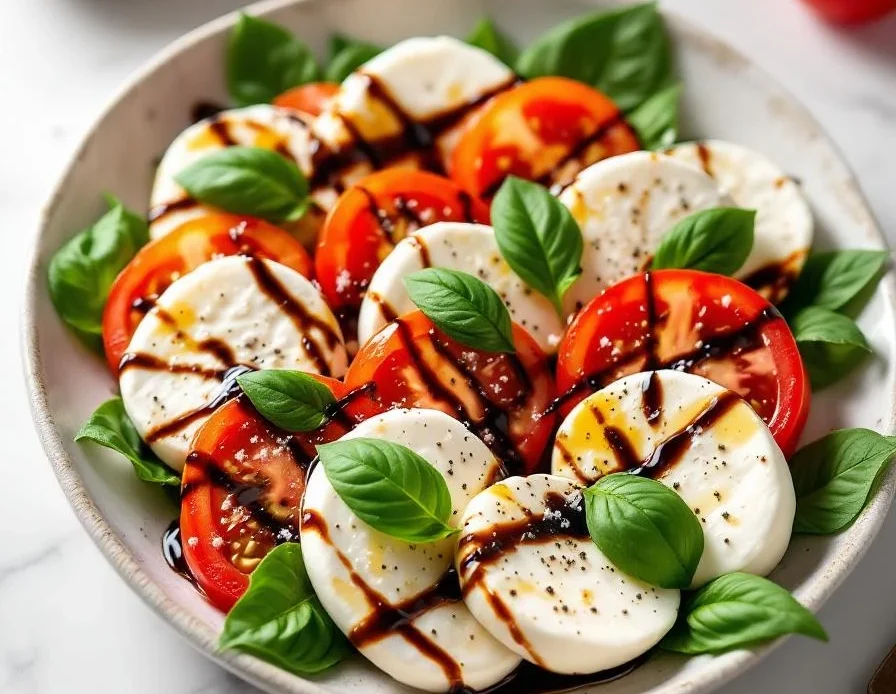
Making a Caprese Salad means dealing with slippery, fresh mozzarella and squishy tomatoes that seem to melt under your fingers. I like to set everything out on a cutting board and get ready for a messy, quick assembly.
The real work is in slicing the cheese and tomatoes evenly, then drizzling oil and tearing basil leaves right before serving. No fancy tools needed, just a sharp knife and a steady hand to avoid squishing the ingredients.
Once you start layering the slices and scattering basil, the smell of fresh herbs and bright oil fills the air. The salad comes together fast, but the messy bits—dripping juice and oily fingertips—are part of the process. It’s a tactile, imperfect kind of prep that makes eating it all the more satisfying.
the gentle squish of ripe tomatoes as you slice into them, releasing a burst of juicy, bright-red pulp that practically drips onto the cutting board with each cut
What goes into this dish
- Fresh mozzarella: I prefer the soft, milky balls that squeak when you bite into them—skip the rubbery stuff. You can swap in burrata if you want a creamier bite, but avoid the pre-sliced blocks that can be dry and dull.
- Tomatoes: Ripe heirlooms or vine-ripened work best—squishy and bursting with juice. If you’re out of season, cherry tomatoes halved can work, though they’re less juicy. Avoid mealy or under-ripe tomatoes for that bright, juicy bite.
- Basil: Fresh leaves are essential—crisp, fragrant, with that peppery punch. Skip the basil if you’re out, but then the salad loses its aroma. Dried basil isn’t a good swap here, it’s all about that fresh herbal aroma.
- Extra virgin olive oil: Bright, peppery, slightly grassy—drizzle generously. If you’re out, a good avocado or walnut oil can add richness, but it won’t have that classic olive punch. Avoid bland oils that won’t stand up to the other ingredients.
- Sea salt and freshly cracked black pepper: Enhance every flavor—don’t skimp. If you’re salt-sensitive, go light, but don’t skip the pepper, it adds that kick at the end. Fine salt can be used, but flaky sea salt looks nicer and tastes better.
- Optional balsamic glaze: Adds a sweet, tangy finish—just a drizzle. Skip if you prefer a more straightforward salad, but it’s a nice contrast to the creamy cheese. Use a good quality glaze—cheap stuff can be overly sugary.
- Cracked black pepper: I like a generous sprinkle—freshly cracked gives it that pungent, spicy aroma. If you don’t have a grinder, a pinch of ground pepper will do, but it won’t have that punchy aroma.
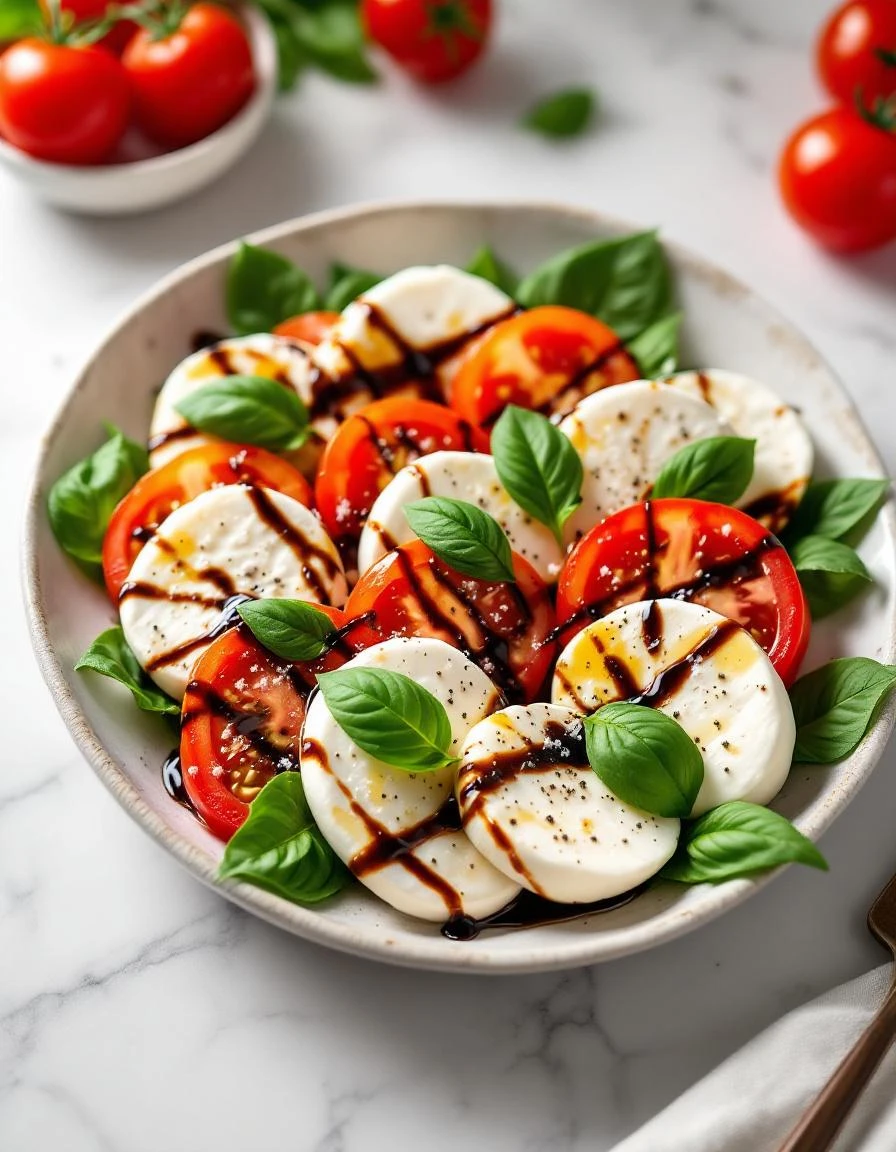
Classic Caprese Salad
Ingredients
Equipment
Method
- Place the fresh mozzarella on a cutting board and slice it into even rounds about 1/4 inch thick, feeling the soft, milky texture as the knife cuts through.
- Next, cut the ripe tomatoes into similar slices, pressing gently to feel the squishy, juicy interior release with each cut—aim for even thickness for a uniform look.
- Lay out the mozzarella and tomato slices alternately on a serving platter or plate, creating a colorful layered pattern that highlights the fresh ingredients.
- Tear the basil leaves into small pieces or leave them whole, then scatter them generously over the layered slices to release their fragrant aroma.
- Drizzle the bright, grassy olive oil evenly over the assembled salad, allowing it to seep into the layers and bring everything to life.
- Sprinkle flaky sea salt and freshly cracked black pepper over the top to enhance all the flavors, tasting and adjusting as needed.
- If desired, finish with a light drizzle of balsamic glaze for a touch of sweetness and tang, adding a glossy finish to the salad.
- Gently serve immediately, allowing the flavors to meld and the textures to shine—perfect for a quick, fresh appetizer or light main.
Common Mistakes and How to Fix Them
- FORGOT to drain excess moisture from mozzarella—water dilutes the flavor, so pat dry if needed.
- DUMPED the basil before adding oil—wait until last moment to preserve aroma and color.
- OVER-TORCHED the tomatoes—use gentle heat or none at all to keep their squishy texture perfect.
- MISSED seasoning step—always taste and adjust salt and pepper before serving to balance flavors.
Make-Ahead and Storage Tips
- Prep the ingredients: slice mozzarella, tomatoes, and tear basil leaves a few hours ahead. Keep tomatoes in a sealed container to prevent sogginess.
- Store mozzarella in its brine in the fridge; it stays fresh for about 2-3 days. Bring it to room temp before assembling for better flavor.
- Tomatoes can be kept in the fridge for up to a day—bring to room temp before serving to boost their sweetness and juiciness.
- Assemble the salad just before serving to avoid sogginess. If made ahead, drizzle oil and season right before eating to keep ingredients vibrant.
- Flavor intensifies as it sits, but basil can wilt and tomatoes may release more juice—best enjoyed within 4 hours of assembly.
- Refrigerate leftovers in an airtight container for up to 1 day. The cheese might firm up and lose some brightness; serve at room temp to revive.
FAQs
1. How do I choose the right mozzarella?
Look for mozzarella that’s soft, milky, and squeaky when pressed. Skip rubbery or dry cheese; it dulls the flavor.
2. What tomatoes work best for this?
Use ripe, juicy tomatoes—think squishy and fragrant. Less juicy or under-ripe ones can make the salad watery.
3. Can I substitute dried basil?
Fresh basil leaves should be fragrant, crisp, and vibrant green. Dried basil won’t give you that punch of herbal aroma.
4. What olive oil is best?
Opt for a bright, grassy olive oil—drizzle liberally. Bland oils won’t stand up to the cheese and tomato’s acidity.
5. How much seasoning should I add?
Salt and freshly cracked black pepper really enhance the flavors. Taste and adjust before serving to get that perfect balance.

Hi, I’m Olivia Chen-Williams, a professional chef, cooking instructor, and the founder of Turn Around At 50. For nearly three decades, my life has revolved around kitchens. Not the quiet, romantic kind, but the real ones. Hot, loud, demanding, and deeply alive.