
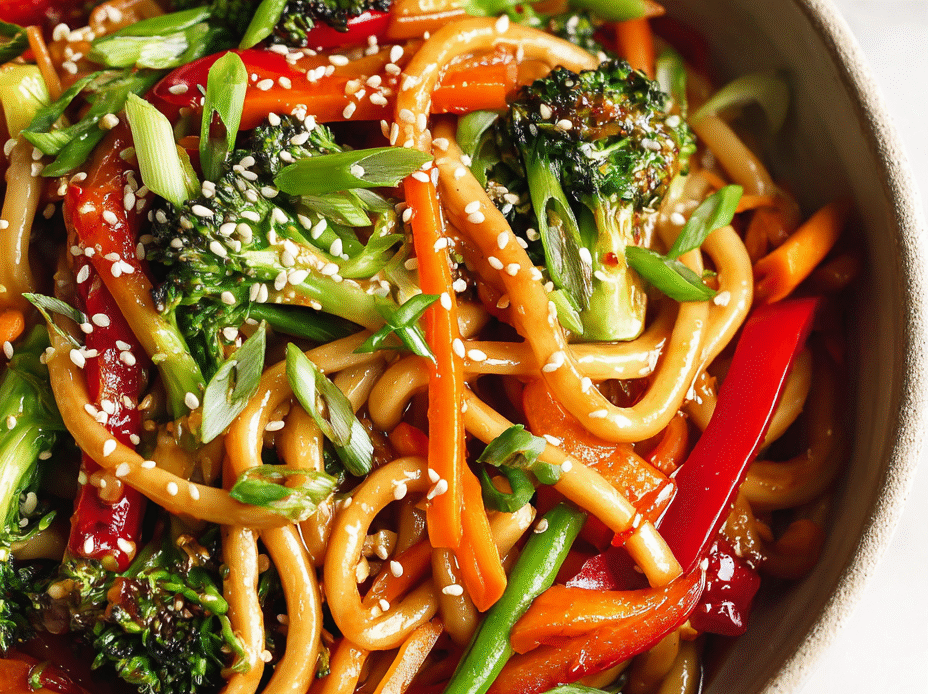
This vegetable udon recipe is my go-to when I want something quick, honest, and satisfying. It’s about embracing the imperfect beauty of what’s fresh in my fridge—crisp bell peppers, tender greens, maybe a few mushrooms—and turning them into a bowl that feels both nourishing and personal. No fancy ingredients needed, just good intuition and a bit of improvisation.
Cooking this feels like a little dance, adjusting the veggies based on what I have, sometimes adding a splash of soy for salt or a squeeze of lemon to brighten everything up. It’s not about perfection but about making something that lifts your spirits and clears your head. I love how the chewy udon ties it all together, giving each bite a little comforting pull, especially when the vegetables are just starting to caramelize around the edges.
Focusing on the art of balancing seasonal vegetables with the chewy bite of udon, this recipe emphasizes improvisation and personal tweaks. It’s about using what’s fresh and in your fridge, turning simple ingredients into a comforting, adaptable bowl. The goal is to make vegetable udon feel like a cozy, personalized retreat, even on the busiest days.
Balancing seasonal veggies with chewy udon
- I love how this dish feels like a quick hug after a long day, the warm noodles and tender veggies soothing my mind.
- There’s a certain chaos in improvising with whatever’s left in the fridge, yet somehow it always turns into something comforting and familiar.
- Cooking this reminds me of lazy Sunday afternoons in Japan, where simple ingredients create moments of quiet joy.
- Getting the perfect chew on the udon is my small victory, especially when paired with that slight smoky char from the pan.
- Sharing this with friends makes me realize how humble, adaptable food can spark real connection.
The story behind this recipe
This vegetable udon recipe came about during a particularly hectic week when I needed something quick, hearty, and adaptable. I was rummaging through my fridge, pulling out whatever veggies I had—some bell peppers, a handful of greens, and a few mushrooms—and realized they’d work perfectly together in a stir-fry. That day, I learned that the best comfort food often comes from improvising with what’s at hand, no fuss, just flavor. Over time, I’ve refined it into a go-to dish that feels like a warm, flexible hug after a long day, always ready to be tweaked to match what’s fresh and in season.
Trivia and historical snippets
- Vegetable udon has roots in Japan’s quick street food culture, where fresh, seasonal ingredients are turned into satisfying bowls on busy days.
- The dish’s simplicity reflects Japan’s love for balancing umami-rich broth with crisp, fresh vegetables, a harmony that’s been refined over centuries.
- Udon noodles, made from wheat flour, arrived in Japan from China around the 13th century, and have since become the backbone of countless comforting dishes like this one.
Ingredient breakdown: key components
- Carrots: I love their sweet, crisp bite, especially when sliced thin and slightly caramelized. Feel free to swap for daikon if you want milder, juicier notes.
- Udon noodles: Their chewy, velvety texture is what makes this dish feel hearty. Opt for fresh if you can, or frozen for convenience—just don’t overcook, or they turn mushy.
- Bell peppers: Bright and juicy, they add a crunchy freshness that’s irreplaceable. Use any color for vibrancy, or zucchini for a milder, softer bite.
- Green onions: They bring a sharp, oniony kick and a bit of freshness. You could substitute with chives or scallions if needed, but don’t skip them altogether.
- Soy sauce: It’s the salty umami backbone, giving depth and warmth. For a milder taste, dilute a little or try coconut aminos—less salty, still savory.
- Sesame oil: A splash adds a nutty aroma and richness that elevates everything. Use sparingly; it’s potent but essential for that toasty finish.
- Mushrooms: I prefer shiitake or cremini—they soak up flavors and add earthy notes. If you’re out, a handful of chopped firm tofu can add protein and texture.
Spotlight on key ingredients
Carrots & Udon Noodles:
- Carrots: I love their sweet, crisp bite, especially when sliced thin and slightly caramelized. Feel free to swap for daikon if you want milder, juicier notes.
- Udon noodles: Their chewy, velvety texture is what makes this dish feel hearty. Opt for fresh if you can, or frozen for convenience—just don’t overcook, or they turn mushy.
- Green onions: They bring a sharp, oniony kick and a bit of freshness. You could substitute with chives or scallions if needed, but don’t skip them altogether.
Notes for ingredient swaps
- Vegetables: Carrots are sweet and crisp, but daikon offers a milder, juicier crunch that’s just as refreshing.
- Udon noodles: Fresh udon has a chewy, velvety texture, but frozen works fine—just avoid overcooking to prevent mushiness.
- Bell peppers: Use any color for vibrancy and sweetness, or swap with zucchini for a softer, milder bite.
- Green onions: They add sharpness and freshness; chives or scallions are good alternatives, but skip none for flavor.
- Soy sauce: It’s the salty umami backbone, but coconut aminos give a similar flavor with less salt and a slightly sweeter note.
- Sesame oil: A splash adds nuttiness; for a subtler aroma, try toasted walnut oil, which still brings richness.
- Mushrooms: Shiitake or cremini soak up flavors and add earthiness; if unavailable, chopped firm tofu can add protein and texture.
Equipment & Tools
- Wok or large skillet: For quick, even heat and stir-frying vegetables
- Pot: To boil udon noodles
- Slotted spoon or tongs: To handle noodles and stir ingredients
- Measuring spoons: For soy sauce and sesame oil
- Knife and cutting board: To slice vegetables thinly and evenly
Step-by-step to Vegetable Udon
- Equip your wok or a large skillet with a bit of oil; heat over medium-high (around 200°C / 390°F) until shimmering. Have all your veggies sliced and ready to go—thin strips or bite-sized pieces for quick cooking.
- Cook the udon noodles in boiling water (about 100°C / 212°F) for 2-3 minutes if fresh, or as per package instructions if frozen. Drain and rinse with cold water to stop cooking and prevent sticking. Set aside.
- Add a splash more oil to the hot pan. Toss in sliced carrots and bell peppers first. Cook for 2-3 minutes, stirring often, until they start to soften and edges turn slightly caramelized. They should smell sweet and smoky.
- Push the veggies to one side. In the cleared space, add minced garlic and ginger. Sauté for 30 seconds until fragrant—don’t burn, or it turns bitter. Mix everything together.
- Add sliced mushrooms and greens. Cook for another 2 minutes until mushrooms are tender and greens wilt. The mixture should be fragrant, with a bit of a smoky aroma from the pan.
- Toss in the cooked noodles. Pour in soy sauce (about 2-3 tbsp), a drizzle of sesame oil, and a splash of water or broth to loosen everything. Stir well, cook for 1-2 minutes until evenly coated and hot.
- Taste and adjust seasoning—more soy for saltiness, a squeeze of lemon for brightness. The noodles should be chewy, veggies tender but still vibrant, and the sauce glossy and flavorful.
Once cooked, transfer the udon and veggies to a plate. Let sit for a minute to settle. Finish with a light drizzle of sesame oil or extra soy if needed. Serve immediately, hot and fragrant.
How to Know It’s Done
- Noodles are hot, slightly chewy, and coated evenly with sauce.
- Veggies are tender but still retain some bite, with caramelized edges.
- A fragrant aroma of garlic, ginger, and roasted vegetables fills the air.
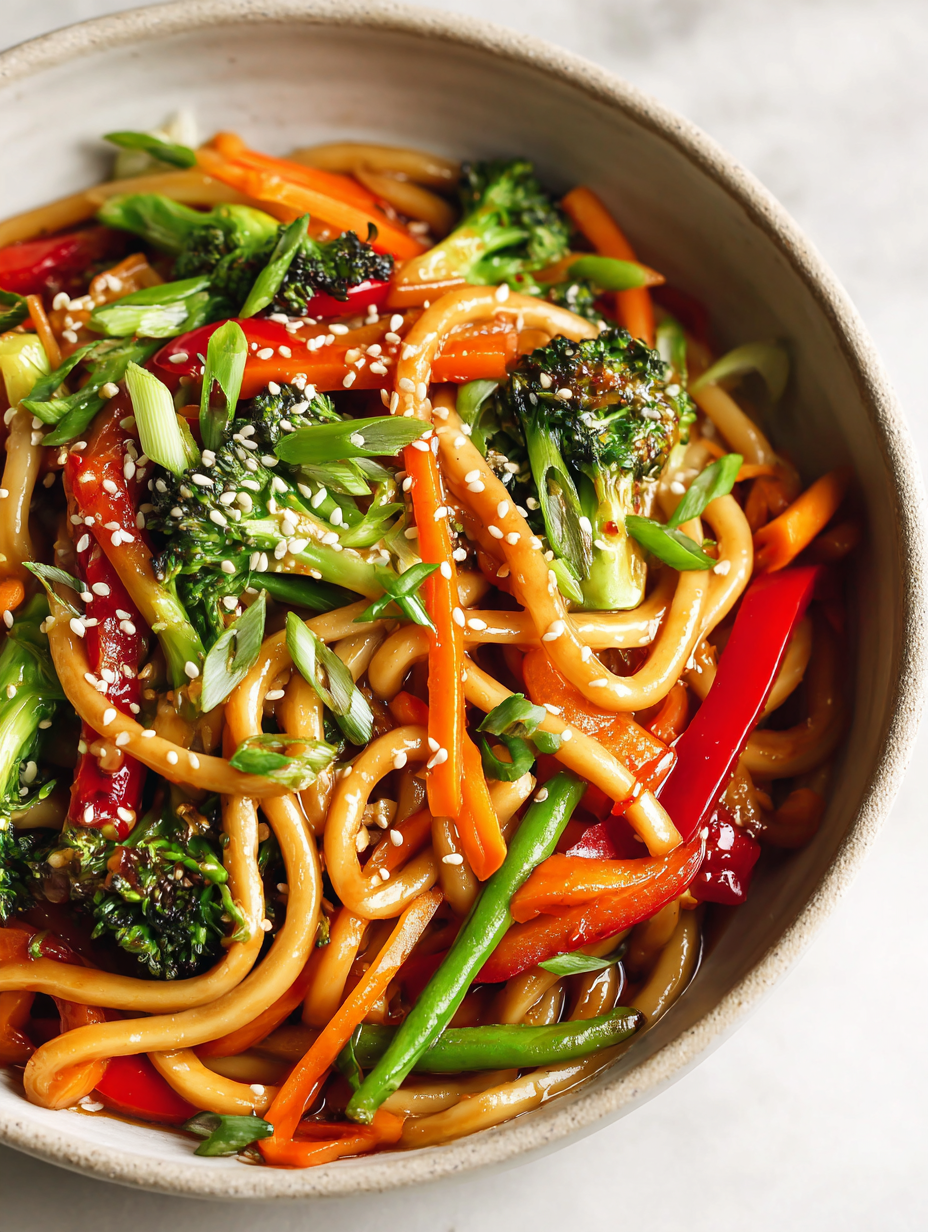
Vegetable Udon Stir-Fry
Ingredients
Equipment
Method
- Bring a pot of water to a boil and cook the udon noodles according to the package instructions, usually 2-3 minutes for fresh. Drain and rinse under cold water to stop the cooking, then set aside.
- Heat a wok or large skillet over medium-high heat and add a tablespoon of vegetable oil. Once shimmering, add the sliced carrots and bell peppers. Stir-fry for about 2-3 minutes until they start to soften and develop a slight caramelization around the edges, filling the air with a sweet, roasted aroma.
- Push the vegetables to one side of the pan. Add a little more oil if needed, then toss in the sliced mushrooms. Stir-fry for another 2 minutes until the mushrooms release their earthy aroma and soften.
- Add the chopped greens to the pan, stirring quickly to wilt them down and release their fresh aroma. Cook for about 1 minute until they’re tender but still vibrant green.
- Pour in the cooked udon noodles, then drizzle with soy sauce and sesame oil. Toss everything together vigorously for 1-2 minutes, ensuring the noodles are heated through and coated evenly with the savory sauce. The noodles should feel chewy and slightly glossy, while the vegetables are tender with caramelized edges.
- Finish by tossing in the sliced green onions and giving everything a final stir. Taste and adjust seasoning if needed—more soy for saltiness or a squeeze of lemon for brightness.
- Serve the vegetable udon hot, straight from the pan, with a sprinkle of extra green onions if desired. Enjoy the comforting chew of noodles and the bright, savory flavors of the stir-fried vegetables.
Notes
Tips & Tricks for Perfect Udon
- Bolded mini-head: Use high heat → Sear vegetables quickly for vibrant color and crisp-tender texture.
- Bolded mini-head: Don’t overcrowd the pan → Keep ingredients in a single layer to avoid steaming and ensure caramelization.
- Bolded mini-head: Taste as you go → Adjust soy and salt gradually for balanced, umami-rich flavor.
- Bolded mini-head: Keep noodles slightly al dente → Rinse thoroughly after boiling to stop cooking and prevent mushiness.
- Bolded mini-head: Add sesame oil at the end → For a toasted aroma and richer flavor without burning it during stir-fry.
- Bolded mini-head: Slice vegetables thinly → Ensures quick cooking and even caramelization, adding more flavor in less time.
- Bolded mini-head: Stir constantly → Prevent burning and promote even coating of sauce and flavors throughout.
Common mistakes and how to fix them
- FORGOT to preheat pan → Ensure pan is hot before adding ingredients.
- DUMPED too much soy → Use soy sparingly; too much can overpower delicate flavors.
- OVER-TORCHED vegetables → Stir consistently; reduce heat if vegetables burn or char too quickly.
- MISSED resting time → Let cooked noodles rest for 1 minute for better texture and flavor absorption.
Quick fixes and pantry swaps
- When noodles stick, splash with cold water and toss gently to loosen.
- If vegetables burn, reduce heat and add a splash of water to deglaze.
- Splash soy too salty? Rinse noodles briefly before tossing again.
- Patch overcooked veggies by quickly stirring in fresh, raw ones at the end.
- Shield delicate greens from overcooking by adding last and tossing quickly.
Prep, store, and reheat tips
- Prep your vegetables: slice carrots, peppers, and greens the night before; keep in airtight containers in the fridge for up to 2 days, maintaining their crispness and color.
- Cook the udon noodles ahead: boil, rinse with cold water, and store in a sealed container for up to 24 hours; they’ll cling less and stay chewy if kept separate from sauce.
- Store sauces separately: mix soy, sesame oil, and any other seasonings in a small jar; they keep well for 3-4 days and can be quickly stirred into hot noodles later.
- Reheating tip: microwave the noodles with a splash of water or broth for 1-2 minutes until steaming and fragrant—watch for overcooking, as they can become mushy.
- Vegetable freshness: sauté the veggies just until tender before storing, then reheat quickly in a hot pan to revive their texture and aroma, which can dull in the fridge.
Top questions about vegetable udon
1. Can I use dried udon instead of fresh or frozen?
Use firm, fresh udon for the best chewy bite. Fresh noodles are softer but cook quickly, while frozen ones hold their texture longer.
2. Can I substitute dried udon for fresh or frozen?
Yes, just cook dried udon according to package instructions, usually a bit longer, then rinse with cold water to stop the cooking.
3. How do I cook dried udon properly?
Absolutely. Just be mindful to cook dried noodles longer and check for that perfect chewy texture before draining.
4. What vegetables work best in this dish?
Use any seasonal vegetables you like—zucchini, snap peas, or bok choy work beautifully for a quick, fresh flavor.
5. How can I reduce the saltiness if it’s too salty?
Adjust soy sauce to taste. If it’s too salty, add a splash of water or lemon juice to brighten it up.
6. Can I make this vegan?
Yes, for a vegan version, omit the fish-based ingredients and use tamari or coconut aminos for umami.
7. How do I prevent udon from sticking together?
To keep noodles from sticking, rinse them immediately after boiling and toss with a little oil before stir-frying.
8. Can I add protein to this dish?
Feel free to add protein like tofu, shrimp, or chicken for extra heartiness, cooked separately or stir-fried with the veggies.
9. How far in advance can I prepare this?
You can prep the vegetables and cook the noodles ahead of time, then reheat quickly in a hot pan before serving.
10. What’s the best way to stir-fry without burning?
Use high heat and stir constantly to prevent burning and ensure even caramelization of the veggies and noodles.
This vegetable udon recipe feels like a little sanctuary, a quick burst of warmth amid busy days. It’s honest, forgiving, and perfect for improvising with whatever you have on hand. In the end, it’s about those simple, satisfying moments—chewy noodles, crisp veggies, and a kitchen filled with aroma.
No matter the season or the chaos outside, this bowl reminds me that good, honest food can be quick, adaptable, and deeply comforting. It’s a humble dish, but one that captures the joy of turning everyday ingredients into something with a little personality. Sometimes, that’s enough to make a meal feel special.

Hi, I’m Olivia Chen-Williams, a professional chef, cooking instructor, and the founder of Turn Around At 50. For nearly three decades, my life has revolved around kitchens. Not the quiet, romantic kind, but the real ones. Hot, loud, demanding, and deeply alive.