
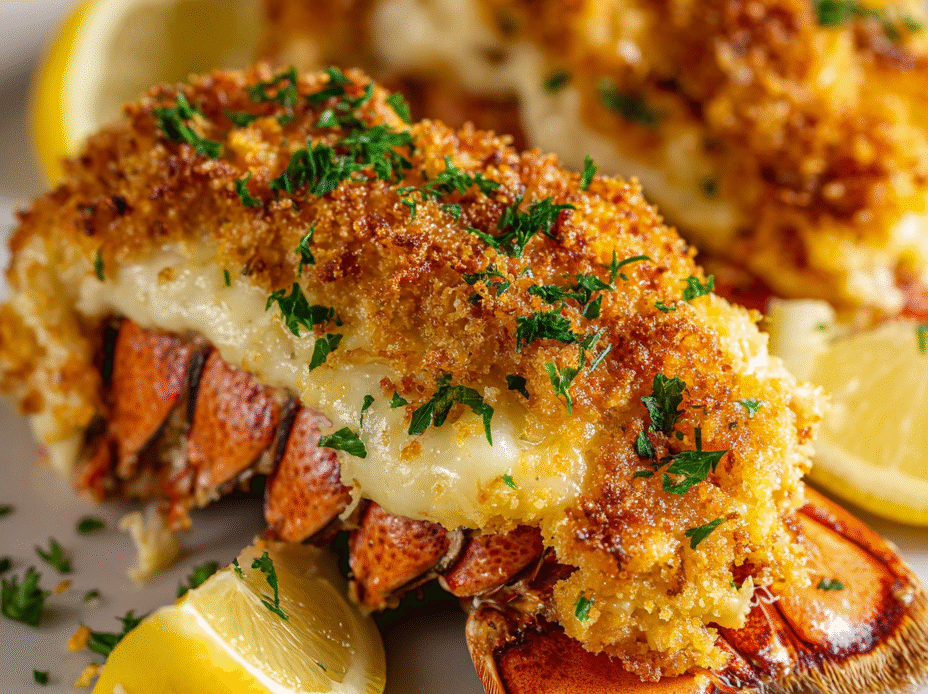
This Parmesan Crusted Lobster Tail recipe is a little bit of a sneaky indulgence. It’s not your everyday lobster dish, but when you want to feel fancy without spending hours in the kitchen, this hits the mark. The crunchy Parmesan crust adds a savory, umami bite that balances beautifully with the tender, sweet lobster meat underneath.
What I love about this recipe is how the cheese forms a golden, irresistible crust that makes the whole dish feel special. It’s about turning something luxurious into an accessible, approachable meal—perfect for a weekend treat or when you’re celebrating small wins. Plus, it’s quick enough to throw together on a busy weeknight, but fancy enough to serve to guests with a glass of white.
Focusing on the unexpected harmony between the rich, buttery lobster and the sharp, nutty Parmesan crust, this recipe elevates comfort seafood into a refined yet approachable dish. It’s about transforming a classic lobster tail into something that feels familiar but is delightfully surprising with every bite—perfect for special occasions or when you want to impress without fuss.
The story behind this recipe
- I once had a lobster tail at a seaside restaurant that was simply unforgettable. The crisp, cheesy crust contrasted perfectly with the tender meat inside, and I kept thinking about how to recreate that crunch at home without losing the lobster’s delicate sweetness.
- This dish came together after a few failed attempts—trying to balance richness with crunch, without overcooking the lobster. It’s a reminder that sometimes, the simplest tweaks—like Parmesan and a quick broil—can turn a good meal into a memorable one.
- Every time I make this, I think about that first bite—the smoky, cheesy aroma filling the kitchen, the crackle of crust under my fork. It’s a small celebration of how a few good ingredients can elevate a humble seafood piece into something special.
Ingredient breakdown: key components
- Lobster tail: I love how the natural sweetness of lobster contrasts with the salty Parmesan. Make sure to pick fresh, bright red tails for the best flavor; avoid those with a dull color or off smell.
- Parmesan cheese: Sharp, nutty Parmesan is my go-to—freshly grated melts better and forms that crispy crust. You can substitute with Pecorino for a slightly saltier, tangier crust, but skip pre-grated cheeses for best results.
- Breadcrumbs: I prefer panko for extra crunch, but regular fine breadcrumbs work if you want a softer crust. Toast them lightly in butter first for richer flavor and a golden hue.
- Butter: Use unsalted butter, melted, to help the crust stick and to add richness. If you want a bit of smoky depth, toss in a pinch of smoked paprika before mixing.
- Garlic: Fresh minced garlic adds aromatic punch—don’t skimp here. If you’re sensitive, reduce to half a clove, but I find the punch really elevates the crust’s flavor.
- Lemon zest: Brightens everything and cuts through the richness. Use a microplane for fine zest, and avoid the bitter pith; it can overwhelm the delicate lobster flavor.
- Herbs (optional): A little chopped parsley or thyme adds freshness. I add just before serving so the herbs stay vibrant and aromatic, not wilted.
Spotlight on key ingredients
Lobster tail:
- I love how the natural sweetness of lobster contrasts with the salty Parmesan. Make sure to pick fresh, bright red tails for the best flavor; avoid those with a dull color or off smell.
- Parmesan cheese: Sharp, nutty Parmesan is my go-to—freshly grated melts better and forms that crispy crust. You can substitute with Pecorino for a slightly saltier, tangier crust, but skip pre-grated cheeses for best results.
Parmesan cheese:
- Sharp, nutty Parmesan is my go-to—freshly grated melts better and forms that crispy crust. You can substitute with Pecorino for a slightly saltier, tangier crust, but skip pre-grated cheeses for best results.
- Breadcrumbs: I prefer panko for extra crunch, but regular fine breadcrumbs work if you want a softer crust. Toast them lightly in butter first for richer flavor and a golden hue.
Notes for ingredient swaps
- Dairy-Free: Swap Parmesan for nutritional yeast or a dairy-free cheese alternative. It won’t melt as smoothly but adds a cheesy, umami flavor.
- Breadcrumbs: Use crushed Ritz crackers or almond meal for different textures—Ritz adds buttery richness, almond gives a nutty crunch.
- Butter: Olive oil can replace butter for a slightly fruitier, less rich crust—keep in mind it won’t brown as deeply.
- Lemon Zest: Lime or orange zest can brighten the crust with a different citrus note; adjust amount to taste, start small.
- Herbs: Fresh thyme or basil can replace parsley—use them sparingly, as their flavors are more pronounced and can overpower.
- Garlic: Garlic powder works in a pinch if fresh isn’t available, but it’s less aromatic—add a pinch and taste before baking.
- Cheese: Pecorino Romano offers a sharper, saltier note; just be mindful of the salt content when adjusting seasoning.
Equipment & Tools
- Sharp scissors or boning knife: To cut through the shell cleanly without cracking the meat.
- Small mixing bowl: To combine the Parmesan crust ingredients.
- Baking sheet with rack: To hold the lobster for even baking and air circulation.
- Baking brush: To apply melted butter or for finishing touches.
Step-by-step guide to Parmesan crusted lobster
- Preheat your oven to 200°C (390°F). Place a rack inside a baking sheet lined with parchment paper. This setup allows for even heat and easy cleanup.
- Gather your tools: a sharp boning knife or seafood scissors, a small bowl, a spoon, and a baking brush. You’ll need these for prepping and applying the crust.
- Prepare the lobster tail: Using scissors or a sharp knife, cut down the center of the top shell, from the fan end to the tail base. Carefully lift the shell—do this gently to avoid tearing—and loosen the meat, keeping it attached at the tail end.
- Lift the lobster meat out of the shell and place it on top of the shell, resting on the fan. Pat dry with paper towels; moisture can prevent crisping.
- Make the Parmesan crust: In a small bowl, mix 1/2 cup grated Parmesan, 1/4 cup panko breadcrumbs, 2 minced garlic cloves, 2 tablespoons melted unsalted butter, a teaspoon lemon zest, and a pinch of salt. Stir until combined.
- Apply the crust: Spoon the Parmesan mixture over the exposed lobster meat, pressing gently so it adheres well. Cover the top evenly for a crunchy crust.
- Bake the lobster: Place the prepared tail on the rack. Bake for 12–15 minutes, or until the crust is golden and crispy, and the lobster meat is opaque and firm. Check around the 12-minute mark; it’s easier to overcook than under.
- Finish with a quick broil: Turn on the broiler for 1–2 minutes if the crust needs more color. Watch closely to prevent burning—look for a deep golden hue and a crackling sound.
- Rest and serve: Let the lobster rest for 2 minutes out of the oven. Plate it with a squeeze of fresh lemon and a sprinkle of chopped herbs if desired.
Allow the lobster to rest for 2 minutes out of the oven. Serve on a warm plate with a lemon wedge and chopped herbs for a fresh contrast.
How to Know It’s Done
- Crust is deep golden and crispy when baked or broiled.
- Lobster meat is opaque and firm, with an internal temp around 60°C (140°F).
- Crust crackles when tapped, indicating proper crispiness.
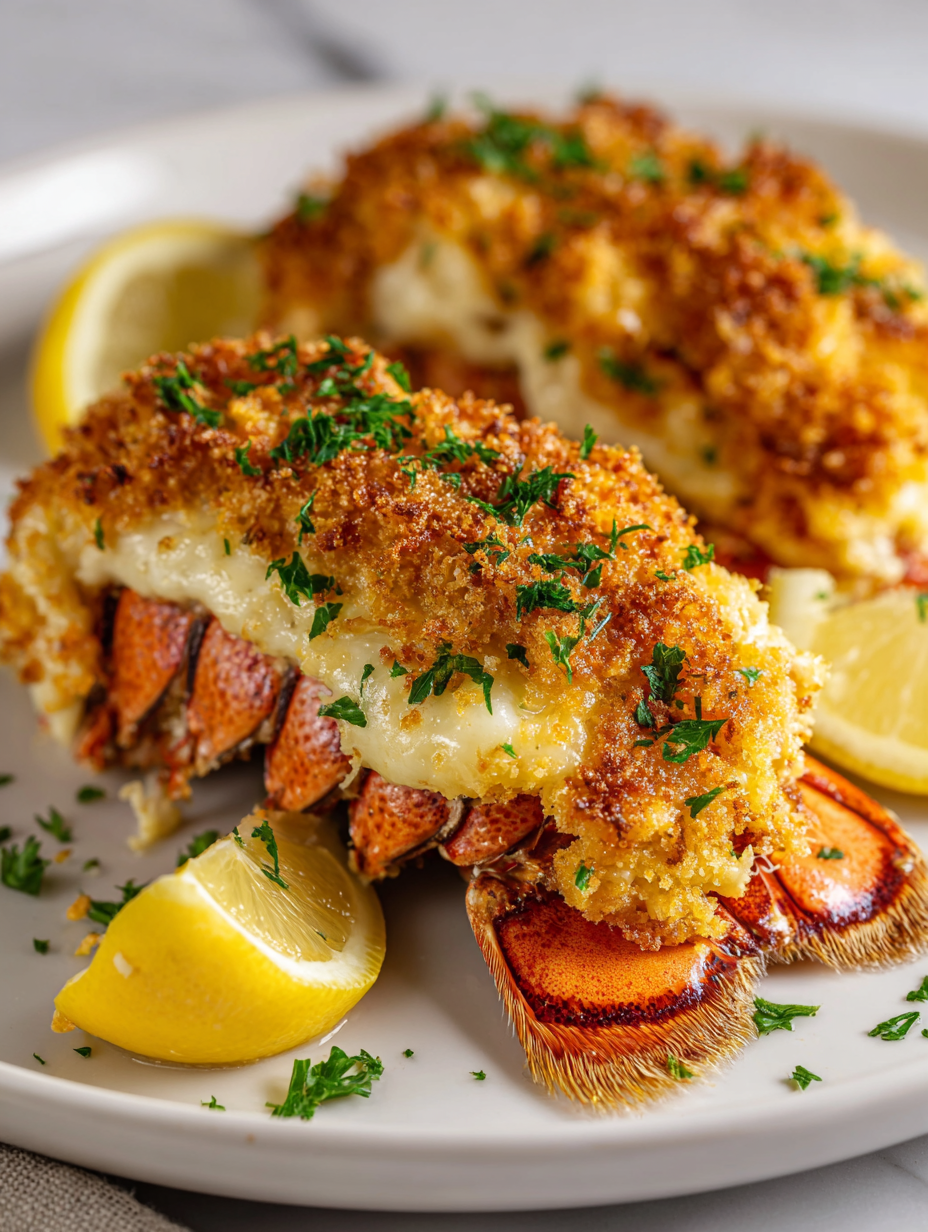
Parmesan Crusted Lobster Tail
Ingredients
Equipment
Method
- Use seafood scissors or a boning knife to carefully cut down the top shell of each lobster tail from the fan end to the tail base, then gently lift the shell to expose the meat without tearing it.
- Loosen the lobster meat from the shell, gently lift it out, and rest it on top of the shell, keeping it attached at the tail end. Pat the meat dry to remove excess moisture.
- In a small bowl, combine the grated Parmesan, toasted panko breadcrumbs, minced garlic, melted butter, lemon zest, and a pinch of salt. Mix until well blended and crumbly.
- Spread the Parmesan mixture evenly over the exposed lobster meat, pressing it gently to ensure it sticks and forms a thick, even crust.
- Preheat the oven to 200°C (390°F). Place the lobster tails on a rack inside a baking sheet lined with parchment paper for even heat circulation.
- Bake the lobster for about 12–15 minutes, until the crust is golden brown and crispy, and the lobster meat is opaque and firm.
- For extra color and crunch, turn on the broiler for 1–2 minutes, watching closely to prevent burning, until the crust is deeply golden and crackling.
- Remove from oven and let rest for 2 minutes. Use a brush to lightly coat with melted butter if desired, then serve with lemon wedges and chopped herbs for garnish.
Pro tips for perfect Parmesan crust
- Bolded mini-head: Use fresh Parmesan for a meltier, crunchier crust—pre-grated cheese won’t give the same texture.
- Bolded mini-head: Apply the crust mixture evenly with a spoon, pressing gently to ensure it sticks and crisps up uniformly.
- Bolded mini-head: Broil the lobster for the last 1-2 minutes to deepen the golden hue and add a crackling finish.
- Bolded mini-head: Keep an eye on the oven; crust can go from golden to burnt quickly—set a timer at the 10-minute mark.
- Bolded mini-head: Rest the lobster for 2 minutes after baking—this helps the juices redistribute and keeps it tender.
Common mistakes and how to fix them
- FORGOT to preheat oven → Always preheat for even crust browning.
- DUMPED lobster in boiling water → Avoid boiling; use broil for crust and gentle cooking.
- OVER-TORCHED crust → Watch broil closely; remove when golden and crackling.
- UNDER-seasoned crust → Add more salt or herbs to enhance flavor before baking.
Kitchen fixes for Parmesan lobster
- When crust is too pale → Splash with a quick broil, watch for crackling golden edges.
- If lobster meat is rubbery → Rest for 2 minutes; overcooking is the usual culprit.
- Dumped crust into the pan → Patch with a sprinkle of Parmesan and a quick broil for extra crunch.
- When crust slides off → Shield with a light brushing of melted butter or egg wash before baking.
- If cheese isn’t melting → Open the oven wider, increase temperature slightly, and give it 1 more minute.
Prep, store, and reheat tips
- Prepare the lobster tails: Cut and loosen the meat from the shell up to the last inch, then refrigerate wrapped in plastic for up to 2 hours. The shell keeps the meat moist and easy to handle.
- Make the Parmesan crust mixture: Combine all ingredients and store in an airtight container in the fridge for up to 24 hours. It firms up slightly when chilled, so bring it to room temperature before applying.
- Assemble just before baking: Keep the prepared lobster and crust mixture separate until ready. Assembling ahead can cause the crust to become soggy, so only do it within 30 minutes of cooking.
- Reheating leftovers: Gently reheat in a 180°C (350°F) oven for 8-10 minutes until warmed through and the crust is crispy again. The lobster meat will stay tender if not overcooked during reheating.
- Shelf life and sensory notes: Fresh lobster tastes best on the day; leftovers may lose some moisture and crispness. The crust will soften slightly but still offer a savory bite when reheated properly.
Top questions about Parmesan Crusted Lobster
1. How do I choose the right lobster tail?
Use fresh lobster tails with bright color and firm texture for best flavor. Avoid dull, grayish tails that smell off.
2. Should I use pre-grated Parmesan?
Grate the Parmesan fresh; pre-grated cheeses don’t melt or crisp as well. It helps form that golden crust.
3. How long does it take to cook the lobster?
Preheat your oven to around 200°C (390°F). Bake for 12-15 minutes, until the crust is golden and lobster is opaque.
4. How do I get the crust to stick properly?
Apply the Parmesan crust mixture evenly, pressing gently so it adheres well. Broil at the end for extra crispness.
5. How do I know when the crust is perfectly toasted?
Watch the lobster during broiling—about 1-2 minutes—to prevent burning. Look for a deep golden, crackling crust.
6. Can I make this dish ahead?
Reheat leftovers gently in a 180°C (350°F) oven for about 8-10 minutes until warm and crispy again.
7. What substitutions work in this recipe?
Substitute Pecorino for Parmesan for a saltier, tangier crust. Use gluten-free breadcrumbs if needed. Lemon zest can be swapped with lime or orange zest.
8. What makes good lobster for this dish?
The lobster’s natural sweetness balances beautifully with the salty Parmesan. Freshness and bright color are key for flavor.
9. Should I broil the lobster?
A quick broil at the end deepens the crust’s golden color and adds a crispy, crackling texture. Keep a close eye to avoid burning.
10. What if the crust isn’t crispy?
If the crust isn’t crispy enough, brush with a little melted butter and broil for another minute, watching carefully.
This lobster dish might seem fancy, but I swear it’s straightforward enough for a weeknight treat. The combination of crispy Parmesan and tender lobster feels like a little celebration on the plate, especially with a squeeze of lemon. It’s the kind of dish that makes you pause and savor each bite, reminding you that good food can be simple and memorable.
Whenever I make this, I think about how the crackling crust and buttery lobster come together in that perfect balance. It’s not just about impressing guests but really relishing the process and the flavors. Sometimes, the smallest tweaks—like a little extra cheese or a quick broil—make all the difference.

Hi, I’m Olivia Chen-Williams, a professional chef, cooking instructor, and the founder of Turn Around At 50. For nearly three decades, my life has revolved around kitchens. Not the quiet, romantic kind, but the real ones. Hot, loud, demanding, and deeply alive.