
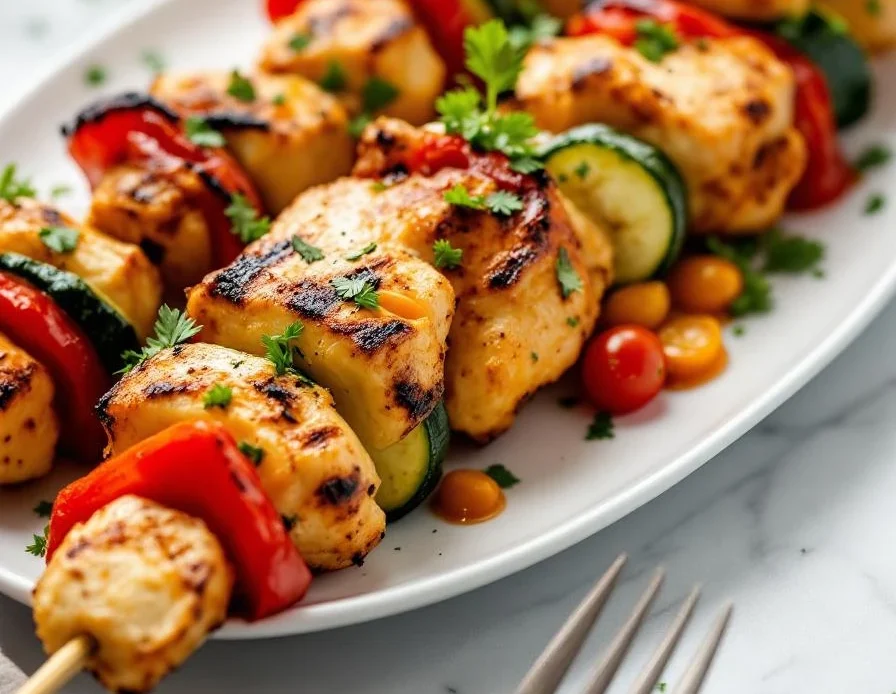
The moment I thread the chicken pieces onto skewers, I get a whiff of raw meat mixing with the marinade—messy, but part of the process. As I prep, I often find myself juggling tongs, trying not to drop a piece or poke myself on the skewers.
Grilling is loud—the sizzle and crackle of chicken hitting hot grates echo in the yard. Turning the skewers every few minutes, I watch for those charred edges and listen for that perfect, steady crackle that signals it’s cooking through.
The satisfying sound of the chicken sizzling and crackling on the grill, with juices bubbling up, signals it’s time to flip—each turn a promise of smoky, tender bites.
What goes into this dish
- Chicken breasts: I usually go for boneless, skinless breasts—they cook evenly and stay juicy, especially with a good marinade. If you prefer dark meat, thighs work too—just watch the cooking time. Juicy and tender, they soak up flavors without drying out.
- Bell peppers: I love the bright, smoky aroma of charred peppers, adding sweetness and crunch. Red or yellow peppers give a vibrant look, but green works fine if you want a slightly more bitter bite. Skip if you’re not into the fuss of chopping and skewering.
- Red onion: I slice these thick so they don’t fall apart on the grill, offering a sharp bite that mellows with heat. You can swap in shallots for a milder, sweeter flavor—skip if you’re not a fan of onion’s pungency.
- Zest and juice of lemon: This bright, tangy splash helps tenderize the chicken and adds a fresh aroma. Lime works well, too, for a slightly different citrus punch. Skip if you prefer a milder marinade.
- Olive oil: I use a good extra virgin to help the marinade cling, and it adds a subtle fruity note. Can substitute with avocado oil for a higher smoke point, especially if your grill runs hot. Skip if you’re avoiding fat.
- Garlic: Fresh minced garlic is essential for that punch of savory aroma that wakes up the meat. You could use garlic powder in a pinch, but fresh really wins here. Skip if you’re sensitive to garlic’s bite.
- Herbs: Fresh parsley or cilantro brightens the overall flavor, but dried can be used if fresh isn’t available—just cut the amount in half. Skip if you dislike herbs or want a simpler flavor profile.
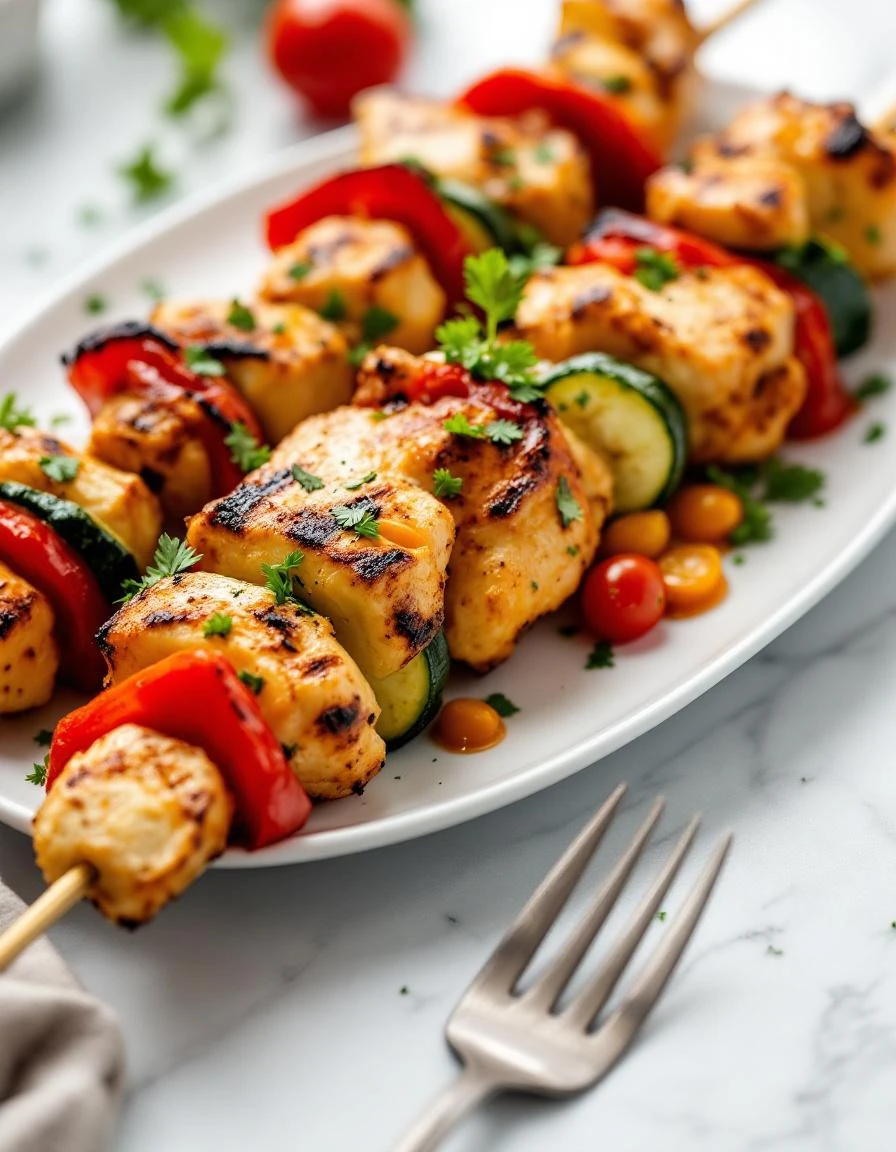
Grilled Chicken Skewers with Vegetables
Ingredients
Equipment
Method
- Combine lemon zest, lemon juice, olive oil, minced garlic, chopped herbs, and a pinch of salt in a bowl to create the marinade. Whisk until well blended and fragrant.
- Add the chicken pieces to the marinade, tossing to coat evenly. Cover and refrigerate for at least 30 minutes, or up to 4 hours for more flavor.
- Preheat your grill to medium-high heat, until hot and slightly smoky.
- Thread the marinated chicken pieces onto skewers, alternating with pieces of bell peppers and red onion for color and flavor.
- Place the skewers on the grill, listening for the sizzle as the chicken hits the hot grates. Cook for about 6-8 minutes per side, turning every few minutes with tongs to ensure even charring.
- Watch for golden-brown edges and listen for steady crackling; the chicken should be cooked through with a smoky exterior.
- Remove the skewers from the grill and let rest for 5 minutes, allowing juices to redistribute for tender bites.
- Serve the skewers hot, garnished with extra herbs or lemon wedges if desired, and enjoy the smoky, flavorful bites.
Common Mistakes and How to Fix Them
- FORGOT to marinate long enough? Extend marinating time for deeper flavor penetration.
- DUMPED the skewers into the grill? Turn frequently to prevent burning and ensure even cooking.
- OVER-TORCHED the chicken? Lower the heat or move skewers to cooler spots on the grill.
- MISSED the resting period? Let cooked kabobs rest a few minutes for juicier bites.
Make-Ahead and Storage Tips
- Marinate the chicken and chop vegetables a few hours before grilling; keeps flavors vibrant and ready to go.
- Store assembled skewers in an airtight container in the fridge for up to 24 hours—flavors deepen but watch for sogginess.
- Freeze skewers for up to 2 months if you want to prep way in advance; defrost in the fridge overnight before grilling.
- Refrigerated kabobs can lose some brightness after a day—consider a squeeze of lemon or fresh herbs before reheating.
- Reheat gently on a grill or in a skillet—look for sizzling and a slight char; avoid overcooking to keep chicken juicy.
FAQs
1. How do I know when the chicken is done?
The chicken should feel firm but not hard, with a slight bounce when pressed. Juices may run clear when pierced with a skewer. A gentle aroma of smoky char and herbs signals it’s ready.
2. What’s the best way to check doneness?
Look for a golden-brown sear with a bit of charring on the edges. The meat should be opaque throughout, with no pink in the center. Juices should run clear when pierced.
3. How do I prevent the chicken from sticking or tearing?
Use tongs to turn skewers gently, avoiding tearing the meat. Keep the heat moderate to prevent burning while getting a good sear. Listen for a steady crackle before flipping again.
4. Why rest the chicken before serving?
Allow the kabobs to rest for 5 minutes after grilling. This helps juices settle, making each bite juicy and tender. You’ll notice a more concentrated aroma and flavor as they rest.
5. Can I prepare these ahead of time?
Marinate the chicken at least 30 minutes, but up to 4 hours for more flavor. Keep in the fridge, covered, to preserve freshness. Reheat gently to preserve moisture and aroma.

Hi, I’m Olivia Chen-Williams, a professional chef, cooking instructor, and the founder of Turn Around At 50. For nearly three decades, my life has revolved around kitchens. Not the quiet, romantic kind, but the real ones. Hot, loud, demanding, and deeply alive.