
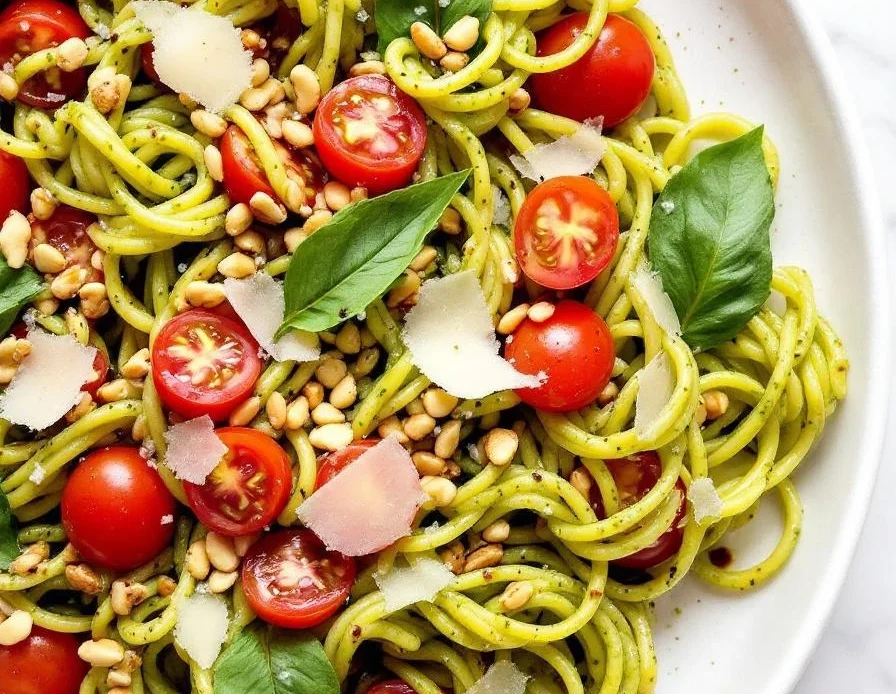
Pulling cold pasta out of the fridge, I toss it straight into a big bowl, hearing that satisfying clink of chilled noodles. The pesto, thick and oily, gets spooned over, and I start mixing, feeling the slippery strands cling and slide between my fingers.
Chopping fresh basil, I keep an eye on the clock, knowing the salad needs to rest a bit for flavors to meld. It’s a messy, tactile process—scooping, stirring, tasting—until everything’s coated and ready to chill further or serve.
The crunch of the cold pasta as you toss it, the snap of fresh basil leaves, and the squeak of the fork against the bowl—making this salad is a tactile, noisy process that feels satisfying with every stir.
What goes into this dish
- Pasta: I use rotini or penne—something that holds onto pesto well. Skip the fancy shapes if you’re in a rush; plain spaghetti works fine too, just give it a good rinse so it’s cold and stops cooking.
- Basil: Fresh basil smells like summer grass—bright and peppery. If not available, try parsley for a milder, grassy note, or arugula for a peppery punch that still adds green vibrancy.
- Pesto: Homemade is best, with garlic, pine nuts, and good olive oil making it lush and fragrant. Store-bought works in a pinch, but look for one with minimal preservatives and lots of basil.
- Cherry Tomatoes: Juicy and sweet, they burst with a pop of flavor. If out of season, roasted cherry tomatoes deepen the flavor, giving a smoky, oozy hit that’s just as good.
- Olive Oil: Extra virgin, preferably a fruity, peppery one—adds richness and depth. If you only have light olive oil, just use a little more to boost that oily aroma and mouthfeel.
- Lemon Juice: Brightens everything with a citrus zing—fresh squeezed is best, but bottled lemon works if it’s fresh and not too dull. Skip if you’re going for a purely herbal flavor.
- Parmesan: Grated right over the top, it adds that salty, umami hit. If dairy-free, nutritional yeast can mimic some of that cheesy tang, but won’t melt into the pesto.
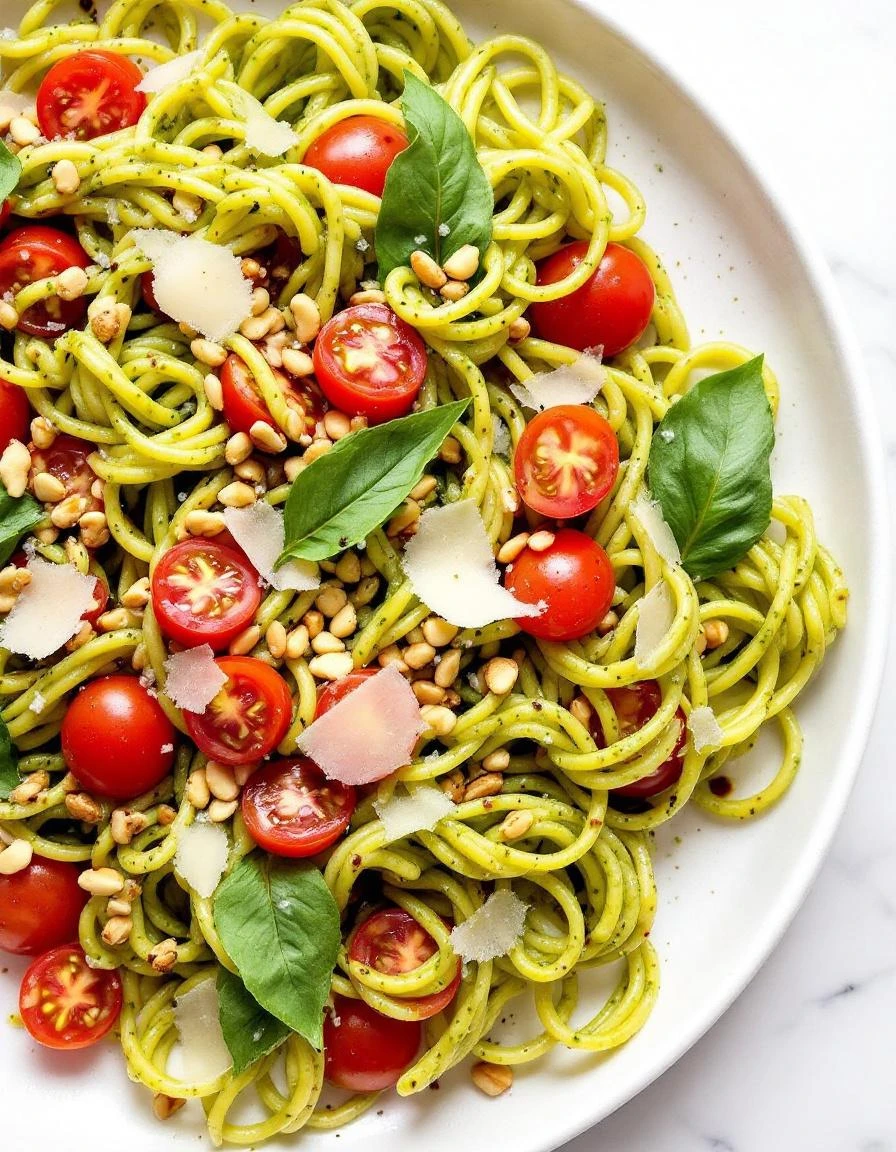
Cold Pesto Pasta Salad
Ingredients
Equipment
Method
- Cook the pasta in salted boiling water until al dente, then drain and rinse thoroughly with cold water to stop the cooking process and cool the noodles down. Set aside in a large mixing bowl.
- While the pasta is cooking, chop fresh basil leaves roughly and halve the cherry tomatoes. These add vibrant flavor and texture to the salad.
- Add the chopped basil and halved tomatoes to the cooled pasta in the bowl. Pour the pesto over the mixture, aiming for an even coating.
- Drizzle the olive oil and squeeze fresh lemon juice over the pesto-coated pasta. These brighten the flavors and add a slight sheen to the salad.
- Gently toss everything together using a large spoon or salad tongs, ensuring the pesto and ingredients are evenly distributed and the pasta is well coated.
- Grate Parmesan cheese over the top of the salad for a salty, umami finish. Mix again gently to incorporate.
- Cover the bowl and refrigerate for at least 30 minutes to allow the flavors to meld and the salad to stay refreshingly cold.
- Give the salad a final toss, taste, and adjust seasoning if needed before serving. Enjoy the vibrant, tangy, and herbaceous flavors in every bite!
Common mistakes and how to fix them
- FORGOT to taste before serving? Always taste to check salt and acidity, adjust accordingly.
- DUMPED in hot pasta? Always rinse cooked pasta with cold water to stop the cooking process and chill.
- OVER-TORCHED the pesto? Keep an eye on it while blending, stop as soon as it’s fragrant and smooth.
- MISSED the basil? Add fresh basil just before serving for maximum vibrancy and aroma.
Make-Ahead and Storage Tips
- Prep the pasta and pesto a day ahead; store separately in airtight containers in the fridge for up to 24 hours. Toss together just before serving for maximum freshness and crunch.
- Chop herbs, halve tomatoes, and grate cheese in advance. Keep everything covered and chilled; these add bright textures and flavors when assembled fresh.
- The salad can sit in the fridge for 2-3 hours without losing crunch. After that, noodles may start to absorb the pesto, so toss again before serving if needed.
- Freezing isn’t recommended—pasta and pesto can turn mushy or separate with prolonged freezing. Best eaten fresh or within a day.
- Flavors meld slightly after resting, but over time the basil’s brightness fades and the oil can separate. Toss and taste before serving to adjust seasoning if needed.
- Refrigerate leftovers in an airtight container. Consume within 2 days for best texture; the pasta may soften and the pesto might lose vibrancy. Reheat gently or serve cold, checking for any off smell or sliminess.
FAQs
1. How should the pasta feel when ready?
The cool, firm pasta gives a slight resistance when bitten, with a faint slippery gloss from the pesto coating. You’ll notice a fresh basil aroma and a burst of tomato juice in each bite.
2. What’s the right pesto consistency?
The pesto should be thick and oily, clinging to the noodles with a fragrant garlic scent. When mixed, it coats each piece evenly, leaving a slight oily sheen and a herbal punch.
3. How long to chill before serving?
Chill the salad for at least 30 minutes, so the flavors meld and the pasta stays refreshingly cold. The basil’s scent intensifies, and the tomatoes soften slightly, releasing their sweet juice.
4. Can I use different tomatoes?
Use ripe cherry tomatoes for a juicy pop and vibrant color. If they’re out of season, roasted tomatoes add a smoky, oozy richness that balances the coolness.
5. How long do leftovers keep?
Store leftovers in an airtight container in the fridge for up to 2 days. The pasta may absorb more pesto, so give it a good toss and freshen with a squeeze of lemon before eating again.
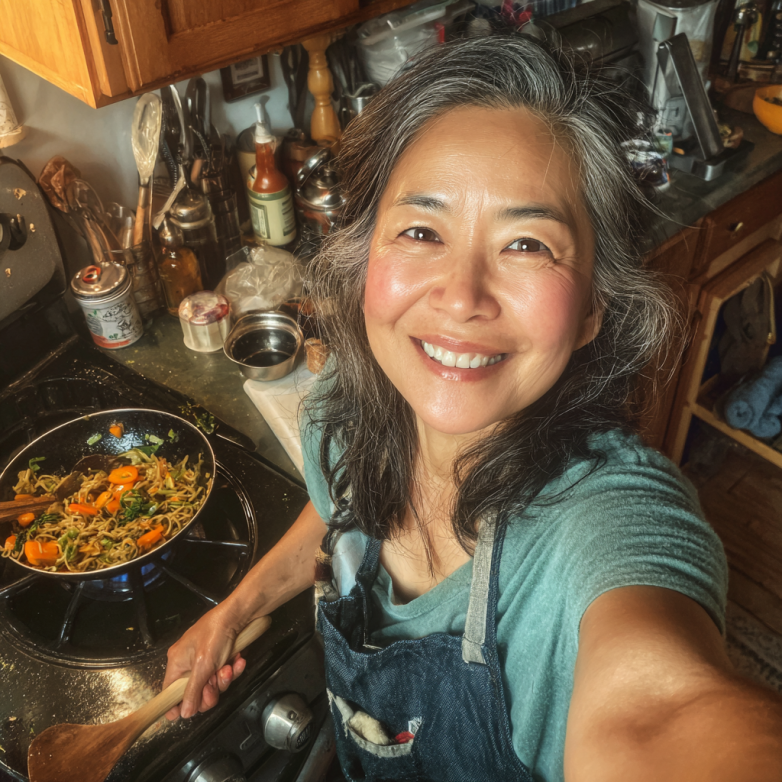
Hi, I’m Olivia Chen-Williams, a professional chef, cooking instructor, and the founder of Turn Around At 50. For nearly three decades, my life has revolved around kitchens. Not the quiet, romantic kind, but the real ones. Hot, loud, demanding, and deeply alive.