
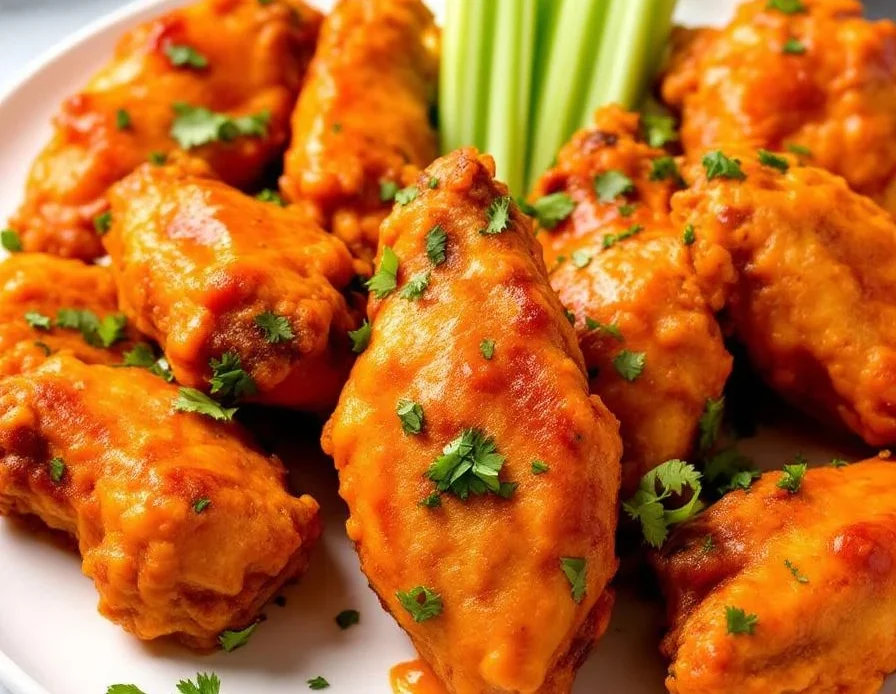
Frying these wings means dealing with hot oil splattering everywhere, so I keep a lid handy and wear an apron that catches drips. The moment you lower the wings into the bubbling oil, there’s a loud sizzle and a puff of steam, so watch your hands. Once they hit that hot oil, you’re in for a messy, noisy process that’s worth the cleanup.
As they cook, the skin crisps up unevenly in spots, and you need to turn them a few times to get that even golden-brown. When you pull them out, they’re hot and greasy, with a crackling sound that’s oddly satisfying. Draining them on paper towels is messy but essential to remove excess oil before tossing in sauce.
the crack of the wings as you bite into them, the crispy skin giving way with a satisfying crunch that echoes in the quiet of the kitchen
What goes into this dish
- Chicken wings: I go for fresh, meaty wingettes with a good amount of skin; if you want less mess, try drumettes. The skin crisps up beautifully, giving that satisfying crunch with each bite.
- Hot sauce: I prefer Frank’s for that classic tangy kick, but if you like more vinegary punch or smoky flavor, swap in Sriracha or chipotle-based sauces. The bright, fiery aroma is key to authentic buffalo flavor.
- Butter: Unsalted, of course—melts into the sauce and smooths out the heat. You can substitute with margarine or a splash of olive oil if butter’s not your thing, but it won’t have the same richness.
- Vinegar: A splash of distilled white vinegar brightens everything up. If you’re out, lemon juice can add a similar tang, or skip it altogether for a milder sauce. It’s that sharp note that makes the sauce sing.
- Garlic powder: I keep it simple, but fresh minced garlic can work for a more pungent, roasted aroma—just add it early in the sauce. The powder disperses evenly and gives a subtle, savory punch.
- Salt and pepper: Salt enhances everything, especially after frying. Pepper adds a little heat and depth—adjust to taste, but don’t skip the seasoning, or the wings can taste flat.
- Optional: Celery stalks or carrots for crunch on the side—fresh and crisp, they cut through the richness and add a refreshing bite.
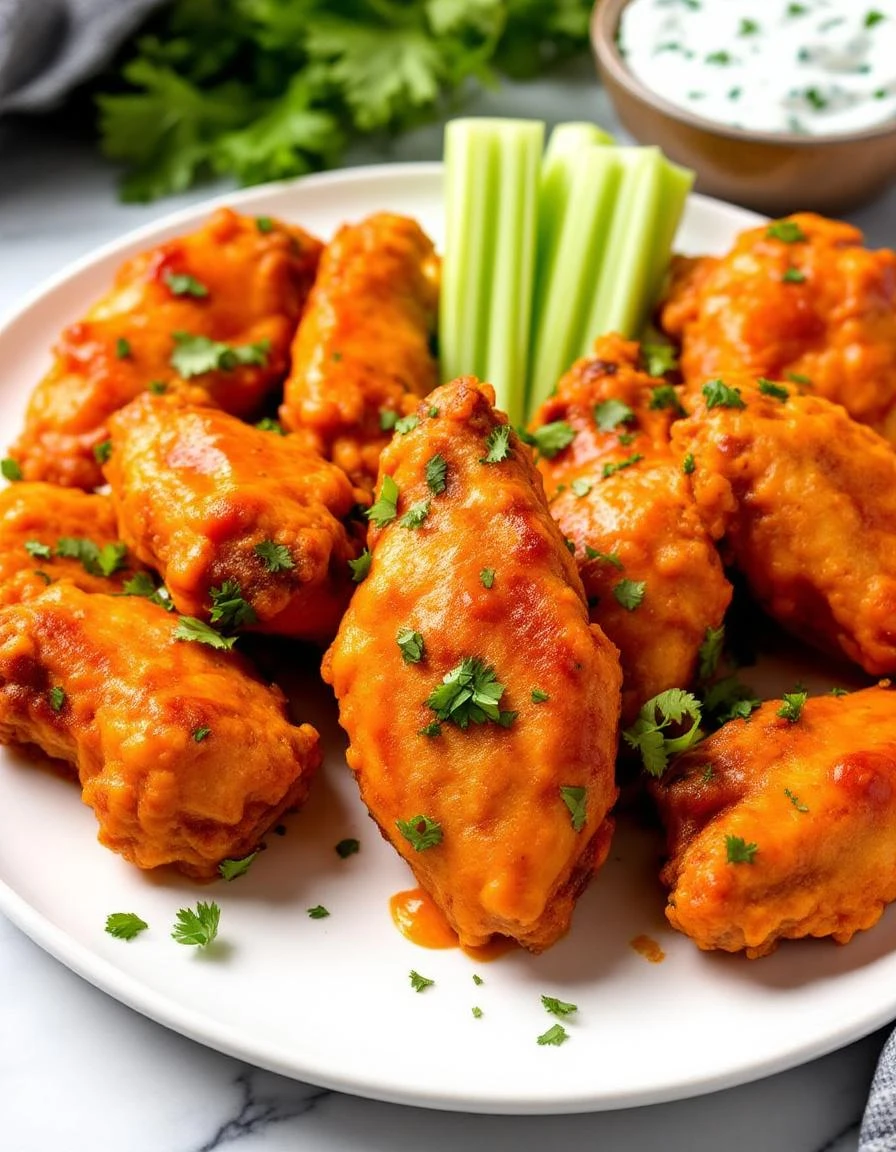
Crispy Buffalo Chicken Wings
Ingredients
Equipment
Method
- Pat the chicken wings dry with paper towels to remove excess moisture, which helps achieve crispiness during frying.
- Fill your deep fryer or large heavy-bottomed pot with enough oil to fully submerge the wings, then heat it to 375°F (190°C).
- Carefully lower the wings into the hot oil using tongs, making sure not to overcrowd the pan. Fry in batches if needed to maintain temperature.
- Fry the wings for about 10-12 minutes, turning occasionally with tongs, until they are golden brown and crispy, with a crackling sound as they cook.
- Use a slotted spoon or tongs to remove the wings and place them on paper towels to drain excess oil, letting them sit for a couple of minutes.
- In a mixing bowl, combine the hot sauce, melted butter, vinegar, garlic powder, salt, and pepper. Whisk until smooth and well blended.
- Toss the hot, crispy wings in the sauce mixture until evenly coated, ensuring the sauce clings to the skin for maximum flavor.
- Serve immediately, allowing the crisp skin to crackle with each bite and enjoy the fiery, tangy flavor of your buffalo wings.
Common mistakes and how to fix them
- FORGOT to dry wings thoroughly, fix by patting with paper towels before frying.
- DUMPED hot sauce directly on wings, let it cool slightly to avoid burning your mouth.
- OVER-TORCHED the skin, lower heat or shorten cooking time for crispy but not burnt skin.
- MISSED seasoning step, add salt and pepper after frying to boost flavor.
Make-Ahead and Storage Tips
- You can fry the wings a few hours ahead, keep them warm in a low oven or warm holding drawer. Reheat in the oven for crispy skin again.
- Sauces can be made a day in advance; store in airtight container in the fridge. Reheat gently on the stove, stirring often to prevent separation.
- For best flavor, toss cooked wings in sauce just before serving. If refrigerated, the sauce may thicken; warm and stir to loosen.
- Wings stored in the fridge last up to 2 days. For freezing, pack tightly in a freezer bag, good for up to a month. Reheat directly from frozen in oven or air fryer.
- Reheated wings won’t be as crisp as fresh, but oven or air fryer reheat will restore some crunch. Check for sizzling sound and crispy skin before serving.
FAQs
1. How do I pick good wings?
Look for wings that feel firm and have a good layer of skin; they should sound crackly when you squeeze them gently. Fresh wings smell clean, not sour or overly gamey.
2. What should the sauce taste like?
The sauce should be tangy and spicy, with a slight vinegary bite and buttery richness. It should cling to the wings without sliding off, leaving a sticky, flavorful coating.
3. What’s the texture like?
Crispy wings crackle loudly as you bite, with a hot, greasy feel on your fingertips. The heat hits your nose first, then the smoky, spicy kick lingers on your tongue.
4. How do I reheat wings?
Reheat in a hot oven or air fryer until they sizzle and the skin feels crisp again. Expect a warm, fragrant aroma of fried chicken and spicy butter as they come back to life.
5. Can I prepare the sauce in advance?
Yes, you can make the sauce ahead—store it in the fridge for up to 2 days. Reheat gently on the stove until it bubbles and smells bright and spicy again.

Hi, I’m Olivia Chen-Williams, a professional chef, cooking instructor, and the founder of Turn Around At 50. For nearly three decades, my life has revolved around kitchens. Not the quiet, romantic kind, but the real ones. Hot, loud, demanding, and deeply alive.