
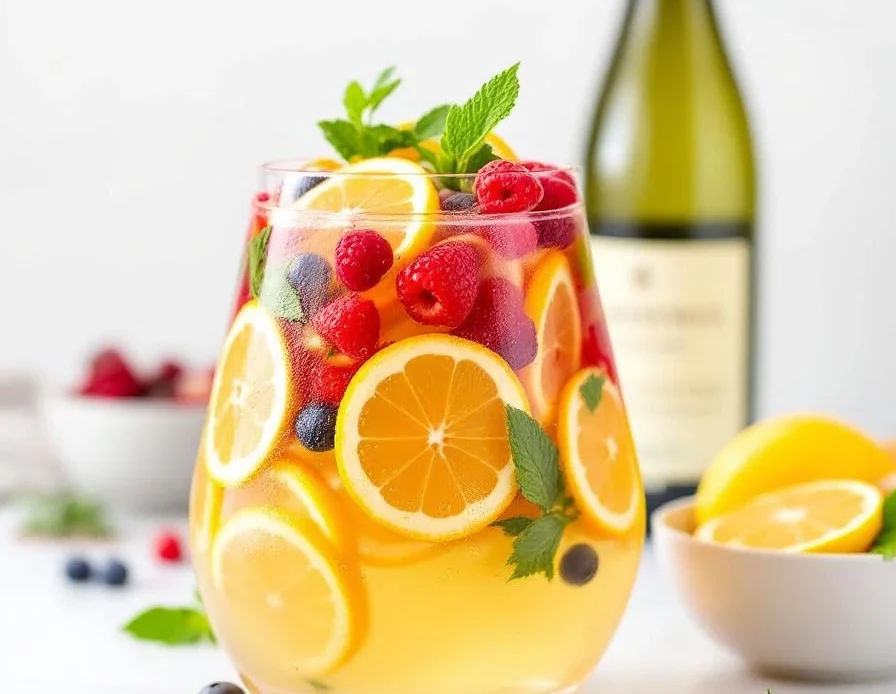
Getting a pitcher of white wine sangria together means chopping fruit, sometimes a little juice squirts out, and dealing with the sticky mess of citrus peel on your counter. The sound of fruit hitting the bottom of the pitcher and the gentle pour of chilled wine create a tactile rhythm that grounds the process.
As you stir everything together, the mix of citrus, fruit, and wine starts to meld—smelling brighter and more complex with each turn of the spoon. It’s a hands-on, slightly messy affair that’s about feeling the ingredients come together in the glass.
The clink of ice cubes against the glass as you pour, the faint fizz of the soda, and the scent of citrus and ripe fruit blending into the warm air—it’s the tactile rhythm of building a pitcher that makes this sangria feel real.
What goes into this dish
- White wine: I go for a crisp, dry variety like Sauvignon Blanc or Pinot Grigio—something with citrus and green apple notes that brighten the fruit. Skip sweet wines unless you want it very sugary.
- Fresh citrus: Lemons and oranges are staples—squeeze out some juice and slice thin for visual pops and aroma. Skip if you’re out, but lemon zest adds a smoky brightness I love.
- Sweetener: A splash of simple syrup, honey, or agave syrup balances the tartness. If you prefer less sugar, start small and taste as you go—sometimes a splash of fruit juice does the trick.
- Fruit: Berries, peaches, or apple slices add texture and color. Use what’s ripe and in season; frozen fruit works in a pinch, just drain excess moisture first.
- Herbs (optional): A sprig of mint or basil can add a fresh, aromatic layer. Skip if you’re not a fan of herbal hints, but it almost smells like a garden party.
- Sparkling element: Club soda or lemon-lime soda adds fizz. I prefer soda water for a cleaner taste; skip if you want it flat or add a splash of tonic for bitterness.
- Ice: Plenty of cubes—clinking and melting—cool the pitcher and dilute slightly. Use large ice blocks if you want to slow dilution, but don’t skip this part.
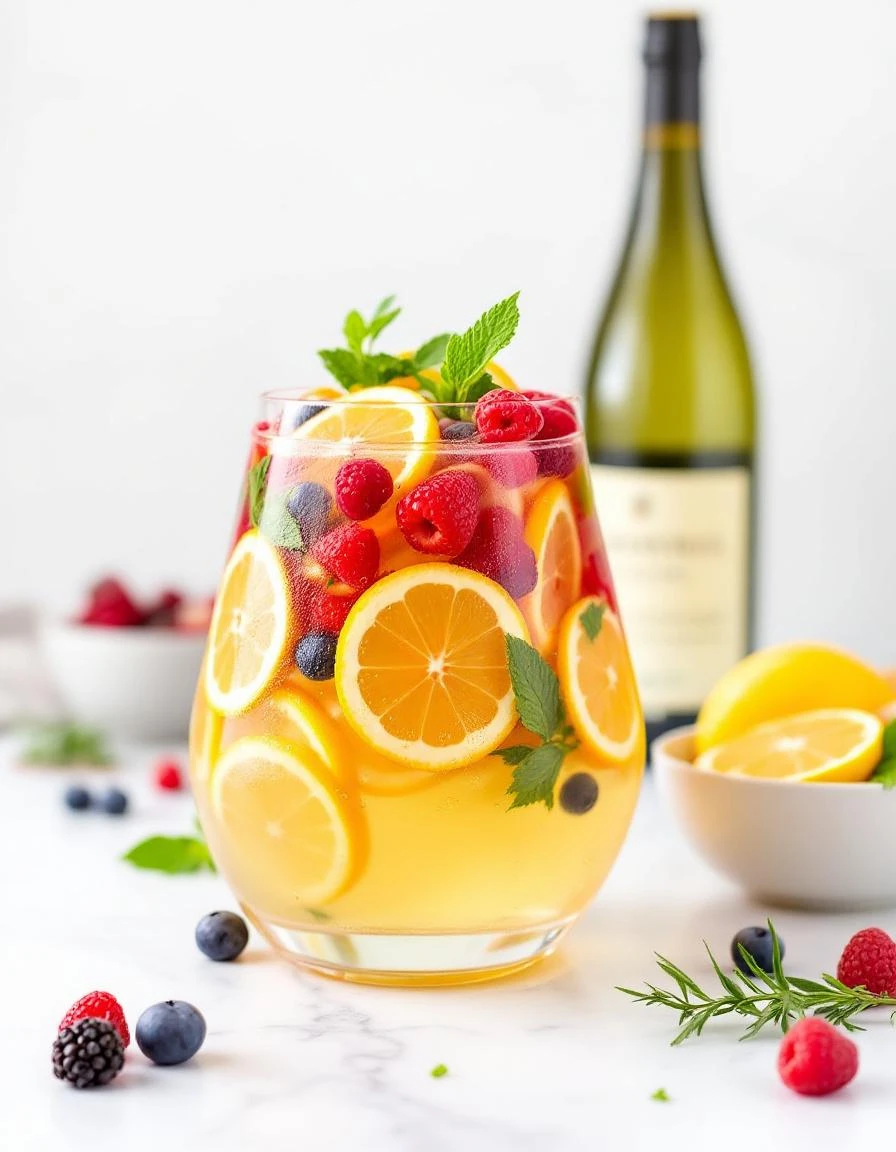
White Wine Sangria
Ingredients
Equipment
Method
- Begin by slicing the lemon and orange thinly, then juice the lemon and orange into a small bowl, removing any seeds.
- Pour the chilled white wine into a large pitcher, then stir in the citrus juice and simple syrup until well combined.
- Add the citrus slices to the pitcher, followed by the sliced peach and berries, creating a colorful mix.
- Gently muddle the fruit with a wooden spoon or muddler to release their juices and aroma, making the mixture fragrant and vibrant.
- Add the mint leaves, gently pressing them in to release their fresh scent without tearing them apart.
- Fill the pitcher with large ice cubes, which will chill the sangria and slow dilution while adding a satisfying clink as you pour.
- Just before serving, pour the chilled club soda into the pitcher, giving it a gentle stir to combine the bubbles and flavors.
- Serve the sangria immediately in glasses filled with extra ice if desired, and garnish with additional fruit slices or mint leaves for presentation.
Common mistakes and how to fix them
- FORGOT to taste the sangria before serving? Add a squeeze of lemon to brighten it up.
- DUMPED in all the fruit at once? Layer ingredients gradually for better flavor extraction.
- OVER-TORCHED the sugar syrup? Warm gently and stir until fully dissolved, avoiding burnt notes.
- MISSED the chill time? Let it rest at least 2 hours; flavors meld and fruit softens.
Make-Ahead and Storage Tips
- You can prep the fruit and citrus the day before—slice and store in the fridge in an airtight container. It softens slightly but keeps its bright flavor.
- The sangria can sit in the fridge for up to 24 hours before serving. The flavors will meld, and the fruit will soak up some wine’s aroma.
- If you add sparkling soda, do it just before serving to keep the fizz lively. Otherwise, it’ll go flat and dull the drink’s freshness.
- Any extra sangria can be stored in the fridge for 2-3 days. The fruit might lose some vibrancy, but the wine will still taste good—just give it a stir.
- Reheating isn’t recommended; serve chilled. If it’s too cold, let it sit at room temp for 10 minutes, then taste for brightness and adjust with a splash of citrus if needed.
FAQs
1. How should the sangria smell when ready?
Chilled, crisp, with a hint of citrus aroma—think lemon zest and ripe fruit mingling on your nose.
2. What’s the right texture for the drink?
It should feel refreshingly cool on your tongue, with the fruit and wine flavors balanced and bright.
3. How do I know when it’s properly chilled?
Look for vibrant fruit pieces and a slight fizz if you’ve added soda—visual cues of freshness and sparkle.
4. When is my sangria ready to serve?
Taste a small sip—sweet, tart, and fruit-forward with a clean, crisp finish that lingers mildly.
5. Which wine works best for this recipe?
Use a dry, citrusy white wine—something like Sauvignon Blanc. It keeps the drink light and lively.

Hi, I’m Olivia Chen-Williams, a professional chef, cooking instructor, and the founder of Turn Around At 50. For nearly three decades, my life has revolved around kitchens. Not the quiet, romantic kind, but the real ones. Hot, loud, demanding, and deeply alive.