

Making gazpacho is all about the rough, messy prep—peeling tomatoes, chopping cucumbers, crushing garlic. It’s a hands-on process that keeps you feeling the textures and smells right in your palms.
You’ll spend a few minutes rinsing, peeling, and blending, with the cold water splashing and the blades whirring. It’s simple, but those little tactile moments matter—this isn’t a dish you can rush through.
The gritty sound of peeling ripe tomatoes, the rough scrape of a knife through cucumber skin, and the splash of cold water as you rinse everything—making gazpacho is a tactile, messy affair that keeps your hands busy and senses sharp.
What goes into this dish
- Ripe tomatoes: I love the feel of squishy, fragrant tomatoes—peel them if you want a smoother soup, but skip it if you’re short on time; the skin adds a slight pop of texture. Swap in canned if fresh aren’t available.
- Cucumber: Crunchy, cool, slightly watery—peel or leave the skin for more texture. If you’re out, zucchini can work, but it’s milder and less refreshing, so add a squeeze of lemon.
- Bell peppers: Sweet, smoky, a splash of color—roast them for deeper flavor or use raw for brightness. Green peppers are sharper, red sweeter; skip if you don’t have any, but add a dash of smoked paprika for smoky depth.
- Garlic: Pungent and sharp when raw, mellow with a bit of roasting or smashing—crush it for a more intense punch, or skip if you’re sensitive. Use shallots for a milder, sweeter note.
- Vinegar: Bright, tangy, it wakes everything up—red wine vinegar is classic, but sherry vinegar adds complexity. If you’re out, a splash of lemon juice can substitute, but it’s less mellow.
- Olive oil: Fragrant, slightly bitter, it coats everything—use good-quality extra virgin for richness. Skip if you prefer a lighter soup, but it really lifts the flavors. A drizzle right before serving is best.
- Salt and pepper: Essential for balancing—don’t skimp. Use sea salt and freshly cracked black pepper for the best flavor punch, especially after blending. If you’re watching sodium, reduce but don’t omit.
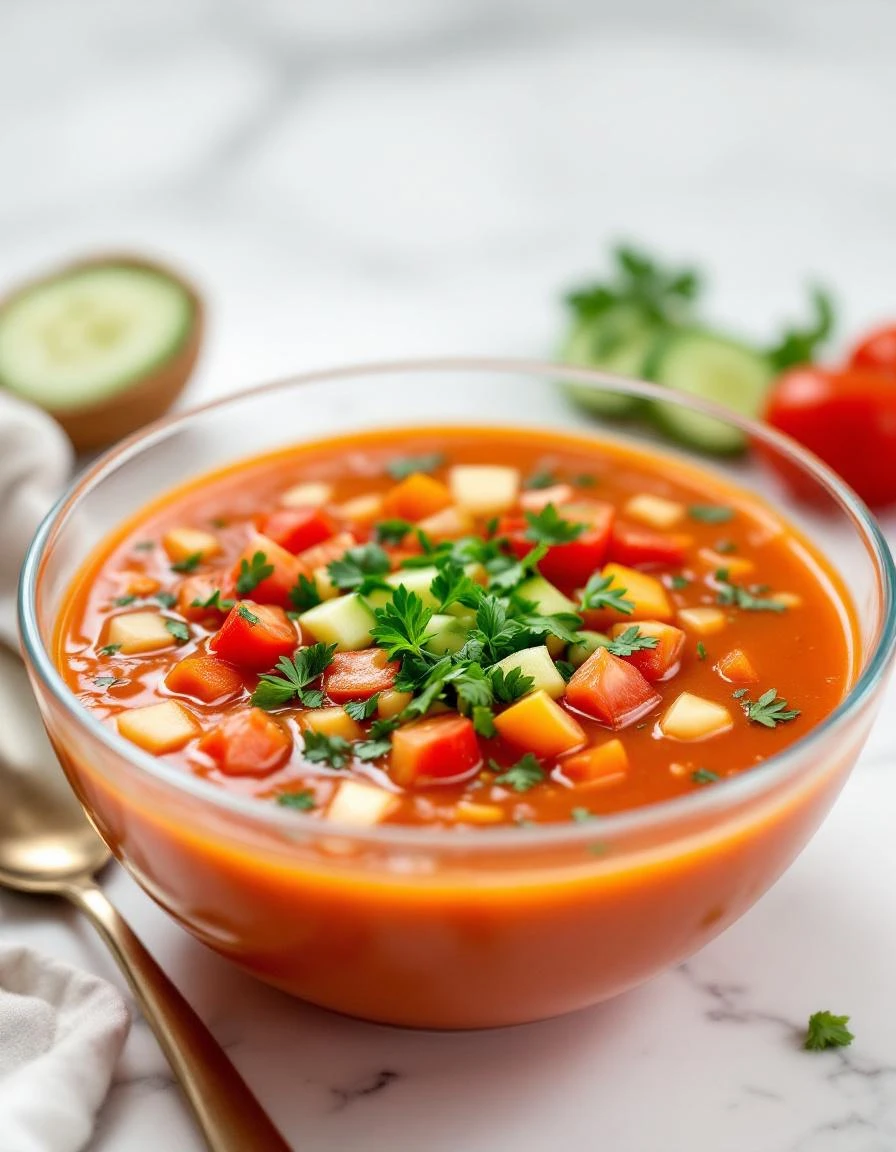
Classic Gazpacho
Ingredients
Equipment
Method
- Start by rinsing your tomatoes, then roughly chop them into large chunks, placing them in a large bowl.
- Peel the cucumber if you prefer a smoother soup, then dice it into chunks and add to the bowl with the tomatoes.
- Cut the bell pepper in half, remove the seeds, and chop it into pieces; add to the bowl for sweetness and color.
- Crush or mince the garlic cloves and add them to the mixture, releasing their pungent aroma.
- Pour the red wine vinegar over the chopped vegetables, then drizzle in the olive oil for richness.
- Use a spoon or your hands to gently toss everything together, ensuring the flavors start to meld.
- Transfer the mixture to a blender, then blend until smooth or slightly chunky, depending on your preference.
- Taste the soup and add salt and freshly cracked black pepper as needed, blending again briefly to incorporate.
- Pour the gazpacho into bowls, then chill in the refrigerator for at least 1 hour to allow flavors to deepen.
- Before serving, give the soup a gentle stir, then drizzle with a little more olive oil and serve cold with crusty bread if desired.
Common gazpacho mistakes and how to fix them
- FORGOT to taste and adjust salt — it dulls the flavor; fix with a pinch more salt before serving.
- DUMPED ingredients into the blender all at once — blend gradually to avoid splattering mess.
- OVER-TORCHED the garlic while roasting — burn it and get a bitter taste; roast gently until fragrant.
- SCOOPED out the seeds from the tomatoes — you lose flavor and texture; just crush or peel if desired.
Make-Ahead and Storage Tips
- Chop and peel your tomatoes, cucumbers, and peppers a day ahead—keeps prep quick and easy the day of. Store in airtight containers in the fridge for up to 24 hours.
- You can blend the gazpacho a few hours before serving—keep it chilled in the fridge, where flavors meld and intensify overnight. Give it a good stir before serving.
- Adding salt and vinegar a day early can deepen the flavor, but taste again before serving to adjust seasoning as needed.
- Freeze leftover gazpacho in ice cube trays for quick defrosting—great for a refreshing snack or to add to smoothies. Best used within 3 months.
- Reheat? Not necessary. Serve chilled or at room temperature. If it’s too thick, stir in a splash of cold water or ice, then taste for seasoning, checking for a bright, fresh tang.
FAQs
1. How should gazpacho feel in the mouth?
Chilled, slightly thick, with a burst of tomato and garlic aroma—think of biting into a ripe tomato after a fresh rain. The texture should be smooth but with a hint of pulp.
2. What are key flavor notes in gazpacho?
Use very ripe, fragrant tomatoes—they’ll give a sweet, oozy burst. Cucumber adds coolness and crunch, while vinegar brightens the whole bowl with a tang.
3. How do I fix bland or bitter gazpacho?
If it’s too bitter or bland, adjust with a pinch more salt or vinegar. Sometimes a splash of lemon juice can lift dull flavors and add a fresh zing.
4. What’s the best way to serve gazpacho?
Serve it cold, right from the fridge, with a drizzle of olive oil. The oil adds a silky mouthfeel and amplifies the tomato-scented aroma.
5. Can I make gazpacho ahead of time?
Leftovers keep well in the fridge for up to 2 days. The flavors deepen, and it becomes more coherent—just give it a good stir before pouring again.

Hi, I’m Olivia Chen-Williams, a professional chef, cooking instructor, and the founder of Turn Around At 50. For nearly three decades, my life has revolved around kitchens. Not the quiet, romantic kind, but the real ones. Hot, loud, demanding, and deeply alive.